 how-to
Buy Vitamin B12 Injections: A 2026 Guide
Table of Contents
- What Vitamin B12 Injections Actually Do
- Cyanocobalamin vs Methylcobalamin Injections: Which Form Should You Choose?
- B12 Injection Prescription Requirements Explained
- How to Administer B12 Injections at Home Safely
- Dosage and Frequency Guidelines
- B12 Injection Side Effects and Risks to Know Before You Buy
- How to Buy Vitamin B12 Injections at a Competitive Price
- Conclusion
Last Updated: August 25, 2026
Vitamin B12 deficiency is more common than most people realize, and oral supplements often fail to deliver adequate absorption. Demand to buy vitamin b12 injections has grown steadily among people managing deficiency, vegans, older adults, and those dealing with persistent fatigue or cognitive fog. This guide from Buy-Otc.com covers the science behind B12 injections, how to administer them safely at home, and how to source them responsibly, details most buying guides skip entirely.
What Vitamin B12 Injections Actually Do
Vitamin B12 (cobalamin) is a water-soluble vitamin essential for red blood cell production, neurological function, and DNA synthesis. When injected, cobalamin bypasses the digestive tract entirely, delivering the nutrient directly into muscle or subcutaneous tissue where it enters the bloodstream immediately. This makes injections significantly more effective than oral supplementation for people whose gut absorption is compromised, offering faster restoration of serum levels and measurable improvements in energy and cognitive health within weeks.
Who Is Most at Risk for Deficiency?
Several groups face disproportionate risk of low B12 and benefit most from injection-based supplementation:
- Vegans and vegetarians, as B12 occurs almost exclusively in animal-derived foods
- Adults over 50, whose declining gastric acid production impairs intrinsic factor release needed for B12 absorption
- Individuals with pernicious anemia, an autoimmune condition that destroys intrinsic factor-producing cells
- People who have had bariatric surgery or gastrointestinal resection, with reduced absorption capacity
- Those taking metformin or long-term proton pump inhibitors, both associated with reduced B12 absorption
According to National Institutes of Health Office of Dietary Supplements, pernicious anemia is one of the most common causes of severe B12 deficiency and typically requires lifelong injection therapy.
Deficiency Symptoms to Watch For
Symptoms of low B12 develop gradually and are easy to misattribute to stress or aging:
- Persistent fatigue and weakness unrelieved by rest
- Brain fog, difficulty concentrating, and memory lapses
- Tingling or numbness in the hands and feet (peripheral neuropathy)
- Pale or jaundiced skin
- Megaloblastic anemia with abnormally large, poorly functioning red blood cells
- Mood changes, including depression and irritability
Neurological damage from prolonged deficiency can become irreversible. Lab testing to verify serum levels before starting any protocol is essential.
Cyanocobalamin vs Methylcobalamin Injections: Which Form Should You Choose?
The two dominant injectable forms of B12 are cyanocobalamin and methylcobalamin.
Cyanocobalamin is the synthetic form most commonly used in pharmaceutical-grade preparations. It's stable, inexpensive, and has a long clinical track record for treating deficiency and pernicious anemia. The body converts it to active cobalamin after injection.
Methylcobalamin is a bioactive form the body can use directly without conversion. Many practitioners prefer it for patients with neurological symptoms because it participates most directly in nerve health and myelin production.
| Feature | Cyanocobalamin | Methylcobalamin |
|---|---|---|
| Form | Synthetic precursor | Bioactive, ready-to-use |
| Stability | Very stable, longer shelf life | Slightly less stable, light-sensitive |
| Common use | Deficiency treatment, pernicious anemia | Nerve health, cognitive support |
| Conversion required | Yes (minor metabolic step) | No |
| Typical availability | Widely available, standard Rx | Available; sometimes compounded |
If your primary goal is correcting deficiency efficiently, cyanocobalamin is proven and cost-effective. If neurological symptoms or cognitive health are priorities, methylcobalamin is worth discussing with your prescriber.
B12 Injection Prescription Requirements Explained
B12 injections are prescription medications in the United States. You cannot legally purchase injectable-grade B12 without a valid prescription from a licensed healthcare provider, physician, nurse practitioner, or physician assistant.
This requirement exists because injectable medications carry risks oral supplements don't: infection, improper dosing, and contraindications requiring medical review. Getting a prescription typically involves a blood test to confirm deficiency, clinical evaluation, and provider determination of appropriate form, dose, and frequency. Telehealth platforms have made this process significantly more accessible.
Verifying a Legitimate Online Source
Before you buy vitamin b12 injections from any online pharmacy, verify the following:
- State licensure: The pharmacy should be licensed in the state from which it ships. The National Association of Boards of Pharmacy VIPPS program maintains a verified list of legitimate online pharmacies.
- Prescription requirement: Any source selling injectable B12 without requiring a valid prescription is operating outside federal law.
- SSL certification: Payment and personal information should be protected by SSL encryption. Buy-Otc.com uses GeoTrust SSL protection as standard.
- Transparent contact information: Legitimate suppliers provide a physical address, phone number, and responsive customer service.
- Sterile solution labeling: Products should clearly state concentration, lot number, expiration date, and sterility assurance.
How to Administer B12 Injections at Home Safely
Home administration of B12 injections is common, practical, and safe when done correctly.
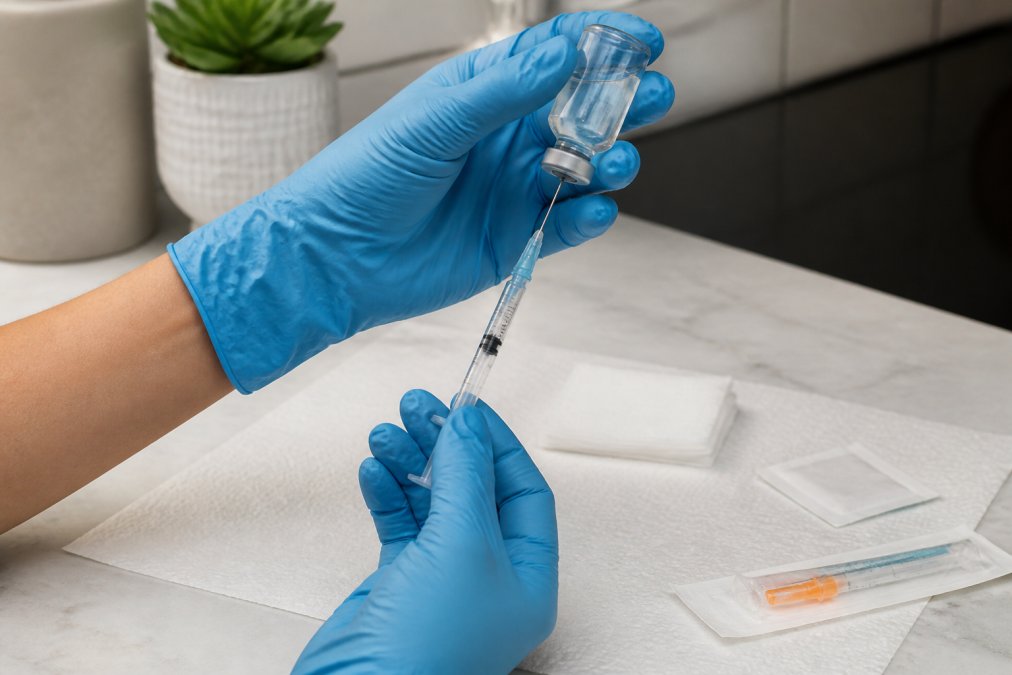
Sterile Technique Step-by-Step
What you'll need:
- Prescribed B12 vial (cyanocobalamin or methylcobalamin sterile solution)
- Appropriate syringe (typically 1 mL) with drawing needle
- Injection needle (gauge and length per provider's instructions)
- Alcohol swabs (70% isopropyl)
- Sterile gauze or cotton ball
- Sharps disposal container
Step 1: Prepare your workspace. Clean a flat surface with an alcohol swab. Wash your hands thoroughly for at least 20 seconds. Use disposable gloves if available.
Step 2: Inspect the vial. Check the expiration date, confirm the solution is clear, and verify the rubber stopper is intact. Never use a compromised vial.
Step 3: Clean the vial stopper. Wipe the rubber top with a fresh alcohol swab and allow it to air dry for 10-15 seconds.
Step 4: Draw the medication. Attach the drawing needle to the syringe. Draw back the plunger to the prescribed dose in air, insert the needle into the vial, inject the air, then draw the solution. Tap the syringe gently and expel any air bubbles. home methylation testing.
Step 5: Switch to the injection needle. Remove the drawing needle and attach the injection needle.
Step 6: Select and prepare the injection site. For intramuscular injection, use the outer thigh or deltoid muscle. For subcutaneous injection, use the abdomen or outer thigh. Wipe the site with an alcohol swab and let it dry.
Step 7: Inject. For intramuscular, insert the needle at a 90-degree angle with a smooth, firm motion. For subcutaneous, use a 45-degree angle. Inject slowly and steadily. Withdraw the needle at the same angle.
Step 8: Apply pressure. Press a clean gauze pad over the site for 30-60 seconds. Do not rub.
Sharps Disposal After Each Injection
Used needles and syringes are regulated medical waste. Never recap needles, never throw them loose into household trash, and never place them in recycling.
Drop the used needle directly into an approved sharps disposal container immediately after use. When the container is three-quarters full, seal it according to manufacturer's instructions. Dispose of it through an approved method: many pharmacies accept sealed sharps containers, and the FDA sharps disposal guidelines maintains a directory of mail-back programs and local collection sites.
Dosage and Frequency Guidelines
Dosage for B12 injections varies based on the reason for supplementation, severity of deficiency, and prescriber's clinical judgment. Common patterns include:
- Initial loading phase for confirmed deficiency: Higher-frequency injections (often daily or every other day for 1-2 weeks) to rapidly restore depleted serum levels
- Maintenance phase: Once levels normalize, frequency typically drops to weekly, biweekly, or monthly injections
- Pernicious anemia management: Lifelong monthly injections are standard for many patients
The concentration of injectable solution typically is 1,000 mcg/mL for standard preparations, though compounded medications may differ. Always follow your prescriber's specific instructions. Adjusting your own dose without medical consultation is a common mistake once people are comfortable with self-injection.
B12 Injection Side Effects and Risks to Know Before You Buy
Most people tolerate vitamin b12 injections well. Serious adverse events are uncommon when the medication is legitimate, technique is correct, and contraindications have been screened.

Common, minor side effects include:
- Injection site reaction: mild pain, redness, or swelling (usually resolves within 24-48 hours)
- Mild itching or warm sensation immediately after injection
- Occasional headache or dizziness following the first few injections
- Nausea in some individuals, particularly with higher doses
Contraindications and Drug Interactions
Before you buy vitamin b12 injections, certain medical conditions and medications require disclosure to your prescriber:
Absolute contraindications:
- Known hypersensitivity to cobalamin or cobalt
- Leber's hereditary optic neuropathy, as cyanocobalamin can accelerate optic nerve degeneration
Conditions requiring caution:
- Hypokalemia (low potassium), as rapid correction of severe B12 deficiency can cause potassium drops requiring monitoring
- Polycythemia vera, as B12 can stimulate red blood cell production
Drug interactions worth noting:
- Metformin and proton pump inhibitors reduce B12 absorption
- Chloramphenicol may blunt the hematologic response to B12 therapy
- Colchicine and extended-release potassium products can impair B12 absorption
A medical consultation before starting any injectable protocol catches edge cases that turn routine supplementation into problems.
How to Buy Vitamin B12 Injections at a Competitive Price
When you buy vitamin b12 injections regularly, cost compounds quickly. Buy-Otc.com offers competitive discounts on B12 shots, needles, and related injectables, with both cyanocobalamin and methylcobalamin options. The platform uses GeoTrust SSL certification to protect payment and personal information, with customer service structured to resolve issues reliably.
When evaluating any source:
- Confirm prescription handling: Legitimate suppliers require a valid prescription before dispensing injectable B12.
- Check product labeling: Sterile injectable solutions should include concentration, lot number, expiration date, and manufacturer information.
- Factor in shipping costs: Evaluate total cost per order, not just unit price.
- Registered user discounts: Buy-Otc.com offers discounts and special offers for registered users, making a meaningful difference for recurring purchases.
| Consideration | What to Check |
|---|---|
| Prescription requirement | Must be required, no exceptions |
| SSL security | Look for GeoTrust or equivalent certification |
| Product labeling | Concentration, lot number, expiration date |
| Shipping costs | Calculate total cost, not unit price alone |
| Customer service | Responsive contact channel for order issues |
| Registered user pricing | Discounts available for repeat purchasers |
For current pricing on B12 injections and needles, visit Buy-Otc.com directly. According to U.S. Food and Drug Administration guidance on buying medicines online, consumers should only purchase prescription medications from pharmacies that require a valid prescription and are licensed in the United States.
Frequently Asked Questions
Q: Do you need a prescription to buy B12 injections?
A: Prescription requirements depend on the form. Injectable vitamin B12 (cobalamin) in vial form is classified as a prescription drug by the FDA when sold as a compounded or pharmaceutical-grade sterile solution. Pharmaceutical-grade intramuscular preparations generally require a valid prescription from a licensed provider. Always confirm the regulatory status of the specific product before purchasing and consult your doctor to get your serum levels tested first.
Q: What is the difference between cyanocobalamin and methylcobalamin injections?
A: Cyanocobalamin is a synthetic form of cobalamin that the body converts into active B12. It is widely available, stable, and the most common form in prescription injections. Methylcobalamin is already in its active form, which some practitioners prefer for nerve health and cognitive health support because it does not require conversion. Bioavailability via intramuscular injection is high for both forms. Your doctor can advise which suits your metabolic function needs and deficiency symptoms best.
Q: Is it safe to administer B12 injections at home?
A: Yes, with proper training and a prescription, self-administering vitamin B12 injections at home is a common and accepted practice. Patient safety depends on using a sterile solution, following correct intramuscular or subcutaneous injection technique, and disposing of needles in an approved sharps container. Your prescribing provider should walk you through the process before your first self-injection. Never share needles, and store vials according to the manufacturer's instructions to maintain sterility.
Q: How do I verify that an online seller of B12 injections is legitimate?
A: Check that the site requires a valid prescription for injectable products, displays verifiable security credentials such as GeoTrust SSL certification, and provides clear contact information and a returns policy. Legitimate online pharmacies in the United States are typically accredited by NABP (National Association of Boards of Pharmacy) or operate under state pharmacy board licenses. Avoid any seller that ships prescription-only injectable B12 without requiring a prescription, as this is a major red flag for counterfeit or improperly stored medication.
Managing B12 deficiency through injections is a long-term commitment, and getting the sourcing right from the start saves money, frustration, and risk. Buy-Otc.com provides discounted pricing on B12 shots, needles, and related injectables, with GeoTrust SSL security protecting every transaction and five-star customer service backing every order. Shop right now at Buy-Otc.com and get the supplies you need at a price that makes ongoing supplementation sustainable.
This article was written using GrandRanker