
 ultimate-guide
Natural Ways to Improve Nutrient Absorption
Table of Contents
- Why Nutrient Absorption Matters More Than You Think
- How Digestive Enzymes Drive Nutrient Breakdown
- Foods Rich in Digestive Enzymes That Boost Bioavailability
- Best Practices for Food Pairing to Maximize Absorption
- Signs of Malabsorption and When to Take Action
- Age-Related Absorption Decline and What You Can Do
- Stress, Medication, and Other Absorption Blockers
- Frequently Asked Questions
Last Updated: September 26, 2026
Why Nutrient Absorption Matters More Than You Think
Your body doesn't absorb every nutrient you consume. Bioavailability, the percentage of a nutrient your body can actually use after digestion, determines what enters your bloodstream and what passes through unused.
Many people eat nutrient-dense meals while absorbing only a fraction of what they consume. Natural ways to improve nutrient absorption can dramatically change health outcomes. Supplementation and proper nutrition go hand-in-hand, which is why understanding absorption mechanics matters for anyone managing their health.
Nutrient bioavailability depends on digestive enzymes, gut health, meal timing, medication interactions, and stress levels. This guide covers science-backed strategies to maximize nutrient absorption naturally.
How Digestive Enzymes Drive Nutrient Breakdown
Digestive enzymes are proteins that break down food into molecules small enough for your intestinal walls to absorb. Without adequate enzyme activity, even the most nutrient-dense foods become nutritionally incomplete in your system.
Your body produces digestive enzymes in the mouth, stomach, pancreas, and small intestine, proteases break down proteins, lipases handle fats, and amylases work on carbohydrates. When enzyme production declines with age, nutrient breakdown becomes less efficient, explaining why older adults often experience micronutrient deficiencies despite adequate intake.
The most effective approach combines enzyme-rich foods with proper food combinations. Raw and fermented foods contain naturally occurring enzymes that assist digestion, reduce pancreatic burden, and improve nutrient assimilation.
Foods Rich in Digestive Enzymes That Boost Bioavailability
Pineapple and papaya contain bromelain and papain, proteases that break down protein structures. Ginger root stimulates digestive secretions and reduces digestive stress, allowing your system to focus energy on nutrient extraction.
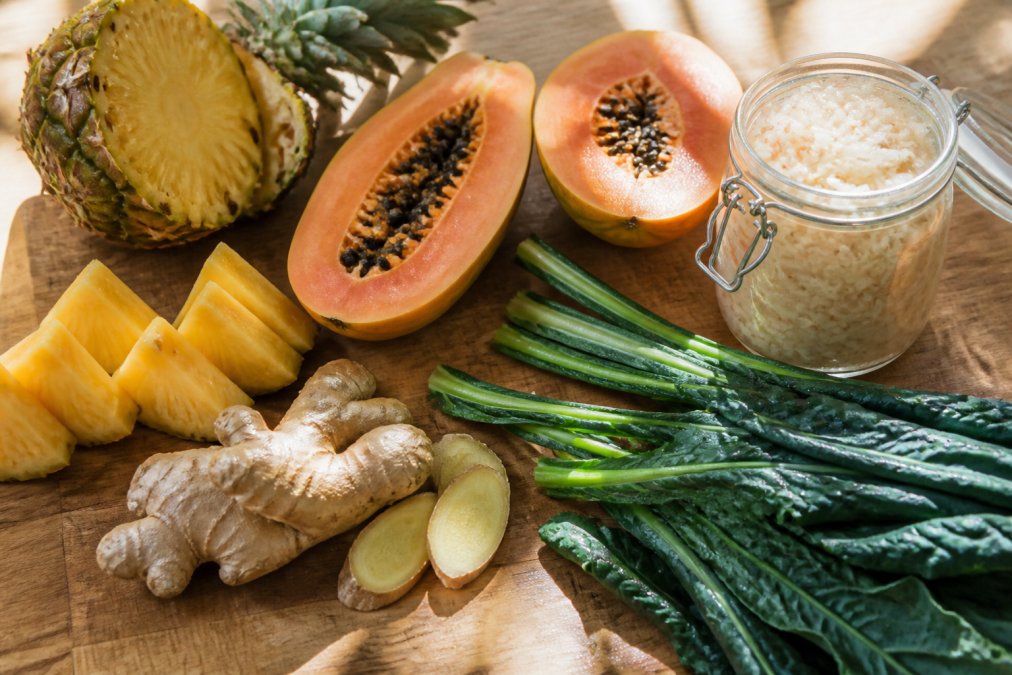
Fermented foods like sauerkraut, kimchi, miso, and tempeh break down complex compounds and create beneficial bacteria that support your microbiome, which directly influences nutrient uptake. Pre-digested nutrients in fermented vegetables require less enzyme activity to absorb, making them ideal for compromised digestive function.
Sprouting activates seeds, removes enzyme inhibitors, and increases enzyme content, offering superior bioavailability compared to unsprouted counterparts. Kiwifruit and avocados also offer digestive support compounds.
Best Practices for Food Pairing to Maximize Absorption
Food pairing strategies use nutrient synergy, the principle that certain foods enhance each other's absorption when eaten together, a precise and actionable natural way to improve nutrient absorption.
Fat-Soluble Vitamins (A, D, E, K) Require Dietary Fat
Fat-soluble vitamins cannot cross the intestinal wall without lipids. Consuming beta-carotene with fat increases absorption by 200-600%. Pair spinach with olive oil, sweet potato with butter, or leafy greens with nuts for optimal bioavailability.
Iron and Vitamin C: A Synergistic Pair
Non-heme iron has poor bioavailability on its own (2-20% absorption). Pairing iron-rich foods with vitamin C sources increases absorption by up to 300%. Vitamin C reduces ferric iron to ferrous iron, the form your intestines absorb most efficiently. Aim for 25-75 mg of vitamin C in the same meal as iron-rich foods.
Calcium and Iron: Competitive Inhibitors
Calcium and iron compete for the same intestinal absorption pathways. Separate these by at least 2 hours, for example, take an iron supplement with breakfast and a calcium supplement with dinner.
Magnesium and Vitamin B6
Magnesium absorption improves with vitamin B6. Pair magnesium-rich foods like pumpkin seeds with B6 sources (chicken, chickpeas, potatoes) to enhance mineral uptake.
Zinc and Protein
Zinc absorption depends on adequate protein in the same meal. Consume zinc-rich foods (oysters, beef, pumpkin seeds, legumes) alongside protein sources. Vegetarians should pair legumes and seeds with fermented foods to reduce phytate content.
Foods That Block Absorption: Strategic Avoidance
Phytates (grains, legumes, seeds), tannins (tea, coffee), and oxalates (spinach, chard, rhubarb) inhibit nutrient absorption. Separate these from mineral-rich meals by 1-2 hours, or use soaking, sprouting, or fermenting to reduce them.
Meal Timing and Digestive Efficiency
Timing between meals matters as much as pairing within meals. Your digestive system requires 4-6 hours to complete a full digestive cycle for a substantial meal. Eating another large meal before this window closes forces your digestive system to split enzyme and acid production between two meals, reducing efficiency for both. Spacing meals appropriately allows your pancreas to fully secrete digestive enzymes, your stomach acid to reach optimal pH, and your intestines to complete nutrient extraction before the next meal arrives.
Smaller, more frequent meals (every 2-3 hours) work for some people, particularly those with compromised digestive function or older adults with reduced enzyme production. However, most people optimize absorption with 3 meals spaced 4-6 hours apart, allowing complete digestive cycles between eating periods.
Practical Implementation
Start by identifying your most common nutrient gaps, whether that's iron, calcium, magnesium, or zinc, and deliberately pair those foods with absorption enhancers in your next 3 meals. Track how you feel over 2-3 weeks; many people notice improved energy, better sleep, or reduced muscle cramps when they optimize food pairing. The investment in strategic meal planning pays measurable dividends in nutrient status and overall health.
Signs of Malabsorption and When to Take Action
Malabsorption occurs when your digestive system fails to extract adequate nutrients despite sufficient dietary intake. Recognizing signs of malabsorption is critical because prolonged nutrient deficiency creates cascading health problems.
Common indicators include chronic fatigue despite adequate sleep, persistent brain fog, unexplained weight loss or difficulty gaining weight, chronic diarrhea or loose stools, and visible signs of specific deficiencies like brittle nails or hair loss. Pale or clay-colored stools suggest fat malabsorption, while floating stools indicate incomplete nutrient breakdown. These physical signals warrant investigation into your digestive function.
Nutritional deficiencies develop gradually, which is why many people don't connect their symptoms to absorption issues. Vitamin B12 deficiency causes fatigue and cognitive decline. Iron deficiency creates weakness and shortness of breath. Magnesium deficiency triggers muscle cramps and sleep disturbances. When standard supplementation doesn't resolve these issues, malabsorption is often the underlying cause.
Testing for malabsorption typically involves blood work measuring specific nutrient levels and sometimes stool analysis. Once identified, addressing the root cause, whether that's low stomach acid, insufficient enzyme production, gut dysbiosis, or medication interference, becomes the priority.
Age-Related Absorption Decline and What You Can Do
Nutrient absorption naturally declines with age. After 50, stomach acid production decreases, which impairs the breakdown of B12 from food sources and reduces mineral absorption. Pancreatic enzyme output also diminishes, making protein and fat digestion less efficient. This explains why older adults experience higher rates of micronutrient deficiencies despite adequate dietary intake.
The good news is that strategic interventions directly counteract this decline. Increasing enzyme-rich foods becomes more important with age. Digestive enzyme supplements can bridge the gap when food sources alone prove insufficient. Stomach acid support through foods like bone broth and fermented vegetables helps restore proper nutrient breakdown. Spacing meals appropriately and eating smaller portions reduces the digestive burden on an aging system.
B12 presents a particular challenge for older adults. Food-bound B12 requires stomach acid for extraction, so age-related acid decline makes supplemental or injected B12 more bioavailable than dietary sources alone. This is where targeted supplementation through B12 injections becomes valuable for maintaining neurological health and energy levels. Buy-Otc.com provides discounted prices on B12 Shots, B1 injections, B6 Injectable, Vitamin C Shots, and also needles that support nutrient status when absorption declines.
Stress, Medication, and Other Absorption Blockers
How Chronic Stress Disrupts Nutrient Absorption
Chronic stress fundamentally disrupts nutrient absorption through multiple mechanisms. When your nervous system enters fight-or-flight mode, blood flow diverts away from your digestive tract to your muscles and brain. Stomach acid production decreases, enzyme secretion drops, and intestinal permeability increases, allowing partially digested material to enter your bloodstream and triggering inflammation that further impairs absorption.
Stress management becomes a non-negotiable component of nutrient optimization. Practices that activate your parasympathetic nervous system, deep breathing, meditation, gentle movement, adequate sleep, directly improve digestive function and nutrient extraction. Even 5-10 minutes of diaphragmatic breathing before meals measurably enhances absorption efficiency by restoring stomach acid production and enzyme secretion.
Medication-Nutrient Interactions: A Systematic Guide
Many commonly prescribed medications interfere with nutrient absorption or increase nutrient losses. Understanding these interactions allows you to adjust timing, dosage, or supplementation strategies to maintain nutrient status.
Proton Pump Inhibitors (PPIs), Used for acid reflux and GERD, PPIs reduce stomach acid production.
Timing Strategies to Minimize Drug-Nutrient Interactions
- Take fat-soluble vitamins (A, D, E, K) and calcium supplements 2-4 hours apart from medications that reduce stomach acid (PPIs, H2 blockers).
- Take iron supplements alone, 1-2 hours before or after other medications and supplements, as iron competes with many compounds for absorption.
- Take magnesium supplements 2 hours apart from antibiotics and bisphosphonates (osteoporosis medications), as magnesium binds these drugs and reduces their effectiveness.
- Take B12 supplements (if oral) with meals to enhance absorption, but separate them from calcium and iron by at least 2 hours.
Testing and Monitoring
- Vitamin B12 and folate (if taking PPIs, metformin, or long-term antibiotics)
- Vitamin D and calcium (if taking corticosteroids or diuretics)
- Iron and ferritin (if taking PPIs or diuretics)
- Magnesium (if taking diuretics or bisphosphonates)
Frequently Asked Questions
What blocks nutrient absorption in the body?
Several factors impair nutrient bioavailability: antinutrients like tannins and saponins in some plants, digestive stress from poor eating habits, chronic inflammation in the gastrointestinal tract, and medications that interfere with mineral uptake. Stress reduces digestive enzyme production, while low stomach acid decreases protein synthesis and mineral absorption. Age also diminishes the body's ability to break down and absorb nutrients efficiently.
How can digestive enzymes naturally improve nutrient uptake?
Digestive enzymes break down food into smaller molecules your body can actually absorb. Enzyme-rich foods like papaya, pineapple, ginger, and fermented vegetables contain natural proteases and other enzymes that support nutrient transformation in your digestive tract. Eating these foods with meals enhances the nutrient density of what you consume, improving overall nutrient assimilation and metabolic efficiency.
What are the signs of poor nutrient absorption?
Signs of malabsorption include persistent fatigue, brain fog, weak muscles, brittle hair and nails, unexplained weight loss, and digestive discomfort after eating. Nutrient deficiency symptoms like pale skin, shortness of breath, or numbness may indicate problems with iron or B12 absorption. If you experience these signs consistently, consult a healthcare provider to identify whether malabsorption is affecting your micronutrient uptake.
Are there specific lifestyle changes that enhance gut health and absorption?
Yes. Manage stress through meditation or exercise, as stress impairs digestive function. Eat slowly and chew thoroughly to activate digestive enzymes. Stay hydrated to support gastrointestinal function. Sleep adequately, as poor sleep disrupts nutrient metabolism. Limit alcohol, which damages the digestive tract lining. Combine complementary foods (iron with vitamin C, calcium with magnesium) to improve mineral uptake. These changes work together to optimize nutrient bioavailability.