
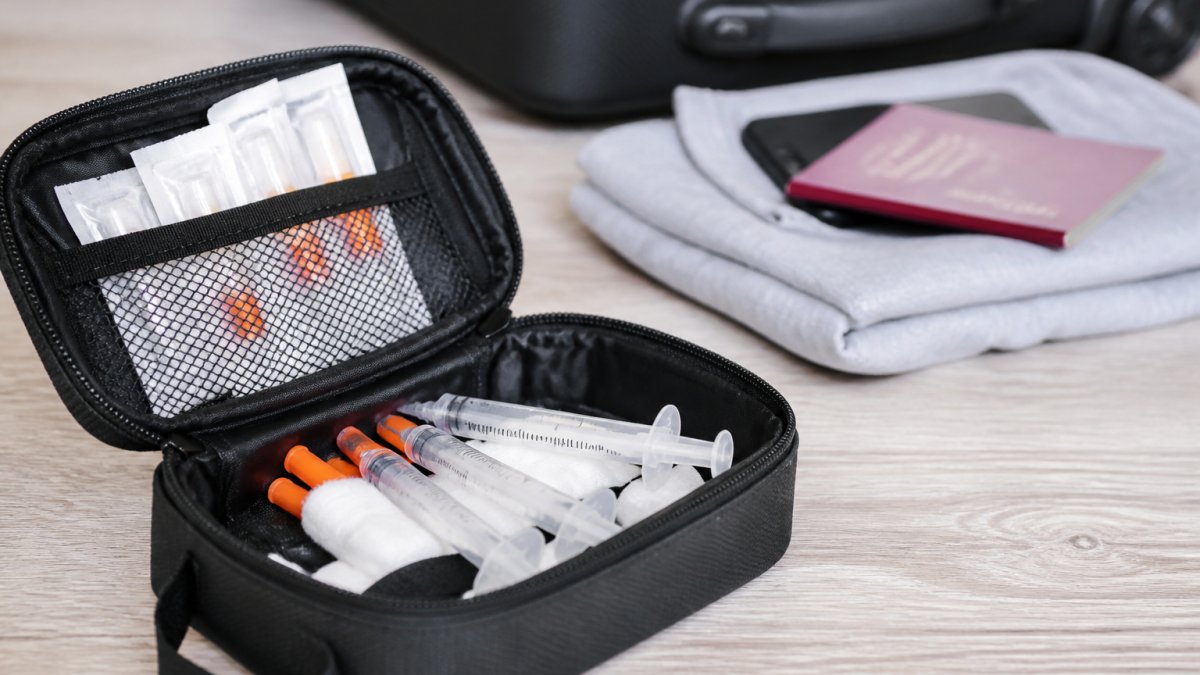
 how-to
How to Safely Transport Medical Needles While Traveling
Table of Contents
- What You Need Before You Pack: Documentation and Prescription Verification
- TSA Rules for Medical Needles: What Actually Gets You Through Security
- Choosing a Sharps Container for Travel
- How to Dispose of Needles While Traveling
- Handling Refrigerated Medications and Temperature-Sensitive Injectables
- Troubleshooting Security Confrontations and Special Assistance
- Frequently Asked Questions
Last Updated: September 27, 2026
What You Need Before You Pack: Documentation and Prescription Verification
TSA does not require a prescription to carry medical needles through security, but airlines and destination pharmacies often do. This guide from Buy-Otc.com walks through exactly what to pack, how to declare it, and how to avoid the delays that catch most travelers off guard.
- A letter from your doctor on clinic letterhead
- Your prescription with the pharmacy label intact
- A list of every medication, dose, and schedule
- Contact details for your prescribing physician
Original Packaging and Medication Backup
Keep medications in their original packaging with the pharmacy label facing up. Loose pills or unlabeled vials invite questions you don't want at a security checkpoint.
TSA Rules for Medical Needles: What Actually Gets You Through Security
TSA screening for medical needles is straightforward when you declare them. Tell the officer before your bag goes through the X-ray. Silence is what causes problems.
Here's how TSA screening typically unfolds:
- Place all medical supplies in a separate bin
- Declare your needles verbally to the officer
- Offer your prescription verification documents
- Expect a possible medical device inspection of the packaging
Hand Luggage vs. Checked Baggage: Where Needles Belong
Medical needles belong in your carry-on allowance, full stop. Checked baggage loses temperature control, gets mishandled, and delays access to your medication.
Pre-Filled vs. Empty Syringe Protocols
Pre-filled syringes are easier to clear through security because the medication is visible inside. Officers can confirm the dose matches your prescription on sight.
Choosing a Sharps Container for Travel
A sharps container for travel is a small, puncture-resistant box that holds used needles until you can dispose of them properly. Buy one before you fly, you cannot rely on finding one at the airport or hotel.
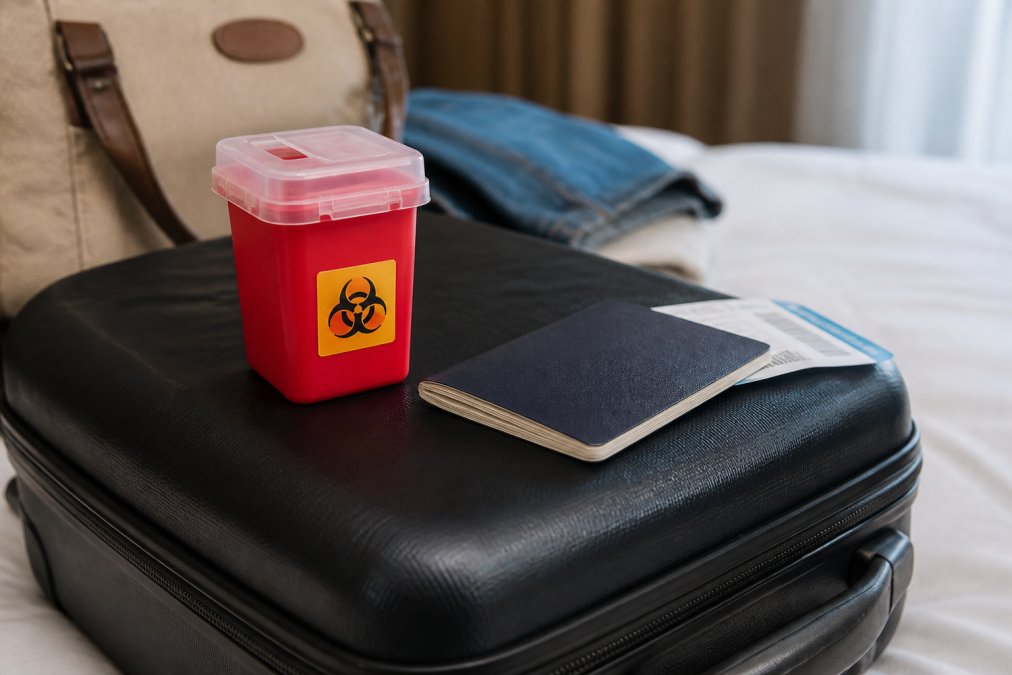
- Hard plastic walls thick enough to resist a needle puncture
- A secure snap or screw lid that will not pop open in a pressurized cabin
- A travel-size sharps format, most commercial travel sharps containers run roughly 4 to 6 inches tall, which fits in a carry-on side pocket
- A clear biohazard label or the universal biohazard symbol
- A wide enough opening to drop a needle in one-handed without touching the sides
Capacity Math: How Many Needles Does a Travel Container Hold?
A common mistake is buying a container too small for the trip. A 4-inch travel sharps container typically holds roughly 20 to 30 insulin syringes or pen needles, depending on gauge and whether you recap. If you inject twice a day on a 10-day trip, that is 20 needles, you are already at capacity before you account for a backup supply.
Do the math before you pack:
- Needles per day × trip days = minimum capacity
- Add 20 to 30 percent for delays, missed doses, or a longer return trip
- If the total exceeds one small container, pack a second empty container rather than overfilling the first
Commercial vs. Improvised Containers
Many travelers use an empty, rigid detergent bottle as a backup. It works in a pinch because the plastic is thick and the cap screws on tight, but it has real drawbacks:
- No biohazard label, so a security officer or disposal facility may refuse it
- No fill line, so it is easy to overfill
- The opening is often too narrow for anything but the smallest gauge
How TSA Treats the Container Itself
An empty sharps container is not a restricted item, it is just a hard plastic box. A container holding used needles is still permitted in carry-on because the needles are medically necessary, but you should expect the same declaration process as your unused supplies. Keep the container sealed and labeled, and mention it when you declare your medical items.
How to Dispose of Needles While Traveling
How to dispose of needles while traveling depends on where you are. Hotel rooms, airports, and public restrooms each call for a different approach.
Your options, ranked by reliability:
- Airport medical stations and first-aid rooms
- Hotel front desks, which often have sharps disposal arrangements
- Local pharmacies that accept travel-size sharps containers
- A sealed, labeled container carried home for proper disposal
Post-Security Sharps Disposal Logistics
Here's the part most guides skip: once you're past security, disposal options shrink fast. Security checkpoint areas don't usually have sharps bins on the passenger side.
Handling Refrigerated Medications and Temperature-Sensitive Injectables
Refrigerated medication needs to stay cold, and cabin conditions work against you. Most injectables tolerate a limited window at room temperature, but temperature sensitivity varies by drug, some tolerate 8 hours, others only 2. Check your medication's storage range on the pharmacy insert before you fly, and write the room-temperature limit on a note in your carry-on.
Types of Temperature-Controlled Travel Gear
There are three broad categories of gear, and they are not interchangeable:
- Insulated medication cases with gel packs. The most common option. A hard-shell case with a removable gel pack holds a steady cool range for several hours. Gel packs must be frozen solid at departure. The CDC guidance on traveling with refrigerated medication notes that frozen gel packs are allowed in hand luggage when used to keep medical items cold.
- Cooler bags with phase-change panels. These use panels that hold a specific temperature rather than freezing solid. They tend to hold a narrower range longer than gel packs, which matters for medications with a tight storage window.
- Battery-powered or thermoelectric coolers. These plug into a wall outlet or a USB port and actively cool. They are heavier and may draw scrutiny at security because of the battery, but they are the only option that holds temperature indefinitely on a long trip.
What TSA Actually Allows
Frozen gel packs and ice packs are permitted in carry-on when they are keeping medically necessary items cold. If a gel pack has partially melted by the time you reach the checkpoint, it may be treated as a liquid, declare it along with your medication and be ready to explain what it is cooling.
Airport and Airline Logistics
Ask your airline about onboard refrigeration when you book. Not every carrier offers it, and the ones that do usually require advance notice, often 48 to 72 hours. Onboard refrigeration is typically a small fridge in the galley, and space is limited, so a request made at the gate is usually too late.
At the airport, a few practical moves help:
- Keep the medication case in your personal item, not the overhead bin, so you can check the temperature
- Ask a gate agent about a quiet room or medical station if you need to re-pack gel packs
- If you have a long layover, look for a restaurant or coffee shop willing to refreeze a gel pack, many will, especially if you explain the medical need
Hotel Storage
Once you arrive, a hotel mini-fridge is the simplest option, but mini-fridges often run too cold and can freeze medication. Put the medication in the main compartment, not against the back wall, and use a small thermometer to confirm the range. If the mini-fridge has no temperature control, ask the front desk for a medical-grade refrigerator, most hotels have one for guest medication.
Troubleshooting Security Confrontations and Special Assistance
Most security checkpoint issues come from poor communication, not bad rules. If an officer challenges your medical supplies, stay calm and hand over your documentation.
Here's a simple script that works:
- "These are medically necessary injectables."
- "Here is my prescription and doctor's letter."
- "Would you like me to show you the medication labels?"
Frequently Asked Questions
How do I pack medical needles for travel?
Pack needles in a hard-sided sharps container or a rigid plastic case inside your carry-on bag. Keep them in original packaging with the prescription label visible. TSA allows medical needles in carry-on and checked baggage when they are for a documented medical condition. Place the container in an easy-to-reach spot so you can pull it out at the security checkpoint without unpacking your entire bag.
Will TSA stop you for needles?
TSA does not prohibit medical needles, but screeners may inspect them. If you carry injectable medication with a prescription label and a sharps container, you should clear security without issue. The key is keeping everything organized and accessible. Declaring your medical supplies to the officer before screening begins reduces confusion. If a screener questions the needles, calmly explain your medical necessity and show your prescription documentation.
Do I need a doctor's note to fly with medical needles?
A doctor's note is not legally required by TSA, but it helps. A letter on letterhead stating your diagnosis, the medication, and the need for injectable delivery gives screeners clear context. Pair it with the pharmacy label on your medication box. Together, these documents establish medical necessity and speed up the screening process if questions arise about your sharps container for travel or insulin delivery device.
Can I bring pre-filled syringe needles in my hand luggage?
Yes. TSA permits pre-filled syringes and insulin delivery devices in carry-on bags. Keep them in original packaging with the prescription label attached. If the syringe contains liquid medication, it is exempt from the 3.4-ounce liquid limit under the medical necessity exception. Carry a small sharps container to store used needles until you can dispose of them properly.
Traveling with medical needles doesn't have to be stressful, but it does require planning. Buy-Otc.com carries discounted injectables and needles, backed by Geotrust SSL protection and 5-star customer service, so you can stock up before your trip without overpaying. Registered users also get access to exclusive discounts and special offers. Get started with Buy-Otc.com and travel with the supplies you need.