ultimate-guide
Vitamin B12 Shots for Vegans: The 2026 Guide
Table of Contents
- Why Vitamin B12 Shots for Vegans Matter More Than You Think
- Oral vs Intramuscular B12 for Vegans: Which Actually Works
- B12 Injection Dosage for Plant-Based Diets
- How to Administer B12 Shots at Home Safely
- Where to Buy Vitamin B12 Injections Online
- Testing B12 Levels: Blood Serum, Homocysteine, and MTHFR
- Frequently Asked Questions
Last Updated: September 12, 2026
Why Vitamin B12 Shots for Vegans Matter More Than You Think
Vitamin B12 shots for vegans solve a problem that no amount of spinach, lentils, or fortified cereal can fully fix: plant foods do not contain meaningful amounts of active cobalamin. This guide from Buy-Otc.com explains who actually needs injections, how dosing works, and how to source supplies safely.
B12 is a water-soluble vitamin your body uses to build red blood cells, maintain nerve health, and regulate homocysteine levels. It exists almost exclusively in animal-derived foods. That means a strict plant-based diet without consistent supplementation puts you on a slow path toward deficiency, and the neurological damage it causes can become permanent if it goes untreated for too long.
Here is the part most people miss: deficiency does not announce itself. Serum B12 levels can look acceptable while functional B12 inside your cells is already running low.
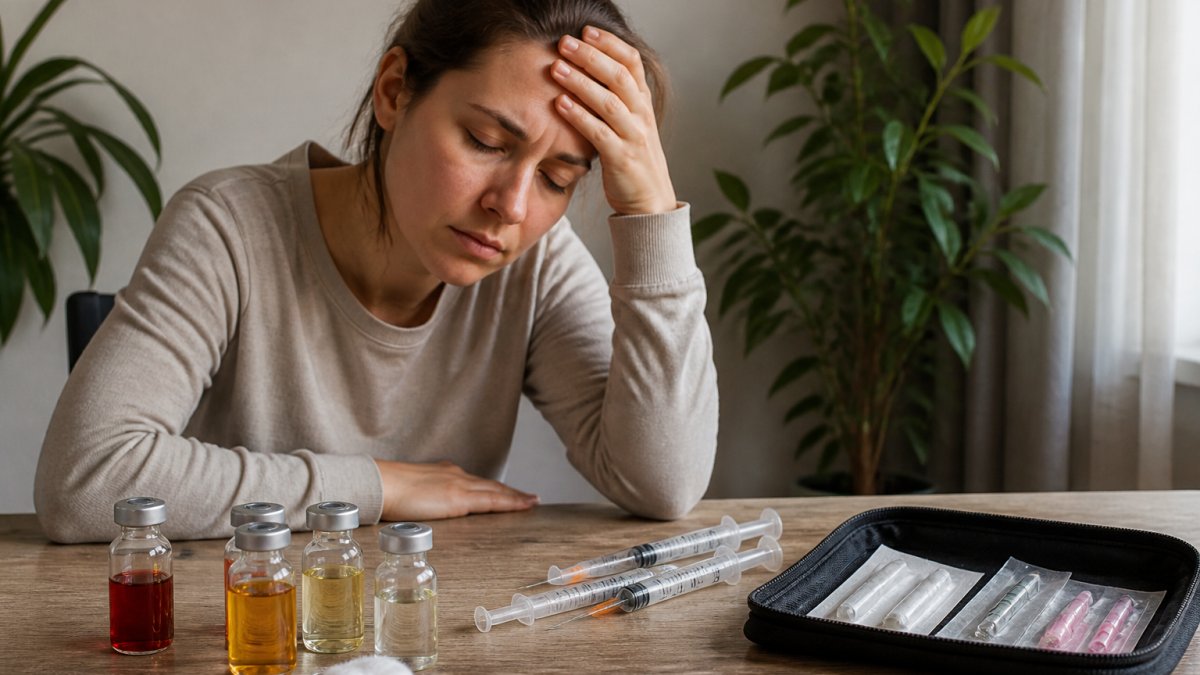
Symptoms of B12 Deficiency and How Fast They Escalate
Early deficiency looks like ordinary tiredness. Fatigue, brain fog, and low mood show up first, which is why so many vegans dismiss the warning signs for months.
Then the symptoms get harder to ignore:
- Tingling or numbness in hands and feet
- Memory problems and difficulty concentrating
- Pale or slightly yellow skin
- Shortness of breath after mild exertion
- A sore, swollen tongue
- Muscle weakness and unsteady balance
The escalation timeline varies by person. Someone with a healthy liver may draw on stored B12 for a year or more before symptoms appear. Someone with malabsorption issues, pernicious anemia, or a long history of deficiency can deteriorate within weeks.
Oral vs Intramuscular B12 for Vegans: Which Actually Works
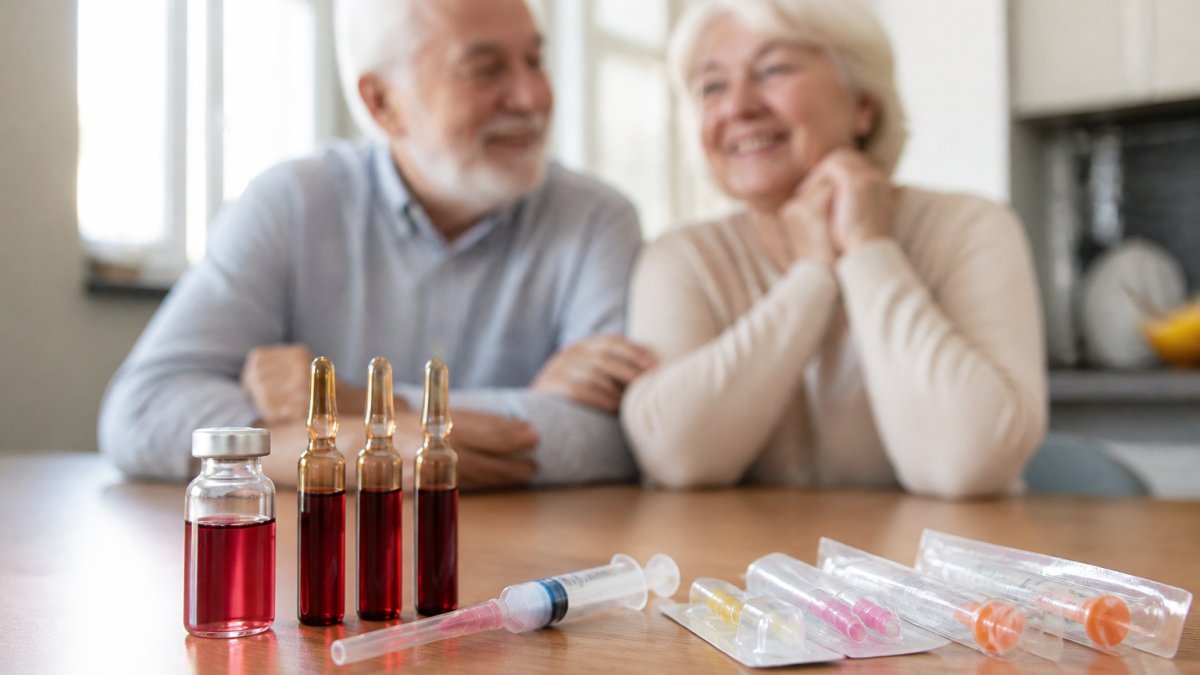
Intramuscular injection delivers B12 directly into muscle tissue, bypassing the digestive system entirely. For most vegans with an active deficiency, this is the most reliable route. But "oral doesn't work" is an oversimplification, and the real answer depends on why absorption is failing in the first place.
The Two Absorption Pathways
Your gut absorbs B12 through two distinct mechanisms:
- Active absorption: B12 binds to intrinsic factor, a protein made by stomach parietal cells, and is absorbed in the terminal ileum. This pathway is efficient but saturates at roughly 1 to 2 mcg per dose.
- Passive diffusion: A small percentage of any oral dose crosses the intestinal wall without intrinsic factor. This pathway is inefficient, absorbing only about 1 percent of what you swallow, but it does not saturate.
That second pathway is why high-dose oral B12 (1,000 mcg or more) can work even for people with malabsorption. If you swallow 1,000 mcg, passive diffusion alone may deliver around 10 mcg, which is several times the daily requirement. The catch is that this only works if the dose is high enough and taken consistently.
Why Injections Still Win for Many Vegans
Injections bypass both pathways and deliver the full dose into circulation. That matters most for:
- People with pernicious anemia, where intrinsic factor is absent
- Anyone who has had gastric bypass or ileal resection
- People with Crohn's disease, celiac disease, or chronic atrophic gastritis
- Vegans showing neurological symptoms, where clinicians do not want to wait weeks for oral levels to rise
For these groups, oral B12 is not unreliable because the vitamin is poorly made. It is unreliable because the body's absorption machinery is compromised.
Sublingual and Intranasal Options
Sublingual tablets are held under the tongue, where some B12 absorbs through mucous membranes. Absorption efficiency sits between oral and injectable, and it suits people who want to avoid needles. Intranasal gels are another option, delivering B12 through the nasal mucosa, though they are less commonly prescribed.
Cyanocobalamin vs. Methylcobalamin: The Form Question
Most clinical injections use cyanocobalamin. It is stable, well-studied, and the body converts it into the two active coenzymes, methylcobalamin and adenosylcobalamin. Methylcobalamin injections are also available and are already in an active form.
For most people, the difference is small. But a subset of vegans may respond differently because of genetics.
The MTHFR Angle Most Guides Skip
MTHFR is an enzyme that helps convert folate and, indirectly, supports B12 metabolism. Certain variants in the MTHFR gene reduce enzyme activity, which can affect how efficiently the body handles cyanocobalamin and folate. People with these variants sometimes report better symptom response to methylcobalamin than to cyanocobalamin.
The evidence here is still evolving, and MTHFR testing is not standard for everyone. But if you have been on cyanocobalamin injections for months with persistent fatigue, brain fog, or elevated homocysteine despite normal serum B12, it is a reasonable conversation to have with your clinician. Some practitioners will trial methylcobalamin in that situation before ordering genetic testing.
Practical Decision Framework
| Situation | Preferred Route |
|---|---|
| Active deficiency with neurological symptoms | Intramuscular injection |
| Malabsorption (pernicious anemia, bariatric surgery, Crohn's) | Intramuscular injection |
| Maintenance in a healthy vegan with no absorption issues | High-dose oral or sublingual |
| Needle-averse but need reliable delivery | Sublingual or intranasal |
| Poor response to cyanocobalamin despite normal levels | Discuss methylcobalamin with clinician |
A common mistake is assuming a high-dose oral tablet matches an injection. It does not. The bioavailability gap is wide enough that many clinicians skip oral entirely for patients showing neurological symptoms, and it is the reason injection protocols remain the standard for anyone with confirmed malabsorption.
NIH Office of Dietary Supplements B12 fact sheet
B12 Injection Dosage for Plant-Based Diets
Dosage depends on whether you are correcting an existing deficiency or maintaining healthy levels on a plant-based diet. The two protocols look very different, and conflating them is the most common dosing mistake vegans make.
Correction Protocol vs. Maintenance Protocol
When a clinician confirms deficiency, the standard approach is a loading phase followed by a taper. A widely used pattern for cyanocobalamin is:
- Loading phase: 1,000 mcg intramuscularly every other day for one to two weeks, or daily for up to a week in cases with neurological symptoms
- Transition phase: 1,000 mcg once weekly for roughly four to eight weeks
- Maintenance phase: 1,000 mcg once monthly, adjusted based on follow-up blood work
Hydroxocobalamin, another common injectable form, is often dosed at 1,000 mcg on a similar schedule but is typically administered in a clinical setting because of its formulation and storage requirements.
For vegans who are not deficient but want to stay that way, the maintenance end of that schedule is the relevant part. Many practitioners settle on 1,000 mcg monthly, though some patients do well on 1,000 mcg every two to three months if their serum and functional markers stay in range.
Why the Daily Recommended Allowance Does Not Translate to Injections
The Recommended Dietary Allowance for adults is 2.4 mcg per day, with higher targets during pregnancy and lactation (ods.od.nih.gov). That figure assumes normal absorption through the digestive tract. Injections bypass absorption entirely, which is why the delivered dose is hundreds of times larger than the daily RDA. The micrograms you see on an injection vial are not comparable to the micrograms on a supplement label.
Vegan-Specific Dosing Considerations
Once you stop eating animal products, your B12 status depends entirely on supplementation. Several factors shift the schedule:
- Time since going vegan: Someone who transitioned recently may still have liver stores and can start on maintenance dosing. Someone vegan for years without supplementation likely needs the full correction protocol.
- Age: Absorption and storage efficiency decline with age, so older vegans often need more frequent maintenance injections.
- Medications: Long-term use of metformin or proton-pump inhibitors is associated with lower B12 status and may push the schedule toward more frequent dosing.
- Gastrointestinal history: Bariatric surgery, Crohn's disease, celiac disease, and other conditions that impair absorption make injections the preferred route and often require higher or more frequent doses.
- Pregnancy and lactation: Requirements rise, and clinicians typically monitor levels more closely and adjust frequency upward.
Monitoring and Adjusting
Dosing is not a set-and-forget decision. Serum B12, methylmalonic acid, and homocysteine are the markers clinicians use to confirm the protocol is working. A common pattern is to test at baseline, again after the loading phase, and then every six to twelve months once stable. If methylmalonic acid or homocysteine stays elevated despite normal serum B12, the dose or frequency is usually increased, or the form is changed.
How to Administer B12 Shots at Home Safely
Home injection is a legitimate option for people on long-term maintenance protocols. It requires clean technique, correct supplies, and a willingness to follow a consistent routine.

What you'll need:
- Prescribed B12 injectable solution
- Sterile syringes with appropriate needle gauge
- Alcohol swabs
- Sharps disposal container
- Clean workspace with good lighting
Step 1: Prepare your workspace. Wash your hands thoroughly and lay out all supplies on a clean surface. Check the vial for expiration dates and any discoloration.
Step 2: Draw the dose. Wipe the vial top with an alcohol swab, insert the needle, and draw the prescribed amount. Remove air bubbles by tapping the syringe.
Step 3: Select and clean the site. The upper outer thigh or deltoid muscle works well for self-injection. Swab the area and let it dry completely.
Step 4: Inject. Insert the needle at a 90-degree angle with a quick, steady motion. Pull back slightly to check for blood, then inject slowly.
Step 5: Dispose properly. Place the used needle directly into your sharps container. Never recap a used needle.
A common mistake is rushing the alcohol drying step. Injecting into damp skin introduces bacteria and raises infection risk.
Side Effects and Contraindications to Watch For
Most people tolerate B12 injections without issue. Injection site reactions like mild soreness or redness are the most common complaint and typically fade within a day.
Watch for these less common reactions:
- Headache or dizziness after injection
- Itching or rash at the site
- Swelling that persists beyond 48 hours
- Rare anaphylactic reactions requiring immediate medical attention
Contraindications matter too. People with cobalt or cobalamin hypersensitivity should not receive cyanocobalamin injections. Anyone with Leber's disease, a hereditary optic nerve condition, should avoid B12 injections entirely because they can accelerate vision loss.
Where to Buy Vitamin B12 Injections Online
Sourcing injectables online requires more care than buying a bottle of vitamins. Counterfeit and improperly stored products exist, and injecting a contaminated solution carries real risk.
Buy-Otc.com stocks B12 shots, B1 injections, B6 injectables, and Vitamin C shots alongside needles and syringes, with discounts available for registered users. The site uses Geotrust SSL protection to secure payment information, and damaged items get resolved through customer service.
When evaluating any supplier, check these points:
- Valid SSL certificate on the checkout page
- Clear product descriptions with expiration information
- Responsive customer service you can reach before ordering
- A stated policy for damaged or lost shipments
Testing B12 Levels: Blood Serum, Homocysteine, and MTHFR
Serum B12 testing measures the amount of cobalamin circulating in your blood. It is the standard first test, but it has a known blind spot: results can read normal while functional deficiency is present.
That is why clinicians often run additional markers:
- Homocysteine levels: Elevated homocysteine suggests functional B12 deficiency even when serum B12 looks fine
- Methylmalonic acid: A more sensitive marker that rises when B12 status is genuinely low
- MTHFR genetic testing: Identifies variations that affect how efficiently your body converts B12 into active forms
The MTHFR angle is one competitors rarely address. People with certain MTHFR variants may process cyanocobalamin less efficiently and respond better to methylcobalamin. If standard injections are not improving your symptoms, genetic testing is worth discussing with your clinician.
Managing B12 on a plant-based diet is not complicated, but it does require consistency. Skipping doses because you feel fine is the most common way vegans drift back into deficiency, and the symptoms return quietly before they return loudly.
Buy-Otc.com carries the injectables, needles, and supplies you need to stay on schedule, with competitive discounts, Geotrust SSL protection at checkout, and customer service that resolves damaged shipments without a fight. Get started with Buy-Otc.com and keep your B12 protocol running without interruption.
Frequently Asked Questions
How often should a vegan get a vitamin B12 shot?
Frequency depends on your B12 status and diet. Vegans with normal serum B12 levels often maintain with one intramuscular injection every 1 to 3 months. Those with deficiency symptoms, neurological damage, or malabsorption may need weekly or biweekly loading doses first. Your doctor can set a schedule based on blood serum testing and homocysteine levels.
Are B12 injections more effective than oral supplements for vegans?
Intramuscular injections bypass the digestive tract entirely, so absorption efficiency is close to 100 percent. Oral cyanocobalamin works for many vegans who produce enough intrinsic factor, but pernicious anemia or malabsorption can block absorption. If blood tests show low serum B12 despite supplementation, injections are the more reliable option.
Can I safely administer B12 shots at home?
Yes, many people self-inject after training from a clinician. Use sterile needles, rotate injection sites, and follow your prescribed dosage frequency. Watch for side effects like redness or bruising at the site. Dispose of needles in an FDA-cleared sharps container. If you have a bleeding disorder or take blood thinners, confirm with your doctor first.
Why do vegans specifically need B12 injections?
Vitamin B12 occurs naturally almost exclusively in animal products. A plant-based diet provides no reliable dietary sources unless you eat fortified foods daily. Over time, low intake depletes liver stores and raises homocysteine levels, which can lead to fatigue, cognitive function decline, and nerve damage. Injections offer a direct way to maintain B12 status without depending on fortified foods.
What are the symptoms of B12 deficiency in vegans?
Early signs include fatigue, brain fog, and mood changes. As deficiency progresses, you may notice tingling in hands and feet, muscle weakness, and memory problems. Severe cases cause neurological damage and pernicious anemia. Because symptoms develop slowly, regular blood serum testing is the most reliable way to catch low B12 before nerve health is affected.
How much do vitamin B12 injections typically cost?
Pricing depends on quantity, supplier, and whether you buy from a clinic or an online retailer. Clinic-administered shots usually cost more per dose than self-injection supplies ordered online. Buy-Otc.com offers discounted prices on B12 shots and needles. Check their website for current pricing and any special offers for registered users.
Are monthly B12 shots worth it for vegans?
For most vegans with stable B12 status, monthly injections maintain healthy serum levels and support energy, metabolic health, and cognitive function. If you eat fortified foods consistently and your blood work is normal, you may need them less often. Monthly shots tend to be worth it for anyone who struggles with oral absorption or wants predictable, preventative care.