
 ultimate-guide
Why Specialized Vitamins for Women Over 50 Matter
Table of Contents
- Why Your Body's Nutritional Needs Change After 50
- Vitamin B12 Deficiency Symptoms in Women Over 50
- The Critical Micronutrients Women Over 50 Cannot Afford to Miss
- Benefits of Injectable Vitamins vs Oral Supplements
- How to Choose a High-Quality Multivitamin for Your Needs
- Common Misconceptions About Supplements After 50
- Frequently Asked Questions
Last Updated: September 20, 2026
Why Your Body's Nutritional Needs Change After 50
Your body isn't the same at 50 as it was at 30. Metabolism slows. Hormone levels shift dramatically. Stomach acid decreases, making it harder to absorb certain nutrients from food alone. These changes mean that why specialized vitamins for women over 50 becomes less of a luxury and more of a necessity for maintaining energy, bone strength, and cognitive clarity.
After menopause, women face specific nutritional gaps that generic multivitamins often miss. The decline in estrogen accelerates bone loss, increases cardiovascular risk, and affects how your body processes B vitamins. At the same time, your digestive system becomes less efficient at extracting nutrients from food. This creates a compounding problem: you need more of certain micronutrients, but your body absorbs less of them.
The difference between a standard multivitamin and why specialized vitamins for women over 50 matter comes down to formulation. Specialized supplements account for hormonal fluctuations, bone density concerns, and the specific absorption challenges that emerge in your 50s and beyond. They're calibrated for what your body actually needs now, not what worked when you were younger.
Vitamin B12 Deficiency Symptoms in Women Over 50
Vitamin B12 deficiency in women over 50 often goes undiagnosed because symptoms mimic normal aging. Fatigue, brain fog, difficulty concentrating, and mood changes get attributed to stress or getting older. Meanwhile, your B12 levels are quietly dropping.
The problem intensifies after 50 because stomach acid, which your body needs to release B12 from food, decreases with age. Even if you eat plenty of B12-rich foods like fish, eggs, or dairy, your body may not extract it efficiently. This is why injectable B12 or sublingual supplements become increasingly important for women in this age group.
Common symptoms of B12 deficiency include persistent fatigue despite adequate sleep, tingling in your hands or feet, difficulty with balance or coordination, and memory problems that feel different from normal forgetfulness. Some women also experience mood changes or depression that don't respond well to typical treatments. If you've noticed these symptoms developing in your 50s, B12 deficiency is worth investigating with your healthcare provider.
The good news: B12 deficiency is one of the most straightforward nutritional gaps to address. Whether through dietary sources, oral supplements, or injectable options, restoring B12 levels typically produces noticeable improvements in energy and mental clarity within weeks.
The Critical Micronutrients Women Over 50 Cannot Afford to Miss
Calcium and Vitamin D for Bone Density
Bone loss accelerates dramatically after menopause. Without adequate calcium and vitamin D, osteoporosis risk climbs sharply. Why specialized vitamins for women over 50 emphasize these two nutrients together is straightforward: vitamin D enables your body to absorb calcium. One without the other is inefficient.
Postmenopausal women need 1,200 mg of calcium daily, higher than the requirement for younger women. Vitamin D3 (the more bioavailable form than D2) helps maintain bone density and supports immune function. The combination protects against fractures, maintains posture, and reduces the physical limitations many women experience in their 60s and beyond.
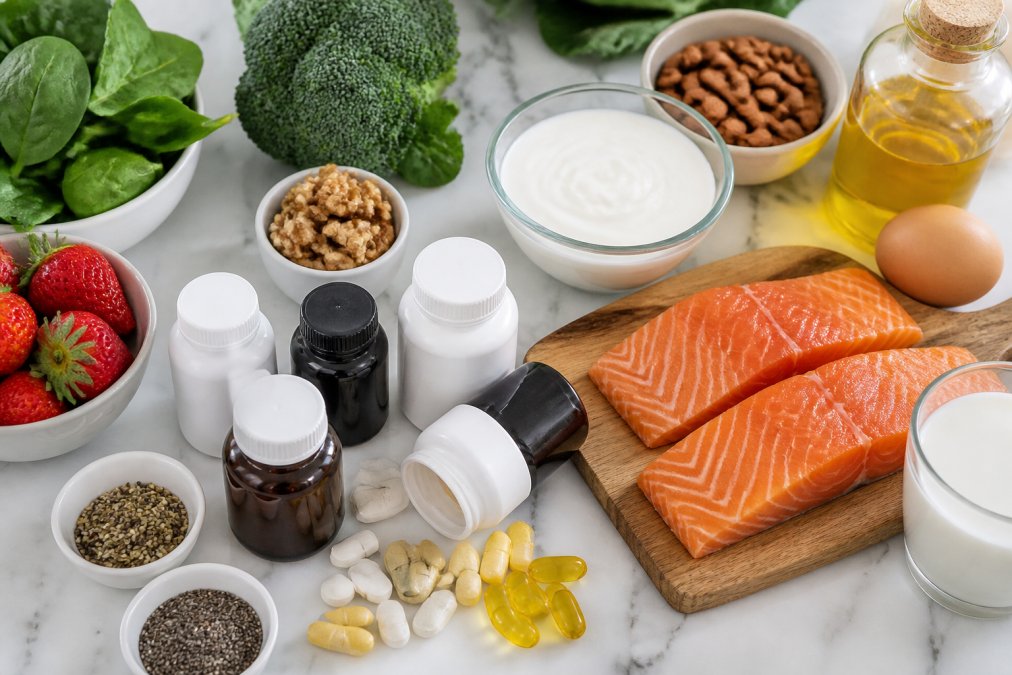
Calcium citrate is absorbed more efficiently than calcium carbonate, especially if you have low stomach acid, a common issue after 50. Vitamin D3 supplementation is particularly important if you live in northern climates, spend limited time outdoors, or have darker skin, which reduces vitamin D synthesis from sunlight.
B-Vitamins for Energy and Cognitive Function
B-vitamins become critical after 50 because they support energy metabolism and cognitive function at a time when both naturally decline. B12, B6, and folate work together to maintain neurological health, support memory, and help convert food into usable energy.
B12 deficiency is especially common in women over 50 due to reduced stomach acid and decreased intrinsic factor production, a protein needed for B12 absorption. B6 supports brain health and immune function. Folate helps prevent cognitive decline and supports cardiovascular health. Together, they form the backbone of why specialized vitamins for women over 50 focus so heavily on B-complex formulations.
Many women find that B-vitamin supplementation, particularly injectable B12, produces noticeable improvements in energy levels and mental clarity within days to weeks. This is because the deficiency is often severe enough that even modest supplementation creates a dramatic improvement in how you feel.
Omega-3 Fatty Acids and Antioxidants for Heart Health
Heart disease is the leading cause of death for women, and risk increases significantly after menopause. Omega-3 fatty acids support cardiovascular health by promoting healthy blood pressure regulation and reducing inflammation. Antioxidants protect cells from oxidative stress, which accelerates aging and disease.
Omega-3s from fish oil or algae-based sources help maintain healthy triglyceride levels and support cognitive function. Antioxidants like vitamins C and E, along with compounds like lycopene and lutein, protect against cellular damage. Why specialized vitamins for women over 50 include these nutrients is simple: your cardiovascular system needs this extra support after menopause when estrogen's protective effects decline.
Benefits of Injectable Vitamins vs Oral Supplements
Injectable vitamins bypass the digestive system entirely, delivering nutrients directly into the bloodstream or muscle tissue. This matters significantly for women over 50 because digestive efficiency declines with age. If your stomach acid is low or your intestinal lining has reduced absorptive capacity, injectable options ensure you're actually getting the nutrients you take.
Bioavailability, how much of a nutrient your body actually absorbs and uses, is the critical difference. Oral B12 supplements are absorbed at roughly 1-2% efficiency in the intestines. Injectable B12 bypasses this limitation entirely, achieving 90%+ absorption. For women with documented B12 deficiency, this difference is transformative.
Injectable options also work faster. Many women report feeling more energetic within days of a B12 injection, whereas oral supplements may take weeks to build up in your system. For those managing chronic fatigue, brain fog, or low energy, injectable vitamins offer a more direct solution.
The tradeoff is convenience. Injections require either self-administration or a healthcare provider visit. Oral supplements are simpler but less effective if your digestive system isn't absorbing them efficiently. For women over 50 with absorption issues, the benefits of injectables often outweigh the minor inconvenience.
How to Choose a High-Quality Multivitamin for Your Needs
What Third-Party Testing and Bioavailability Mean
Third-party testing verifies that a supplement contains what the label claims and is free from contaminants. This matters because the supplement industry isn't as strictly regulated as pharmaceuticals. A third-party seal from organizations like USP or NSF indicates the product has been independently verified for quality and purity.
Bioavailability refers to how much of a nutrient your body can actually absorb and use. Some forms of minerals, like magnesium glycinate or calcium citrate, are absorbed more efficiently than others. Why specialized vitamins for women over 50 use specific nutrient forms is directly tied to bioavailability. A cheap multivitamin with poorly absorbable forms delivers less benefit than a higher-quality supplement with optimized nutrient forms.
When evaluating supplements, look for third-party testing certification and check the specific forms of key nutrients. Calcium citrate absorbs better than calcium carbonate.
Drug-Supplement Interactions You Should Know About
Certain medications interact with supplements in ways that reduce effectiveness or create safety concerns. If you're taking blood thinners like warfarin, high-dose vitamin K supplements can interfere with medication effectiveness. If you're on thyroid medication, calcium and iron supplements can reduce absorption if taken simultaneously.
Common Misconceptions About Supplements After 50
| Nutrient | Why It Matters After 50 | Best Form | Typical Daily Need |
|---|---|---|---|
| Calcium | Bone density, osteoporosis prevention | Calcium citrate | 1,200 mg |
| Vitamin D3 | Calcium absorption, immune function | D3 (cholecalciferol) | 1,000-2,000 IU |
| Vitamin B12 | Energy, cognitive function, nerve health | Injectable or methylcobalamin | 2.4 mcg (or 1-2 injections monthly) |
| Vitamin B6 | Brain health, immune function | Pyridoxal-5-phosphate | 1.5-2 mg |
| Omega-3 | Heart health, inflammation reduction | Fish oil or algae-based | 1,000-2,000 mg EPA+DHA |
| Magnesium | Bone health, muscle function, sleep | Magnesium glycinate | 320 mg |
According to National Institutes of Health Office of Dietary Supplements, nutrient absorption efficiency decreases measurably after age 50, particularly for B12, calcium, and vitamin D. This physiological change is why why specialized vitamins for women over 50 have become increasingly important for maintaining health markers that decline without intervention.
Frequently Asked Questions
What are the most important vitamins for a woman over 50?
Women over 50 need to prioritize B12, vitamin D, calcium, and magnesium due to absorption changes and hormonal shifts. B12 supports energy and cognitive function; vitamin D and calcium work together to prevent bone density loss and osteoporosis. Magnesium supports metabolic rate and heart health. Omega-3 fatty acids and antioxidants also become increasingly important for cardiovascular and immune support as you age.
Do women over 50 really need a specialized multivitamin?
A standard multivitamin may not address the specific nutritional gaps women over 50 face. Specialized formulas account for decreased nutrient absorption, hormonal fluctuations, and the higher dietary reference intake for certain micronutrients. Generic multivitamins often contain inadequate amounts of calcium, vitamin D, and B12, nutrients your body absorbs less efficiently after 50.
How does metabolism change affect vitamin absorption after 50?
Your metabolic rate naturally slows after 50, and your stomach produces less acid, which reduces the absorption of water-soluble vitamins like B12 and fat-soluble vitamins like vitamin D. This is why injectable B12 or supplements with enhanced bioavailability become more practical. Additionally, medications common in this age group can further interfere with nutrient absorption, making supplemental intake more critical.
What should I look for when choosing a supplement for women over 50?
Look for third-party testing to verify potency and purity. Check the form of key nutrients: calcium citrate absorbs better than calcium carbonate; vitamin D3 is more effective than D2. Verify dosage guidelines match your dietary reference intake and account for any medications you take, as drug-supplement interactions can affect efficacy.