 Ultimate guide
How to Use B12 Shots for Low Energy and Tiredness
Last Updated: November 2, 2026
Quick Summary
B12 shots for low energy and tiredness make sense when a blood test confirms low B12 or when your body cannot absorb the vitamin from food or pills. A shot only helps if B12 is actually your problem, since tiredness has dozens of causes that injections cannot fix. If nothing changes after several weeks of properly dosed injections, B12 was likely not the main driver.
- Benefit most: diagnosed deficiency, absorption problems, dietary gaps, and certain medication effects.
- Diagnosis starts with a blood test, and clinicians may add methylmalonic acid or homocysteine.
- A common plan uses a loading phase of frequent injections, then monthly maintenance for many people.
- Most genuinely deficient people notice some improvement within a few days to a couple of weeks.
- Shots win when absorption is the problem because they bypass the digestive tract entirely.
Table of Contents
- When B12 Shots for Low Energy and Tiredness Make Sense
- Symptoms of Low B12 and How Deficiency Is Diagnosed
- Vitamin B12 Benefits and Side Effects
- Vitamin B12 Injections Dosage and Frequency
- How Soon Do You Feel Less Tired After a B12 Injection?
- B12 Shots vs Oral Supplements: Which Fits Your Case
- Why Some People Feel Worse After a Shot and When to Get Help
- Ordering B12 Shots and Needles for Home Use
- Frequently Asked Questions
When B12 Shots for Low Energy and Tiredness Make Sense
B12 shots for low energy and tiredness make sense when a blood test confirms low B12 or when your body cannot absorb the vitamin from food or pills. Many people who nap through the afternoon assume a shot is the fix. Sometimes it is. Often it isn't.
Vitamin B12 is a water-soluble nutrient your body needs to build red blood cells, carry oxygen, and keep nerves working properly. When levels drop, fatigue and weakness are among the first signals. That connection is real, and it is well documented by NIH Office of Dietary Supplements on vitamin B12.
Here is the part most guides skip: a shot only helps if B12 is actually your problem. Tiredness has dozens of causes, from poor sleep to thyroid issues to plain overwork. Injections cannot fix any of those.
The people who benefit most fall into a few clear groups:
- Diagnosed deficiency: a lab result below the normal range
- Absorption problems: older adults, people with digestive conditions, or those who have had stomach or intestinal surgery
- Dietary gaps: vegans and vegetarians who eat little or no animal food
- Medication effects: long-term use of certain acid reducers or diabetes drugs
If you recognize yourself in that list, a shot may be worth discussing with your doctor. If you do not, keep reading before you order anything.
Symptoms of Low B12 and How Deficiency Is Diagnosed
Low B12 symptoms build slowly and mimic plenty of other conditions. The classic cluster includes fatigue, weakness, dizziness, blurred vision, mood changes, and trouble concentrating. Some people notice tingling in the hands or feet, which points to nerve involvement and deserves prompt attention.
Diagnosis starts with a blood test. Your clinician will typically check serum B12, and may add methylmalonic acid or homocysteine, which rise when B12 is low even if the basic test looks normal. A MedlinePlus overview of the B12 blood test explains what each marker measures.
A common mistake is ordering a shot based on symptoms alone. Fatigue is not specific to B12. Ruling out thyroid problems, anemia, sleep disorders, and depression first saves money and, more importantly, catches conditions that a vitamin cannot touch.
Reading Your B12 Blood Test and Borderline Results
Borderline results confuse more people than outright low ones. A level that sits just inside the normal range does not always mean your B12 status is fine, especially if you have symptoms or risk factors. In that gray zone, clinicians often order the secondary markers before deciding on treatment.
Ask for your actual numbers, not just "normal." Track them over time. A level that has fallen steadily across two tests tells a different story than a single reading that has always sat in the same spot.
Vitamin B12 Benefits and Side Effects
Correcting a genuine deficiency may bring steadier energy, better concentration, improved mood, and healthier red blood cells. Nerve symptoms can improve too, though they often resolve more slowly than fatigue.
Side effects from B12 injections are usually mild. Some people report brief soreness at the injection site, a temporary flush, or mild nausea. Serious reactions are rare. The NIH fact sheet on vitamin B12 notes that B12 has a low toxicity profile, which is one reason clinicians prescribe it freely once deficiency is confirmed.
What a shot will not do is give a well-nourished person extra energy. There is no evidence that B12 works as a stimulant. If your levels are normal, an injection adds nothing except cost.
Vitamin B12 Injections Dosage and Frequency
Dosage and frequency depend on why you are deficient, how severe the deficiency is, and how your body responds. There is no single universal schedule, but clinical practice tends to follow a recognizable pattern that you can use to sanity-check your own plan.
A common approach for a confirmed deficiency looks like this:
- Loading phase: more frequent injections over the first weeks to rebuild stores. A typical pattern is every other day or several times per week for a short period, though the exact number is set by your prescriber.
- Maintenance phase: injections spaced further apart once levels and symptoms stabilize. Monthly is a common maintenance interval for many people, but some need more frequent dosing and others need less.
- Cause-specific adjustments: people with absorption problems often need ongoing maintenance indefinitely, while a dietary gap corrected with oral supplements may need only a short course of injections.
Your prescriber sets the numbers based on your lab results, your symptoms, and the underlying cause. Ask what your target level is and when your next blood test is scheduled, because dosing without follow-up testing is guesswork.
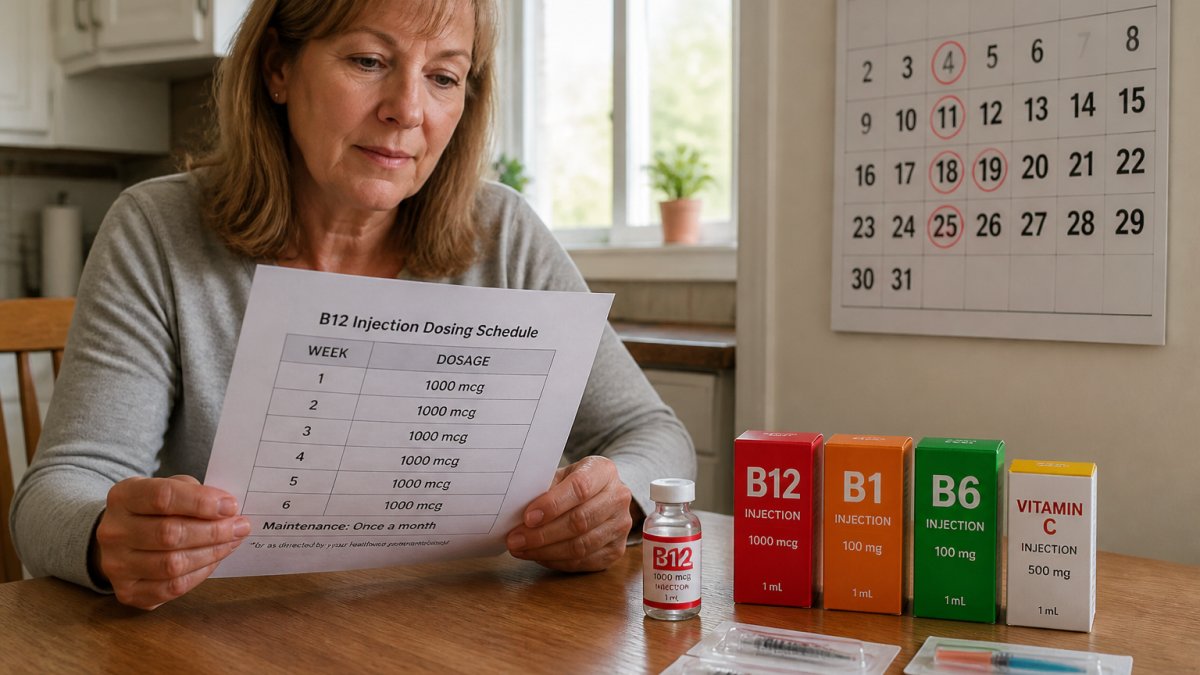
Monitoring matters as much as the dose. Clinicians commonly recheck serum B12 after the loading phase, and may also track methylmalonic acid or homocysteine if those were abnormal at baseline. Symptom response is part of the picture too: if your energy is improving and your labs are moving into range, the schedule is working.
Keep a simple log. Note the date, the dose, and how you felt in the days that followed. This record is what lets your clinician adjust frequency with evidence instead of guesswork.
How Soon Do You Feel Less Tired After a B12 Injection?
Most people who are genuinely deficient notice some improvement within a few days to a couple of weeks, though the timeline varies with the severity of the deficiency and the cause. Energy often returns before nerve symptoms do, and full correction can take longer, sometimes several weeks to a few months for nerve-related symptoms such as tingling.
A realistic way to think about it:
- First few days: some people feel a lift, others feel nothing yet. A temporary dip or flu-like feeling in the first day or two is reported by some and usually resolves on its own.
- One to two weeks: energy and concentration often begin to improve if B12 was the driver.
- Several weeks to months: red blood cell measures and nerve symptoms tend to catch up more slowly.
If nothing changes after several weeks of properly dosed injections, that is useful information. It suggests B12 was not the main driver of your tiredness, and the next step is a broader conversation with your doctor rather than more shots. Persistent fatigue has many causes, including thyroid problems, anemia from other causes, sleep disorders, and depression, and those deserve assessment rather than another injection.
Track your response in writing. Rate your energy at the same time each day on a simple scale, note sleep and activity, and record each injection date and dose. Patterns emerge fast, and you will have something concrete to show at your next appointment. Watch out: if you feel worse after every injection, or if you develop difficulty breathing, swelling of the face or throat, a racing heartbeat, or widespread hives, seek medical help promptly rather than waiting for the next scheduled dose.
B12 Shots vs Oral Supplements: Which Fits Your Case
Shots win when absorption is the problem. An intramuscular injection bypasses the digestive tract entirely, which matters for people with absorption issues or those who struggle to take pills consistently.
Oral supplements suit mild deficiencies and dietary gaps. High-dose tablets work for many people because a fraction is absorbed even without intrinsic factor.
| Situation | Better Fit | Why |
|---|---|---|
| Confirmed deficiency with absorption issues | Injection | Bypasses the digestive tract |
| Vegan or vegetarian diet gap | Oral supplement | Easy, low cost, effective for most |
| History of stomach or intestinal surgery | Injection | Absorption is unreliable |
| Symptoms plus borderline labs | Discuss with clinician | Testing first, treatment second |
Why Some People Feel Worse After a Shot and When to Get Help
Feeling worse after an injection is more common than most guides admit. Some people report flu-like symptoms, body aches, or a temporary dip in energy in the first day or two. The cause is not fully settled, but it is usually short-lived and resolves on its own.
Watch out: seek medical help promptly if you experience difficulty breathing, swelling of the face or throat, a racing heartbeat, or widespread hives. Those are signs of a reaction that needs immediate care, not a wait-and-see approach.
If you feel unwell after every injection, tell your clinician. A different dose, a different schedule, or a switch to oral supplements may suit you better.
Ordering B12 Shots and Needles for Home Use
Home injection supplies are available to buy, and a clinician can advise on the right plan for you. Needle length and gauge matter: too short and the injection does not reach muscle, too long and it is uncomfortable. Our page on B12 injection needles and syringes covers sizing so you order the right supplies the first time.
At Buy-Otc.com, we offer discounted prices on B12 shots, B1 injections, B6 injectable, vitamin C shots, and needles. Pricing depends on quantity, dates, and delivery, so check our website for current prices or a quote. Our site uses Geotrust SSL protection, and registered users receive discounts and special offers.
If you are still unsure whether your tiredness points to low B12, start with a checklist of signs that you may need vitamin B12 shots and a fuller list of B12 deficiency symptoms in adults. If you want to know how long the effects of an injection typically last before you commit to a schedule, clinical guidance on timing answers that directly.
Frequently Asked Questions
Do B12 shots really help with fatigue?
They help when tiredness comes from a confirmed B12 deficiency. In that case, replacing the vitamin restores red blood cell production and nerve function, which can ease fatigue and weakness. If your B12 level is normal, a shot is unlikely to add energy, and persistent tiredness usually has another cause such as thyroid problems, iron deficiency, sleep apnea, or depression. Get a blood test before assuming a B12 shot is the answer.
How quickly can you expect an energy boost after a B12 injection?
People with a real deficiency often notice less tiredness within a few days to two weeks, with fuller improvement over several weeks as red blood cells rebuild. Anyone with nerve symptoms such as tingling may need months of regular treatment. If nothing changes after a month of properly dosed B12 shots, that is a signal to look at other reasons for your low energy rather than increasing the dose.
Are there side effects to B12 injections for energy?
Most people tolerate B12 shots well. Common complaints are soreness at the injection site, mild headache, or nausea. A small number report feeling worse for a day or two, sometimes with flu-like symptoms or body aches, which usually settles. Serious reactions are rare. Tell your healthcare professional about any allergy history, and seek urgent care for rash, swelling, or trouble breathing.
Who is most at risk for a Vitamin B12 deficiency?
Risk runs highest in vegans and vegetarians, adults over 60 with reduced absorption, people with pernicious anemia or gut conditions like Crohn's disease, those who have had weight loss surgery, and anyone on long-term metformin or acid-reducing medication. If you fall into one of these groups and feel persistently tired, ask for a B12 blood test rather than guessing, since low B12 can also affect mood and cognitive function.
Persistent tiredness deserves a real answer, not another cup of coffee. If your labs point to low B12, Buy-Otc.com makes it simple to order B12 shots, needles, and the rest of your injectable supplies in one secure checkout, with competitive discounts and responsive support if anything goes wrong. Get started with Buy-Otc.com and keep your levels, and your energy, where they belong.