 Ultimate guide
B12 Injection Frequency for Pernicious Anemia: A Guide
Last Updated: November 10, 2026
Quick Summary
B12 injection frequency for pernicious anemia is usually a lifelong schedule that starts with more frequent loading doses and then moves to less frequent maintenance injections. The exact interval is set by your prescriber based on your blood results, symptoms, and the formulation used.
- Pernicious anemia prevents absorption of B12 from food, so replacement usually continues for life.
- Loading doses are often given on alternate days for a few weeks before maintenance begins.
- Hydroxocobalamin is retained longer in the body than cyanocobalamin, which can support less frequent dosing.
- Returning numbness, tingling, or balance problems are a reason for prompt clinical review, not self-adjusted dates.
- Never shorten or extend your injection interval on your own; confirm changes with your clinician.
Table of Contents
- Why Pernicious Anemia Requires Lifelong B12 Injections
- Loading Dose Schedules: The First Weeks of Treatment
- Maintenance B12 Injection Frequency by Country and Formulation
- Cyanocobalamin Versus Hydroxocobalamin and Oral High-Dose Options
- How Symptoms and Blood Tests Guide Your Injection Schedule
- How to Safely Inject B12 at Home and Handle Missed Doses
- B12 Injection Price and Vitamin B12 Injection Dose Guidelines
- Booking Your Supplies and Setting Up Your Home Injection Plan
- Frequently Asked Questions
Why Pernicious Anemia Requires Lifelong B12 Injections
B12 injection frequency for pernicious anemia is not a short course. It is ongoing replacement, because the body can no longer absorb enough vitamin B12 from food on its own. This guide explains how injection schedules are usually structured, what changes them, and what to ask your clinician before you start.
Pernicious anemia is an autoimmune condition in which the immune system attacks the cells that make intrinsic factor, the protein needed to absorb B12 in the gut (the NHS). Without intrinsic factor, dietary B12 passes through largely unabsorbed. Cobalamin, the form of vitamin B12 the body uses, must be replaced by another route, which is why intramuscular injections or high-dose oral therapy are the usual approaches. Because the underlying absorption problem does not resolve, most people need treatment for the rest of their lives.
NIH Office of Dietary Supplements fact sheet on vitamin B12
Loading Dose Schedules: The First Weeks of Treatment
Treatment usually begins with a loading phase, a period of more frequent injections designed to refill B12 stores quickly. Clinicians commonly give injections on alternate days for a few weeks before moving to a less frequent maintenance schedule. The exact pattern depends on how low the B12 level is and whether neurological symptoms are present.
Your prescriber sets the loading schedule, not a generic template. Do not shorten or skip loading doses on your own, even if symptoms improve quickly.
Maintenance B12 Injection Frequency by Country and Formulation
Maintenance frequency is where readers most often find conflicting numbers, and the conflict is usually about formulation and guideline source rather than error. Cyanocobalamin is a formulation often prescribed, and clinical practice commonly starts with frequent intramuscular doses and extends intervals once symptoms and blood results are stable. Hydroxocobalamin is sometimes used when a less frequent schedule is wanted, though availability and prescribing habits vary. Your prescriber can explain which approach applies to you.
The table below summarizes how the two situations are commonly framed. It is a reference for understanding why schedules differ, not a dosing instruction.
| Factor | Typical approach | Why it changes the interval |
|---|---|---|
| Formulation | Cyanocobalamin is widely used; hydroxocobalamin persists longer | Longer retention can support less frequent dosing |
| Severity at diagnosis | Severe deficiency or neurological involvement often prompts closer early monitoring | Clinicians want symptoms to resolve before extending intervals |
| Clinical response | Stable symptoms and blood results support longer intervals | Returning symptoms usually shorten the interval again |
| Guideline source | Recommendations differ between professional bodies and clinics | Local practice and prescriber judgment shape the final plan |
Because practice differs between clinics, confirm any interval against your own prescription. Do not extend the interval yourself because a schedule you read online lists a longer gap, since the interval your clinician sets is tied to your own labs and symptoms.
Cyanocobalamin Versus Hydroxocobalamin and Oral High-Dose Options
Cyanocobalamin and hydroxocobalamin are both injectable forms of B12. Hydroxocobalamin is retained in the body for longer, which is one reason it is sometimes preferred for less frequent dosing. Cyanocobalamin is a commonly used form.
High-dose oral B12 is an alternative for some people. Large oral doses can be absorbed through a small amount of passive diffusion even without intrinsic factor. Whether oral therapy is suitable depends on your clinician's assessment, so it should be discussed rather than chosen independently.
How Symptoms and Blood Tests Guide Your Injection Schedule
A single serum B12 result is a weak guide on its own during treatment. Serum levels can rise after an injection and tell you little about tissue stores, so clinicians usually read the blood result alongside symptoms and blood counts. Hemoglobin and mean corpuscular volume show whether the anemia is responding, and the symptom picture often matters more than the number for deciding whether to change the schedule.
Neurological symptoms deserve particular attention. Numbness, tingling in the feet or hands, unsteady balance, and memory or concentration changes can improve slowly after treatment starts, and they can return if the interval stretches too far. When any of these reappear, the right response is a prompt clinical review, not a self-adjusted injection date. Fatigue and mood changes are also worth recording, but they are less specific, so they are best interpreted with the blood results.
Keep a simple log between injections that records the injection date, energy level, any tingling or balance problems, and mood. Bring it to each follow-up visit. This gives your clinician a pattern to work from rather than a memory of the last two weeks, and it makes it easier to decide whether the current interval is working or needs to shorten.
How to Safely Inject B12 at Home and Handle Missed Doses
Home injection is possible for many people, but only after clinical training and a clear plan from your prescriber. Our step-by-step guide to rotating injection sites explains how to vary sites from one dose to the next. Use a new sterile syringe and needle for every dose, rotate sites as instructed, and dispose of sharps in a puncture-resistant container.
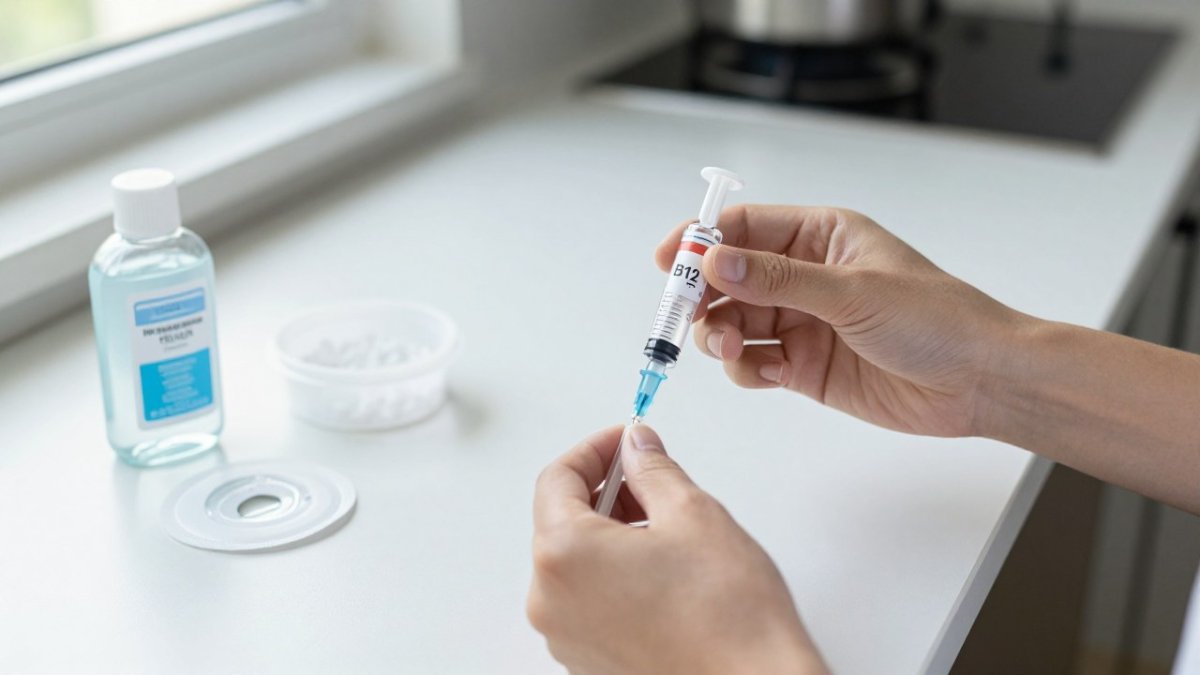
If a dose is missed or delayed, contact your clinician rather than doubling up on the next injection. Ask in advance what your plan is for travel, illness, or supply shortages.
CDC guidance on safe injection practices and sharps disposal
B12 Injection Price and Vitamin B12 Injection Dose Guidelines
Prices for B12 injections depend on the product, the quantity, and the delivery details. Check current pricing on the Buy-Otc.com website or request a quote for your order.
Standard dose guidelines are set by your prescriber. Do not rely on a dose published in an article for your own treatment.
Booking Your Supplies and Setting Up Your Home Injection Plan
Before you order, confirm your prescription, dose, and injection schedule with your clinician. Then gather the items you need: syringes, needles, B12 vials, alcohol swabs, and a sharps container. Buy-Otc.com lists B12 shots and needles, so you can review those supplies for your plan on its website.
Set reminders for each injection date, keep a supply buffer, and review your plan at every follow-up appointment. Once you have your supplies, learn how to properly dispose of needles at home safely. Ongoing treatment works best when the schedule is written down and shared with the clinician who manages it.
Get your B12 supplies at Buy-Otc.com, with discounted prices on injectables and needles.
Frequently Asked Questions
How often should I take B12 shots for pernicious anemia?
Most people with pernicious anemia start with a loading phase followed by maintenance injections. The exact schedule depends on your symptoms, blood counts, serum B12 results and your clinician's judgment. Frequency is individualized, so never change your schedule without discussing it with your prescriber. Keep a dated record of each injection and any symptom changes to bring to follow-up visits.
Is a B12 injection every 3 months enough?
For some people with pernicious anemia, an injection every two to three months maintains adequate levels, but many others need more frequent doses to keep symptoms such as fatigue, numbness or tingling under control. Whether every three months is enough is a question for your clinician, who will weigh your symptom response and follow-up testing. If symptoms return between injections, that is a signal to discuss a shorter interval rather than waiting for the next scheduled dose.
Why do I need several B12 injections in the first two weeks?
The loading dose rapidly refills the body's B12 stores, which are depleted in pernicious anemia because the stomach cannot produce intrinsic factor needed to absorb B12 from food. Frequent early injections help replete tissues, including nerves, and support blood cell production. Once stores are replenished, the schedule is stretched out to maintenance. Skipping the loading phase can delay symptom recovery, so follow the schedule your clinician prescribes.
What happens if I miss a scheduled B12 injection?
A single missed or delayed injection is usually not an emergency, but it should be rescheduled as soon as practical and reported to your clinician, especially if fatigue, numbness, tingling or confusion reappear. Do not double the next dose to catch up unless your prescriber advises it. Keeping reminders on your phone and tracking dates in a log helps prevent gaps in treatment.