
 how-to
How to Properly Dispose of Needles at Home Safely
Table of Contents
- Why Proper Needle Disposal Matters
- Step-by-Step: How to Properly Dispose of Needles
- Choosing an FDA-Cleared Sharps Container
- What to Do With Used Syringes When You Don't Have a Container
- Finding Sharps Disposal Near Me: Drop-Off Sites and Mail-Back Programs
- State Rules, Labeling, and Prohibited Disposal Methods
- Travel, Pets, and Emergency Disposal: What Most Guides Miss
- Conclusion
- Frequently Asked Questions
Last Updated: September 14, 2026
Why Proper Needle Disposal Matters
Learning how to properly dispose of needles protects everyone who handles your household waste, from family members to sanitation workers. A loose needle in a trash bag can cause a needle stick injury long after you've forgotten it was there. This guide from Buy-Otc.com walks you through safe handling, container choices, and legal disposal options across the country.
The risk isn't theoretical. Home-generated medical waste now includes millions of syringes, lancets, and autoinjectors used for diabetes care, hormone therapy, and vitamin injections like B12. Many people toss them in household waste without a second thought. That single decision creates a hazard that can injure a sanitation worker or a family member.
The good news: proper disposal takes about two minutes once you have the right setup. Below, we'll show you exactly how to do it, where to take full containers, and what the rules say in your area.
Step-by-Step: How to Properly Dispose of Needles
Safe disposal follows three simple phases: gather supplies, contain the needle immediately after use, and seal the container when full. Skipping any step is where most accidents happen.
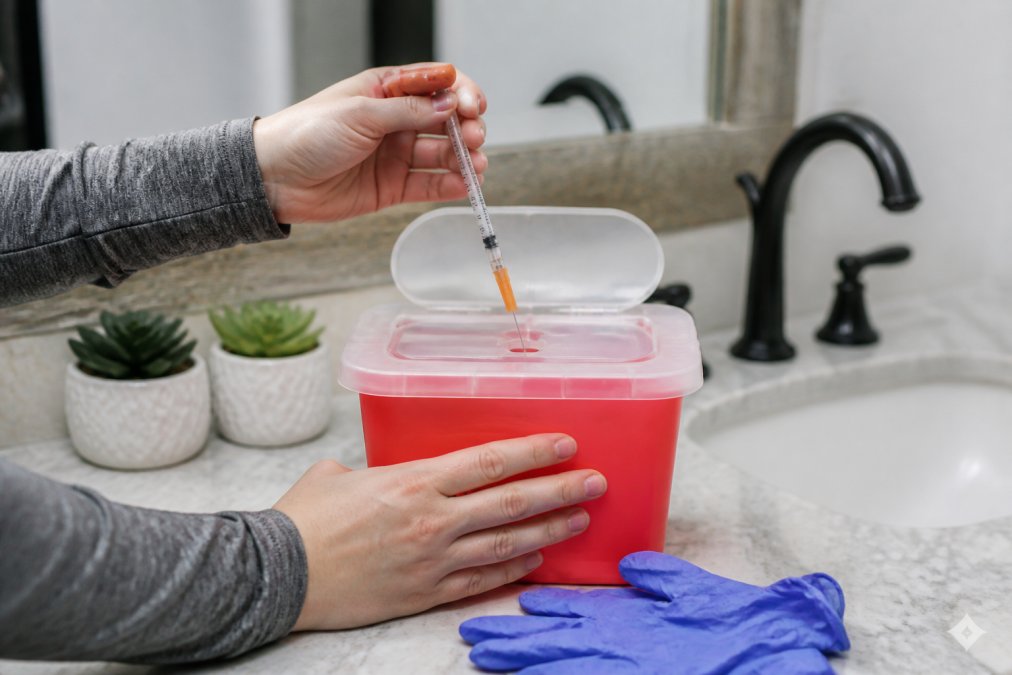
Step 1: Gather Your Supplies
Before your first injection, set up a dedicated disposal station. You'll need an FDA-cleared sharps container, or an approved rigid plastic container as a backup, plus a flat surface out of reach of children and pets.
- A puncture-resistant, leak-proof container with a sealable lid
- A stable surface, not a bathroom counter edge
- Gloves if you're handling someone else's needles
- A permanent marker for labeling
Step 2: Handle and Contain Used Needles
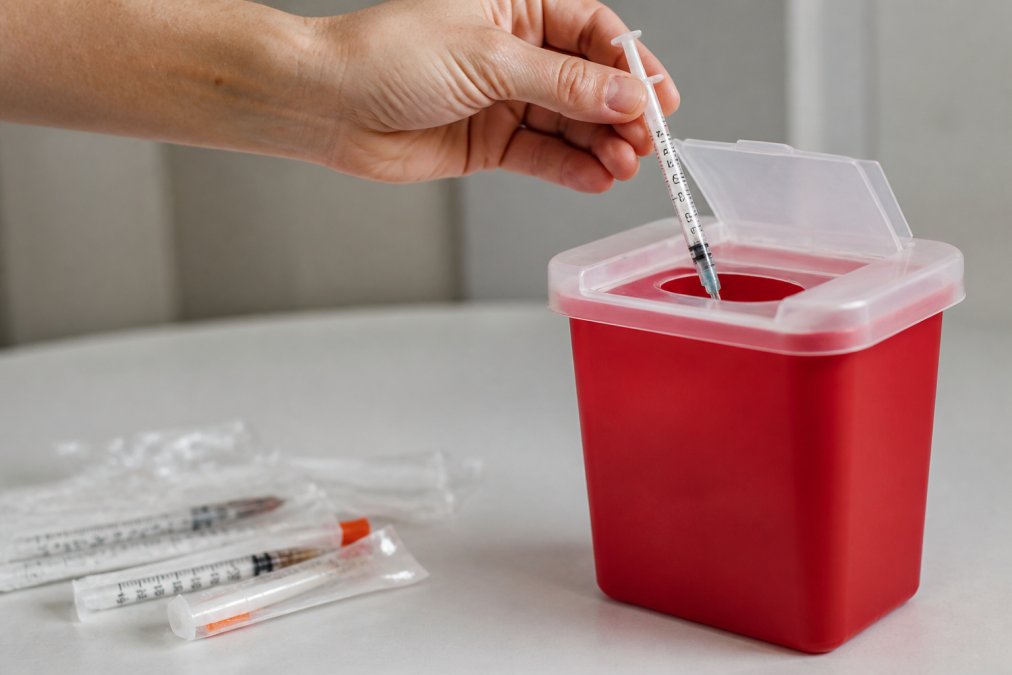
Never recap, bend, or break a needle before disposal. Most needlestick injuries happen during recapping. Drop the used needle directly into the container opening, point-first, immediately after use.
If you're using a needle clipper for insulin syringes, clip only the needle portion and store it in the device until you can transfer it to a sharps container.
Step 3: Seal and Store Until Disposal
When the container reaches the fill line, stop using it. Close the lid permanently, seal it with heavy-duty tape if the lid isn't locking, and label it clearly as sharps or biohazardous waste.
Store full containers in a secure spot away from children, pets, and food until you can drop them off or mail them.
Choosing an FDA-Cleared Sharps Container
The best container is an FDA-cleared sharps disposal container, available from pharmacies, medical supply stores, and online retailers. These containers are puncture-resistant, leak-proof, and designed with a restricted opening that prevents contents from spilling.
If you don't have a commercial container, a heavy-duty plastic household container works as a substitute when it meets specific criteria:
| Feature | Requirement | Why It Matters |
|---|---|---|
| Material | Rigid, puncture-resistant plastic | Prevents needles from piercing through |
| Lid | Tight, sealable, secure | Blocks spills and access |
| Opening | Small, restricted | Keeps contents from tipping out |
| Labeling | Clearly marked "Sharps" | Alerts anyone handling the waste |
A laundry detergent jug or a sturdy plastic bottle can work in a pinch, but only if it's rigid enough that a needle can't pierce the side. Never use glass, thin plastic, or a container meant for food.
What to Do With Used Syringes When You Don't Have a Container
This is the scenario most guides skip: you are away from home, or your container is full, or you find a stray needle, and you have nothing approved to put it in. The goal is the same in every case, get the needle into something rigid, puncture-resistant, and closable as fast as possible, then transfer it to a proper container later.
Ranked temporary options (best to last resort)
- A commercial travel sharps container. Small, hard-sided, locking-lid containers are sold at pharmacies and online. This is the only option designed for the job. Keep one in a bag, glovebox, or desk drawer if you inject outside the home.
- A needle clipper. For insulin syringes and other detachable-needle devices, a clipper severs the needle and stores it inside the device. The clipped syringe body is no longer a sharps hazard and can be discarded, but the clipper itself must eventually go to a sharps container.
- A heavy plastic bottle with a screw-on cap. A laundry detergent jug or a thick-walled plastic bottle works as a temporary shell. Cap it, tape the cap shut, and label it. This is a stopgap, not a permanent solution.
- A rigid, hard-sided box with a locking lid. A small hard plastic storage box can hold a needle until you reach a container, provided the needle cannot pierce the walls.
What never to use
- Tissue, napkins, or paper towels. These do nothing to stop a needle. Wrapping a needle in tissue and dropping it in a public trash bin is one of the most common causes of needlestick injuries to custodial and sanitation workers.
- Plastic bags. A needle passes through a bag with almost no resistance.
- Glass jars and cardboard boxes. Glass shatters and cardboard is easily pierced.
- Beverage cans or food containers. These are not rigid enough and create a contamination risk.
If you are away from home
Carry a small travel sharps container or a needle clipper in your bag. If you are caught without either, place the needle point-first into the sturdiest closable container you can find, a hard plastic bottle is the usual answer, cap it, and carry it with you until you can transfer it to a proper container. Do not leave it in a public restroom or a hotel trash can. If you are flying, keep injectables in their original packaging with the prescription label, and check current TSA rules on medical supplies before you travel.
If you find a stray needle
Never pick up a stray needle with your bare hands. Use tongs, a scoop, or a thick folded barrier, and place the needle point-first into a rigid container. Wash your hands thoroughly afterward. If the needle is in a public space and you cannot safely contain it, contact the property owner or your local health department rather than improvising.
Finding Sharps Disposal Near Me: Drop-Off Sites and Mail-Back Programs
Searching "sharps disposal near me" usually returns a mix of pharmacy drop-off sites, local collection programs, and mail-back services. The right option depends on your state and how much waste you generate.
Drop-off sites are often the easiest route. Many pharmacies, hospitals, and public health departments accept sealed sharps containers through community collection programs. Call ahead to confirm they accept home-generated medical waste.
Mail-back programs let you ship full containers using prepaid, approved packaging. These work well for people in rural areas or anyone who prefers not to leave home. Sharps mail-back programs typically include the container, a shipping box, and postage.
Municipal collection varies widely. Some waste management departments host periodic household hazardous waste days where sharps are accepted. Check your local waste management website for dates and requirements.
State Rules, Labeling, and Prohibited Disposal Methods
Disposal rules are set at the state level, and they generally fall into one of two regulatory models. Knowing which model your state follows tells you whether a sealed container can legally go in the trash or whether you must use a collection site or mail-back service.
Model 1: Trash-permitted with conditions. Many states allow home-generated sharps in household trash, but only if the container is rigid, puncture-resistant, leak-proof, sealed, and clearly labeled. The container must be closed before it leaves the home, and loose needles are never permitted. In these states, the sealed container goes in the regular trash, not recycling.
Model 2: Trash-prohibited. A smaller but growing group of states and municipalities ban sharps from household trash entirely. Residents must use an approved drop-off site, a mail-back program, or a household hazardous waste collection event. In these jurisdictions, a labeled container in the trash is still a violation.
Because the list changes and varies by county as well as state, the fastest reliable check is your state health department's medical waste page or your county waste management authority. A quick call to your local health department will confirm which model applies where you live.
Labeling requirements
Labeling is the one rule that is nearly universal. Mark the container clearly with the word "Sharps" or "Biohazard" in a way that is visible without opening it. A permanent marker on a rigid plastic container is sufficient in most jurisdictions. Some states and many collection sites also require the container to be sealed with heavy-duty tape before it is accepted, tape the lid shut even if it locks, because taped lids are the standard most drop-off sites expect.
Prohibited methods
These prohibitions apply almost everywhere, regardless of which model your state follows:
- Never flush needles. They clog plumbing, pass through treatment systems, and can wash up on beaches and riverbanks.
- Never place loose sharps in household trash. A loose needle is the single most common cause of sanitation-worker needlestick injuries.
- Never place sharps in recycling. Sorting facilities are not equipped for biohazardous waste, and a needle on a conveyor belt can injure a worker before it is ever seen.
- Never use glass, cardboard, or thin plastic. These fail under the force of a needle and are not accepted by any program.
Where to verify your state's rules
The EPA guidance on managing household medical waste explains how home-generated medical waste should be handled, and the FDA's recommendations for sharps disposal containers cover container standards. For state-specific rules, the CDC's sharps disposal information is a solid starting point, and your state health department's website is the authoritative source for whether trash disposal is permitted where you live.
Travel, Pets, and Emergency Disposal: What Most Guides Miss
Most disposal guides stop at the home container. But real life throws curveballs: a vacation, a diabetic pet, a dropped needle in a parking lot.
Travel disposal. Pack a small, hard-sided travel container with a locking lid. Never carry loose needles in a purse or carry-on. If you're flying, check the TSA rules on medical supplies before you go, and keep injectables in their original packaging with a prescription label.
Pet-related sharps. If you give insulin or other injections to a pet, the same rules apply. Keep a dedicated sharps container near your pet's supplies, and never toss a used pet needle in the kitchen trash. Pet sharps are a frequently overlooked source of household injuries.
Emergency disposal. If a needle breaks or you find a stray one, use tongs or a scoop, never your bare hands. Place it in a rigid container immediately, and wash your hands afterward. If you're stuck without any container, a sealed hard plastic bottle is the safest temporary option until you can transfer the needle.
Conclusion
Proper needle disposal comes down to three habits: contain immediately, seal completely, and dispose through an approved channel. Get those right and you eliminate the risk of a needlestick injury in your home or in the hands of a sanitation worker.
Buy-Otc.com supplies B12 shots, B1 and B6 injectables, vitamin C shots, and the needles you need to administer them, all backed by Geotrust SSL protection and 5-star customer service. Registered users get access to ongoing discounts and special offers, and if an order arrives damaged, our team works to resolve it quickly.
Get started with Buy-Otc.com and set up a safe, reliable injection routine today.
Frequently Asked Questions
How do I safely dispose of used needles at home?
Place used needles immediately into an FDA-cleared sharps container or a sturdy, puncture-resistant plastic container with a sealable lid. Do not recap, bend, or break needles. When the container is three-quarters full, seal it with duct tape and take it to a drop-off site, mail it back through a sharps mail-back program, or follow your state's household waste guidelines. Never put loose needles in the trash or flush them down the toilet.
What is an FDA-cleared sharps container and why does it matter?
An FDA-cleared sharps container is a puncture-resistant, leak-proof container designed specifically for used needles, lancets, and syringes. These containers have a tight-fitting lid and are labeled with a biohazard symbol. Using one reduces the risk of needle stick injuries to sanitation workers and anyone handling household waste. If you cannot find an FDA-cleared container, a heavy-duty plastic container like a detergent bottle with a screw-on lid can work as a temporary alternative.
Can I put used needles in the regular trash?
In most states, putting loose needles in household trash is prohibited. Even when your state allows disposal in household waste, needles must be inside a sealed, puncture-resistant container labeled as biohazardous waste. Loose needles can injure sanitation workers and spread infectious waste. Check your state health department's rules, because disposal regulations vary. When in doubt, use a drop-off site or mail-back program to dispose of needles safely.
Where can I find sharps disposal near me?
Search for sharps disposal near me using your state health department's website, which lists collection sites, pharmacies, hospitals, and police stations that accept home-generated medical waste. Many communities also offer sharps mail-back programs through pharmacies or online suppliers. If you cannot locate a drop-off site, contact your local waste management authority for disposal guidance specific to your area.