 how-to
What's the Best Needle Gauge for Painless Subcutaneous Injections?
Last Updated: October 27, 2026
Quick Summary
The best needle gauge for painless subcutaneous injections is usually a 30 or 31 gauge needle, because a higher gauge number means a thinner needle. Thin needles cut through skin with less resistance, and less resistance generally means less discomfort. Match the needle gauge and length to your subcutaneous tissue depth and your medication's thickness.
- A higher gauge number means a thinner needle, so a 31 gauge is finer than a 25 gauge.
- A 25 gauge needle at 5/8 inch suits adults with thicker subcutaneous tissue.
- For B12 injections, a 25 to 27 gauge needle at 5/8 inch is a common pairing for adults.
- Never shorten a needle by pushing it in partway; depth control comes from the needle.
- Reusing a needle bends and blunts the tip, which is a real source of discomfort.
Table of Contents
- What Needle Gauge Means and Why It Decides Comfort
- Subcutaneous Injection Needle Gauge and Length: What to Match
- Is a 25 Gauge Needle for Subcutaneous Injection the Right Pick?
- How Needle Thickness and Tip Sharpness Affect Pain
- Needle Size for B12 Injection: What Fits a Vitamin Shot
- Subcutaneous vs Intradermal vs Intramuscular: Depth Changes the Needle
- How to Give a Subcutaneous Injection Comfortably
- Ordering the Right Needles for Your B12 Shots
- Frequently Asked Questions
What Needle Gauge Means and Why It Decides Comfort
The best needle gauge for painless subcutaneous injections is usually a 30 or 31 gauge needle, because a higher gauge number means a thinner needle. Thin needles cut through skin with less resistance, and less resistance generally means less discomfort.
Reading the Gauge Number
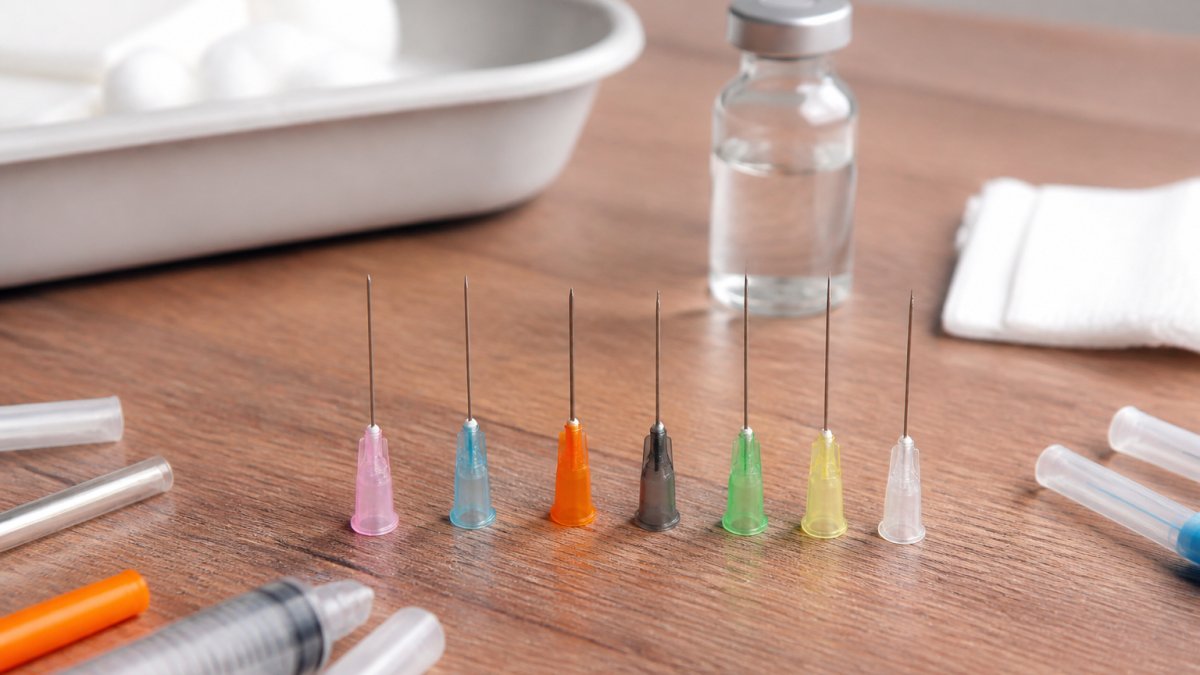
The gauge number works backwards from what most people expect. A higher gauge number means a thinner needle, and a lower number means a thicker one.
That single fact explains most of the confusion around needle shopping. Bigger numbers do not mean bigger needles. They mean smaller ones.
Gauge is only half the story. Length and injection depth matter just as much, and we cover both below.
Subcutaneous Injection Needle Gauge and Length: What to Match
For a subcutaneous injection, the needle gauge and length need to match each other. A thin needle that is too long can reach muscle instead of fat, and a short needle that is too thick can sting on the way in.
| Gauge | Typical Length | What It Suits | Comfort Level |
|---|---|---|---|
| 25 G | 5/8 inch | Adults with thicker subcutaneous tissue | Moderate |
| 27 G | 1/2 inch | Most adults, general use | Good |
| 30 G | 5/16 inch | Adults with thinner tissue, sensitive skin | Very good |
| 31 G | 5/16 inch | Very thin needles for low-volume doses | Very good |
Three rules cover most cases:
- Match needle length to the subcutaneous tissue depth at your injection site.
- Match gauge to your comfort level and the thickness of the medication.
- Never shorten a needle by pushing it in partway. Depth control comes from the needle, not your hand.
Thicker medications flow slowly through a very thin needle. If a 31 gauge feels hard to push, a 27 or 30 gauge is the practical compromise.
Is a 25 Gauge Needle for Subcutaneous Injection the Right Pick?
A 25 gauge needle for subcutaneous injection is a solid middle choice. It is thick enough for most medications to flow smoothly and thin enough that many adults barely notice it.
Here is where the 25 gauge wins and loses:
- Wins: faster flow for thicker liquids, less bending, easier handling for shaky hands.
- Loses: more insertion sensation than a 30 or 31 gauge, especially on thin skin.
- Best for: adults with more subcutaneous tissue at the site, or anyone injecting a larger volume.
People with sensitive skin often do better with a 30 or 31 gauge. If you have been using a 25 gauge and it stings, moving up a gauge number is the first thing to try.
How Needle Thickness and Tip Sharpness Affect Pain
Needle thickness and tip sharpness are the two biggest drivers of injection pain. A thinner needle makes a smaller opening in the skin. A sharper tip glides through tissue instead of tearing it. Both reduce the signal your nerve endings send back.
In practice, this means:
- Thinner needles usually hurt less on insertion, which is why 30 and 31 gauge needles are common for subcutaneous use.
- A dull tip hurts more, even on a thin needle. Needles are meant for one use only.
- Reusing a needle bends and blunts the tip. That is a common mistake and a real source of discomfort.
Pain is not only about the needle. Technique, site choice, and medication temperature all play a part, and we walk through each one below.
Needle Size for B12 Injection: What Fits a Vitamin Shot
For a B12 injection, a 25 to 27 gauge needle at 5/8 inch is a common pairing for adults injecting into the abdomen or thigh. Vitamin B12 shots are small in volume, so many people do well with a thinner 30 gauge needle too. The right needle size for B12 injection depends on where you inject, how much tissue you have at that site, and, most importantly, what your prescription and device instructions specify.
A few practical notes:
- B12 is a small-volume dose, so flow is rarely a problem even with a thin needle.
- Thinner tissue at the site calls for a shorter needle, not just a thinner one.
- Always follow the needle size your clinician or the medication's instructions specify.
Why Gauge Alone Is Not Enough for B12
B12 is not a single, uniform product. It comes as cyanocobalamin or hydroxocobalamin, in different concentrations, and in vials drawn up with a separate syringe or in prefilled devices. Each format has its own compatibility requirements:
- Vial-and-syringe setups require a needle that fits the syringe hub (most commonly a Luer lock or Luer slip connection). A needle that does not seat properly can leak or detach.
- Prefilled pens and auto-injectors use manufacturer-specific pen needles. You cannot substitute a standard syringe needle, and the pen's dial mechanism is calibrated for a particular needle length and gauge.
- Concentration affects volume. A more concentrated B12 solution means a smaller volume to inject, which may allow a finer gauge. A larger volume may flow better through a 25 or 27 gauge.
A common pattern is for clinicians to specify both the gauge and the length on the prescription, and for the pharmacy label to repeat them. If the label and the box disagree, call the prescriber or pharmacist before injecting.
Device and Medication Compatibility Checklist
Before you order B12 needles, confirm:
- The needle hub matches your syringe type (Luer lock vs. Luer slip vs. pen).
- The gauge and length match the prescription label, not just a general recommendation.
- The needle is labeled for subcutaneous use, not intramuscular.
When to Ask a Clinician About Your B12 Needle
Reach out to your prescriber or pharmacist if:
- The needle on your prescription is unavailable and you need a substitute.
- You have difficulty gripping the syringe or seeing the markings (dexterity or vision changes).
- You feel a sharp sting or notice bruising at every injection despite good technique.
Most practitioners find that the "best" B12 needle is the one that matches the prescribed device, the medication volume, and the person's tissue depth, not simply the highest gauge number available.
Subcutaneous vs Intradermal vs Intramuscular: Depth Changes the Needle
The three main injection types differ by depth, and each one needs a different needle. Subcutaneous goes into the fat layer just under the skin. Intradermal goes into the top layer of skin. Intramuscular goes deeper, into the muscle.
| Injection Type | Depth | Typical Gauge | Typical Length |
|---|---|---|---|
| Intradermal | Top layer of skin | 26-27 G | 3/8-1/2 inch |
| Subcutaneous | Fat layer under skin | 25-31 G | 5/16-5/8 inch |
| Intramuscular | Muscle tissue | 22-25 G | 1-1.5 inch |
Intradermal injections use a very fine needle and a shallow angle. Intramuscular injections need a longer, thicker needle to reach muscle. Subcutaneous sits in between, which is why the subcutaneous injection needle gauge and length pairing matters so much.
If you are ever unsure which type your medication needs, ask your clinician before you order needles.
How to Give a Subcutaneous Injection Comfortably
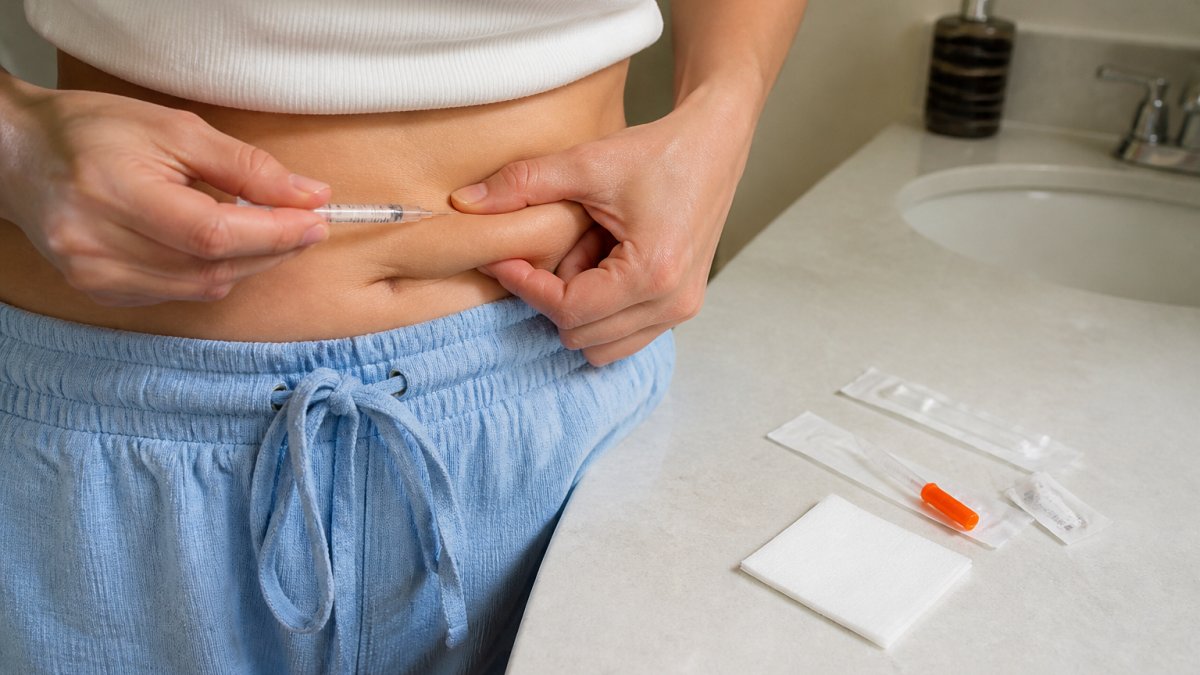
Comfortable subcutaneous injections come down to a consistent routine: prepare, clean, pinch, insert, inject slowly, and dispose safely. The technique matters as much as the needle, and the steps below reflect general, clinician-approved practice.
- Wash your hands with soap and warm water, then dry them fully.
- Prepare your supplies on a clean surface: needle, syringe or pen, alcohol swab, and sharps container.
- Check the medication, confirm the name, dose, and expiration date against your prescription label.
- Clean the site with an alcohol swab and let it dry completely before injecting. Injecting into wet alcohol can sting.
- Pinch the skin gently to lift the fat layer away from muscle. For very thin tissue, a 45-degree angle may be appropriate; for most adults, 90 degrees is common.
- Insert smoothly without jabbing. A steady, deliberate motion is usually less uncomfortable than a hesitant one.
- Push the plunger slowly. Speed is a common cause of stinging.
- Withdraw and dispose of the needle directly into a sharps container without recapping.
For a full walkthrough, see our guide on how to self-administer B12 injections safely.
Choosing and Rotating the Injection Site
Common sites include the abdomen (at least two inches from the navel), the front of the thigh, and the upper outer arm. Pick a site with a layer of fat you can pinch.
Rotate sites every time. Injecting the same spot repeatedly causes hard lumps (lipohypertrophy) and soreness, and can change how the medication is absorbed. Our guide on how to properly rotate injection sites for comfort shows a rotation pattern you can follow.
Avoid:
- Scars, moles, and bruised skin
- Areas that are tender to the touch
- The same spot two injections in a row
Sharps Disposal and Aftercare
After the injection, press gently with a clean swab. Do not rub the site. Rubbing spreads the medication and increases soreness.
Place used needles and syringes directly into a sharps container, a rigid, puncture-resistant container with a secure lid. If you do not have a commercial sharps container, a heavy-duty plastic container with a screw-on lid can be used temporarily, but check your local disposal rules.
Individual Circumstances That Affect Technique
Comfort and safety are not only about gauge. The following factors may warrant professional guidance:
- Dexterity or vision changes may make a pen device or a larger-gauge needle easier to handle safely.
- Needle anxiety can be reduced with a finer gauge, a shorter needle, and a consistent routine, but it is worth discussing with your clinician.
- Body composition affects tissue depth; very thin or very muscular sites may need a shorter needle or a different angle.
Ordering the Right Needles for Your B12 Shots
Getting the needle right is the difference between dreading your injection and barely thinking about it. Higher gauge numbers mean thinner needles, and for most people a 30 or 31 gauge needle at the right length is the most comfortable choice for subcutaneous use.
A quick checklist before you order:
- Confirm the gauge and length your medication calls for
- Match needle length to your injection site
- Buy enough needles for one use each, with no reuse
At Buy-Otc.com, we offer B12 shots, B1 injections, B6 injectables, vitamin C shots, and needles. The site has Geotrust SSL protection, and damaged items can be resolved. Registered users also get access to discounts and special offers.
If you want the full needle reference before you buy, our needle size and syringe guide covers gauge, length, and IM versus SQ in one place. When you are ready, you can order B12 shots and needles online and have what you need for your next injection.
Frequently Asked Questions
Is 25 gauge ok for subcutaneous?
Yes, a 25 gauge needle works for subcutaneous injections, especially with slightly thicker medications. It sits in the middle of the comfort range: thinner than a 22 gauge but sturdier than a 30 or 31 gauge. For thin medications like B12, many people prefer a 27 to 30 gauge instead. The right needle gauge depends on your medication's thickness and your clinician's instructions, so confirm the size before ordering.
Does a higher gauge needle hurt less?
A higher gauge means a thinner needle, and thinner needles usually cause less discomfort going in. A 30 or 31 gauge is thinner than a 25 gauge, so it often feels like less of a pinch. That said, very thin needles can bend with thicker medications or shaky hands. Comfort also depends on technique, needle sharpness and injection depth, so gauge is one factor, not the whole story.
What needle length is typically used for subcutaneous injections?
Most subcutaneous injections use a needle length of 4 mm to 8 mm, or about 5/16 to 5/16 inch depending on the syringe type. Shorter needles reach the fatty layer under the skin without hitting muscle, which is the goal for subcutaneous use. Longer needles are reserved for intramuscular injections. Your clinician will confirm the length that matches your body type and injection site.
Can a needle be too small for a subcutaneous injection?
Yes. A very thin needle, such as a 31 gauge, can bend or clog when used with a thicker medication, and it may not deliver the full dose. If the plunger feels hard to push, the needle is likely too small for that medication. Match the gauge to the medication's thickness and follow your clinician's recommendation rather than choosing the thinnest needle available.
The needle you choose shapes how every injection feels, so it is worth getting the gauge and length right the first time. Buy-Otc.com carries injectable vitamins and matching needles at discounted prices, with Geotrust SSL protection at checkout and a support team that fixes damaged orders quickly. Get started with Buy-Otc.com and shop with confidence.