 how-to
Can You Boost B12 Absorption Naturally?
Last Updated: October 29, 2026
Quick Summary
Natural ways to boost B12 absorption focus on supporting the steps that still work, since no food or fermented product can restore intrinsic factor or repair a damaged ileum. Spreading B12 foods across the day, choosing fortified foods daily if you eat plant-based, limiting alcohol, reviewing medications with a clinician, and taking supplements consistently have reasonable to strong support.
- B12 absorption requires stomach acid, binding proteins, intrinsic factor, and a healthy terminal ileum working in order.
- Pernicious anemia stops intrinsic factor production, making food-bound B12 absorption effectively zero.
- Vinegar, bitters, and fermented foods have no reliable clinical evidence for correcting absorption disorders.
- Oral tablets need intrinsic factor, while injections skip digestion entirely for severe malabsorption.
- Vegans, adults over 60, and people on metformin or long-term acid reducers should get tested.
Table of Contents
- How B12 Absorption Actually Works
- Foods High in Vitamin B12 for Better Absorption
- What Blocks Vitamin B12 Absorption
- B12 Supplements and Absorption: Oral, Sublingual, and Injections
- Vitamin B12 Deficiency Symptoms and Who Should Get Tested
- 7 Natural Ways to Support B12 Absorption
- Ordering B12 Injections and Supplies With Confidence
- Frequently Asked Questions
How B12 Absorption Actually Works
Natural ways to boost B12 absorption start with understanding one fact: your body cannot absorb vitamin B12 from food without a chain of steps working in order.
Vitamin B12, also called cobalamin, is a water-soluble vitamin your body needs for red blood cells, nerve function, and energy metabolism. Your body cannot make it. You must get it from food or supplements, and you must absorb it properly. The National Institutes of Health Office of Dietary Supplements fact sheet on vitamin B12 explains this process in detail.
Stomach Acid, Intrinsic Factor, and the Small Intestine
The absorption process runs in four stages, and each one has a specific requirement:
- Stomach acid and pepsin separate B12 from the proteins in food. B12 in food is bound to protein; without enough acid, that bond stays intact and the vitamin passes through unabsorbed.
- Salivary and gastric binding proteins (haptocorrin) carry the free B12 through the stomach so acid does not destroy it.
- Intrinsic factor, a glycoprotein your stomach lining (parietal cells) makes, binds to the free B12 in the small intestine. This is the critical handoff: without intrinsic factor, B12 cannot be recognized by the receptors in the ileum.
- The intrinsic factor-B12 complex travels to the terminal ileum, the last section of the small intestine, where specialized receptors (cubilin and amnionless) absorb it into the blood.
Break any link and absorption drops. Low stomach acid, a lack of intrinsic factor, or damage to the small intestine all cause problems.
Matching Each Step to a Common Cause
- Step 1 failure (low stomach acid): Age-related decline in acid production, long-term use of proton-pump inhibitors or H2 blockers, and atrophic gastritis all reduce the acid needed to free B12 from food. This is why many older adults absorb less from the same meal.
- Step 2 failure (binding protein issues): Less commonly discussed, but gastric surgery and some pancreatic conditions can disrupt the binding proteins that protect B12 in transit.
- Step 3 failure (no intrinsic factor): Pernicious anemia is an autoimmune condition in which the body attacks parietal cells or intrinsic factor itself. Without intrinsic factor, food-bound B12 absorption is effectively zero, no matter how much you eat.
- Step 4 failure (ileum damage): Crohn's disease, celiac disease, and surgical removal of the terminal ileum damage the absorption site. Bariatric surgery that bypasses the ileum has the same effect.
Why This Matters for 'Natural' Strategies
Here is the honest limitation that most articles skip: no food, vinegar, fermented product, or bitters can restore intrinsic factor or repair a damaged ileum. Those steps are medical, not dietary. What natural strategies can do is support the steps that are still working, mainly by keeping stomach acid and the small intestine as healthy as possible and by delivering B12 in forms and amounts the body can use. The next sections separate what the evidence supports from what it does not.
Foods High in Vitamin B12 for Better Absorption
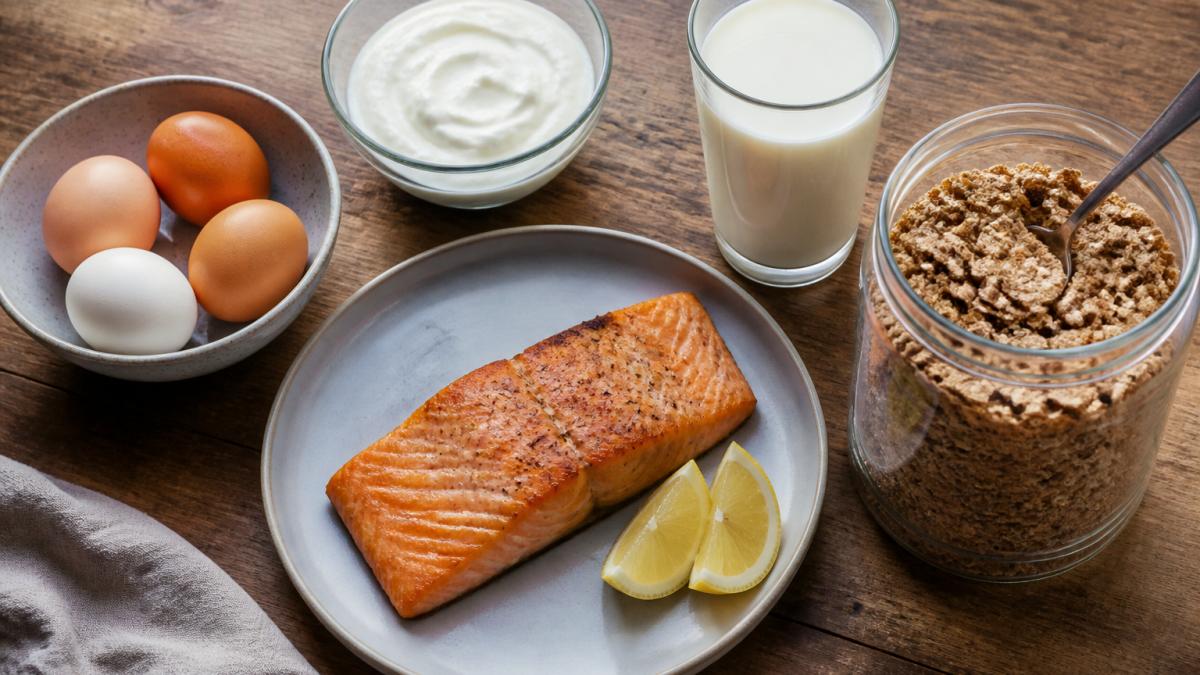
The best food sources of B12 are animal foods, and the serving size matters more than most people think. A small splash of milk in coffee will not move your levels. You need consistent, meaningful servings.
Animal Foods, Fortified Options, and Serving Realities
- Fish and shellfish: salmon, tuna, trout, clams, sardines
- Meat and poultry: beef, liver, chicken
- Dairy: milk, yogurt, cheese
- Eggs: especially the yolk
- Fortified foods: breakfast cereal, nutritional yeast, fortified plant milk
Check food labels and serving size, because fortification levels vary widely. For a deeper list, see our guide to foods high in vitamin B12 for energy.
What Blocks Vitamin B12 Absorption
- Low stomach acid from age or acid-reducing medication
- Pernicious anemia, an autoimmune condition that stops intrinsic factor production
- Gastrointestinal conditions such as Crohn's disease or celiac disease
- Gastric surgery that removes part of the stomach
- Heavy alcohol use, which irritates the stomach lining and strains the liver
- Metformin and long-term acid blockers, which many people take daily
B12 Supplements and Absorption: Oral, Sublingual, and Injections
| Method | How It Works | Best For |
|---|---|---|
| Oral tablets | Dissolve in the stomach, need intrinsic factor | Mild shortfalls, everyday support |
| Sublingual | Dissolve under the tongue, partly bypasses digestion | People with mild absorption issues |
| Injections | Delivered into muscle, skips digestion entirely | Pernicious anemia, surgery, severe malabsorption |
If you are weighing the two, our B12 shots vs oral supplements absorption comparison breaks down the difference side by side.
Ask a clinician what fits your situation.
Vitamin B12 Deficiency Symptoms and Who Should Get Tested
- Vegans and vegetarians
- Adults over 60
- Anyone with a gastrointestinal condition
- People on metformin or long-term acid reducers
- Anyone with unexplained fatigue or tingling
For a fuller symptom checklist, read our guide to the 9 signs of B12 deficiency in adults.
7 Natural Ways to Support B12 Absorption
These natural ways to boost B12 absorption focus on what you can control. None of them replace medical care for a diagnosed deficiency, but each supports the process. To be useful, though, they need to be graded honestly. Below, each strategy is labeled by the strength of the evidence behind it, because the internet is full of B12 absorption claims that do not hold up.
Strategies With Reasonable Support
- Spread B12 foods across the day. Evidence: reasonable.
- Choose fortified foods daily if you eat plant-based. Evidence: strong.
- Limit alcohol. Evidence: reasonable.
- Review your medications with a clinician. Evidence: strong for the link, not for self-adjustment.
- Take supplements consistently. Evidence: strong.
Strategies With Weak or Unproven Support
- Pair B12 foods with a balanced meal. Evidence: weak.
- Cook eggs gently. Evidence: weak.
What About Vinegar, Bitters, and Fermented Foods?
You will see claims that acidic foods, apple cider vinegar, or bitter herbs boost B12 absorption by supporting stomach acid. The logic sounds plausible, but there is no reliable clinical evidence that these approaches correct a diagnosed absorption disorder, and they cannot substitute for intrinsic factor. Treat them as unproven. Similarly, fermented foods like tempeh are often described as B12 sources, but they are not a reliable one; do not count them toward your intake.
The Strategy That Beats All Seven
For broader guidance, see our article on natural ways to improve nutrient absorption.
Ordering B12 Injections and Supplies With Confidence
If injections are part of your routine, ordering supplies online raises fair questions. Legitimacy and security top the list.
At Buy-Otc.com, we stock B12 shots, B1 injections, B6 injectable, vitamin C shots, and needles at discounted prices. Every order runs through industry-standard security software with Geotrust SSL protection, so your personal and card details stay encrypted. If an item arrives damaged, we resolve it. Registered users also get access to discounts and special offers.
Frequently Asked Questions
What is the quickest way to absorb B12?
For most people, oral B12 taken on an empty stomach absorbs reasonably well because it bypasses the competition from food proteins. Sublingual tablets dissolve under the tongue and are popular, though evidence that they beat swallowed tablets is limited. If you have diagnosed malabsorption or pernicious anemia, injections deliver B12 directly into muscle and skip the digestive route entirely, which is why clinicians often recommend them. Ask a healthcare professional which route fits your test results.
What blocks absorption of B12?
Several things interfere with B12 absorption. Long-term acid-reducing medications such as proton pump inhibitors and H2 blockers lower stomach acid, which is needed to release B12 from food. Metformin, used for type 2 diabetes, is linked to lower B12 levels. Conditions affecting the stomach or small intestine, including pernicious anemia, celiac disease, Crohn's disease, and weight-loss surgery, reduce intrinsic factor or damaged absorption sites. Heavy alcohol use also impairs uptake. If any of these apply, testing matters more than diet tweaks.
Can vitamin B12 deficiency be treated with food alone?
It depends on the cause. If your levels are mildly low and your digestion works normally, increasing foods high in vitamin B12 such as fish, meat, eggs, dairy, and fortified cereals can help. If the deficiency stems from malabsorption, pernicious anemia, or long-term medication use, food alone usually is not enough and supplements or injections are needed. Vitamin B12 deficiency symptoms like fatigue, tingling, or memory problems should prompt a blood test rather than self-treatment.
Does taking vitamin B12 with food improve absorption?
Usually the opposite. B12 in food is bound to protein and requires stomach acid and enzymes to release it, so absorption from food is less efficient than from supplements. Supplemental B12 is already in free form, and many clinicians suggest taking it on an empty stomach for best uptake. If the supplement upsets your stomach, taking it with a small meal is fine. For injections, food timing makes no difference at all.
Getting B12 right is less about eating more and more about absorbing what you eat. If you are ready to take control of your levels, Buy-Otc.com makes it simple: shop discounted B12 injections and supplies, order securely with Geotrust SSL protection, and lean on our five-star customer service if anything goes wrong. Get started with Buy-Otc.com and keep your B12 routine on track.