 listicle
Best Digestive Enzymes for Chronic Bloating in 2026
Table of Contents
- Best Digestive Enzymes for Chronic Bloating: Quick Comparison
- How We Evaluated These Enzyme Supplements
- 1. Enzymedica Digest Gold + ATPro: Best Overall for Chronic Bloating
- 2. Physician's CHOICE Digestive Enzymes: Best Broad-Spectrum Value
- 3. Fodzyme: Best for FODMAP-Related Gas and Bloating
- 4. Zenwise Digestive Enzymes: Best Enzyme-Probiotic Combo
- 5. Methyl-Life Chewable Digestive Enzymes: Best for Pill Avoiders
- 6. Dr. Tobias Digestive Enzymes: Best Budget Option
- How to Take Digestive Enzymes for Bloating
- Digestive Enzymes vs Probiotics for Bloating
- Signs You Need Digestive Enzymes
- Frequently Asked Questions
Last Updated: October 20, 2026
Best Digestive Enzymes for Chronic Bloating: Quick Comparison
Chronic bloating after meals is one of the most common reasons people search for the best digestive enzymes for chronic bloating.
Below, we break down six enzyme products by formula, price, and best use case, so you can match a supplement to your trigger food rather than guessing.
| Product | Starting Price | Best For | Standout Feature |
|---|---|---|---|
| Enzymedica Digest Gold + ATPro | $30.00 | Overall chronic bloating support | Thera-blend activity across pH levels |
| Physician's CHOICE Digestive Enzymes | $20.00 | Broad-spectrum value | 16 enzymes plus prebiotics |
| Fodzyme | $79.99 | FODMAP-related gas | Targets fructan, GOS, and lactose |
| Zenwise Digestive Enzymes | $25.00 | Daily maintenance | Enzymes plus probiotic strains |
| Methyl-Life Chewable Enzymes | $39.00 | Pill avoiders | Chewable format |
| Dr. Tobias Digestive Enzymes | $20.00 | Budget buyers | Simple protease, amylase, lipase blend |

How We Evaluated These Enzyme Supplements
Most enzyme roundups rank products by brand recognition or affiliate payout. We scored each product on label-verifiable criteria you can repeat with any product.
1. Enzyme activity, not milligram weight
Enzyme potency is measured in activity units, not milligrams. A 500 mg capsule with no listed activity tells you almost nothing. Units differ by enzyme type:
- Protease is often measured in HUT (hemoglobin units) or SAPU.
- Amylase is often measured in DU (dextrinizing units).
- Lipase is often measured in FIP or LU.
A product that lists activity units per enzyme gives you something to compare; a proprietary blend hiding those numbers behind a milligram figure gives you marketing instead of data. We scored products higher when they published per-enzyme activity.
2. Formula-to-trigger fit
A broad-spectrum blend suits mixed meals and unclear triggers; a targeted enzyme suits a known trigger. We did not penalize a narrow product for lacking broad coverage if its target was precise, nor reward a broad product for trace amounts too low to matter.
3. Cost per serving, not sticker price
Bottle price is misleading because serving counts vary widely. We calculated cost per serving where the label allowed it and flagged products where serving size made the real cost unclear. A $20.00 bottle with 30 servings costs more per meal than a $30.00 bottle with 90 servings.
4. Label transparency and testing
We looked for:
- Full enzyme activity units listed per ingredient
- Allergen disclosures (soy, dairy, gluten, shellfish) clearly stated
- Third-party testing claims that are specific rather than vague
5. Format and tolerability
Capsule size, chewability, powder versus pill, and dietary restrictions affect whether you will take the product consistently. A formula you abandon after a week is not a good value regardless of its label.
6. Evidence fit
The strongest evidence for digestive enzymes is in specific, diagnosed deficiencies, lactase for lactose intolerance, or pancreatic enzyme replacement for exocrine pancreatic insufficiency. Evidence for broad multi-enzyme blends in unexplained chronic bloating is weaker. We weighted products by how well their formula matched an evidence-supported use case, not by enzyme count.
How to run your own comparison
Line any two products up on these six criteria. If one lists per-enzyme activity and the other hides behind a proprietary blend, you have your answer. If both list activity, compare the units for the enzyme matching your trigger, lactase for dairy, alpha-galactosidase for beans and cruciferous vegetables, a broad protease/amylase/lipase profile for mixed meals.
1. Enzymedica Digest Gold + ATPro: Best Overall for Chronic Bloating
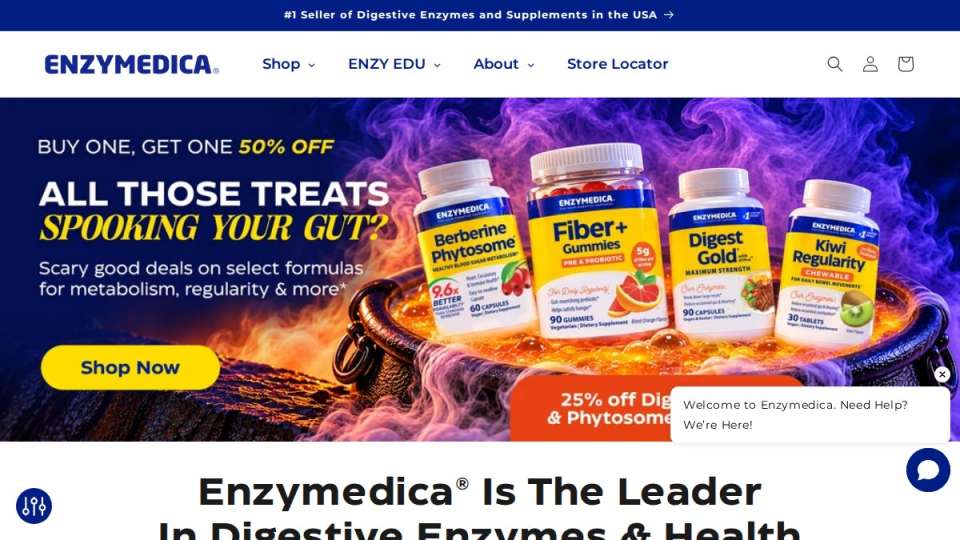
Digest Gold + ATPro is our top pick for general chronic bloating because it covers proteins, fats, and carbohydrates in one formula and uses Thera-blend technology designed to stay active across a range of stomach pH levels. That matters: stomach acid can deactivate some enzymes before they reach the small intestine, so a formula built for varied pH has a practical advantage.
Key strengths and drawbacks
The strengths are breadth and consistency: it is one of the most widely reviewed enzyme formulas and handles mixed meals well, suiting people whose bloating is not tied to one food. The drawback is that it costs more than the budget options, and if your bloating is clearly dairy- or bean-related, a targeted enzyme may serve you better for less.
2. Physician's CHOICE Digestive Enzymes: Best Broad-Spectrum Value
For the money, this is the most complete formula in the group: 16 enzymes covering proteins, carbs, fats, and dairy, plus prebiotics for the gut microbiome. It undercuts most competitors while offering more enzyme types than several pricier options. The main complaint is capsule size. If pill size is not an issue, this is the value pick for a varied diet with no single trigger food.
3. Fodzyme: Best for FODMAP-Related Gas and Bloating
Fodzyme takes a different approach, targeting three specific fermentable carbohydrate groups: fructan, GOS, and lactose. These compounds drive gas from beans, onions, garlic, wheat, and dairy, common triggers for IBS-type bloating. It comes as a powder you sprinkle on food, so it works at the meal rather than as a daily capsule.
4. Zenwise Digestive Enzymes: Best Enzyme-Probiotic Combo
Zenwise combines a proprietary enzyme blend with probiotic strains, appealing to people who want digestive support in one bottle rather than two. It sits mid-range. The tradeoff: proprietary blends can obscure exact enzyme activity, and the formula includes ingredients that may not suit every dietary restriction. For daily maintenance and mild bloating it is a reasonable all-in-one, but for a precise dose of a specific enzyme, a single-enzyme product gives more control.
5. Methyl-Life Chewable Digestive Enzymes: Best for Pill Avoiders
Not everyone can swallow capsules, and this chewable formula solves that without sacrificing enzyme coverage. It breaks down all three macronutrients and travels well for restaurant meals. It costs more per serving than capsules, and the flavor does not appeal to everyone, but for people who genuinely cannot take pills, it is the most practical option here.
6. Dr. Tobias Digestive Enzymes: Best Budget Option
Dr. Tobias keeps it simple: protease, amylase, and lipase for protein, carbohydrate, and fat breakdown. No specialized additives, which is the point. If you want a low-cost entry to see whether enzymes help your bloating at all, this is a sensible first purchase. The limitation: it lacks targeted enzymes like alpha-galactosidase or lactase, so it will not do much for bean- or dairy-specific gas.
How to Take Digestive Enzymes for Bloating
Timing is the part most people get wrong. Enzymes work on the food in your gut, so they need to be present when the food arrives.
Match the enzyme to the meal: a broad-spectrum blend for mixed plates, alpha-galactosidase for beans and cruciferous vegetables, lactase for dairy. Give any new enzyme a two-week trial with consistent timing, and track symptoms in a log so you compare real data rather than memory.
Digestive Enzymes vs Probiotics for Bloating
These supplements do different jobs. Enzymes break down food in the gut so it does not ferment and produce gas; probiotics add live bacteria to support the microbiome over time. Enzymes act within the meal, while probiotics build effects over weeks. Some people benefit from both, which is why combo products exist.
Signs You Need Digestive Enzymes
Enzyme insufficiency is not the same as chronic bloating, and supplement marketing conflates the two constantly. Before you buy a bottle, it helps to know which symptom patterns point toward an enzyme gap and which point elsewhere.
Patterns that suggest an enzyme gap
Enzyme-related bloating tends to be meal-linked and repeatable. A common pattern is gas, fullness, or distension that begins within 30 to 90 minutes of eating and tracks with a specific food group. Examples include:
- Dairy-heavy meals triggering gas, cramping, or loose stool within an hour, a pattern consistent with lactase insufficiency, which is common in adults.
- Beans, lentils, onions, garlic, wheat, or cruciferous vegetables producing gas a few hours after eating, a pattern consistent with limited alpha-galactosidase or other carbohydrate-digesting enzyme activity.
- Fatty or fried meals causing a heavy, greasy feeling and loose stools, a pattern that can reflect limited lipase activity, though persistent steatorrhea warrants medical evaluation.
These signs are suggestive, not diagnostic. A healthcare professional can test for conditions such as lactose intolerance or exocrine pancreatic insufficiency if symptoms are persistent, and a short, tracked enzyme trial is a reasonable low-risk step for most healthy adults in the meantime.
Patterns that suggest something other than enzymes
Chronic bloating, recurring for weeks or months, not just after a heavy meal, often has a cause enzymes will not fix. The most common alternatives:
- Constipation. Stool backing up in the colon is one of the most frequent drivers of persistent bloating and distension. If you are not having regular, comfortable bowel movements, enzymes are unlikely to be the answer.
- Irritable bowel syndrome (IBS). Bloating is a core IBS symptom, and it often responds to dietary approaches, stress management, or clinician-guided treatment rather than to broad enzyme blends.
- Food intolerances beyond lactose. Fructose, histamine, and other intolerances can produce bloating that a general enzyme product will not address.
If your bloating is diffuse, constant, and not clearly tied to meals, an enzyme supplement is a low-probability bet. A clinician can help sort out whether the microbiome, a food intolerance, constipation, or something else is driving it.
Red flags that mean stop self-treating
Some symptoms should end the supplement experiment immediately and send you to a doctor:
- Unintentional weight loss
- Blood in the stool or black, tarry stools
- Persistent vomiting
Those are not supplement problems. They are clinical evaluation problems.
A practical triage before you buy
Ask yourself three questions before ordering anything:
- Is my bloating tied to specific meals or foods? If yes, a targeted enzyme matched to that trigger is a reasonable experiment. If no, enzymes are a weak fit.
- Are my bowel movements regular? If constipation is part of the picture, address that first, fiber, hydration, and clinician guidance, before adding enzymes.
- Have symptoms persisted for more than a few weeks or worsened? If so, get evaluated before self-treating.
Enzymes are a tool for a specific job: helping break down food your body is not fully processing. They are not a treatment for chronic bloating with an unknown cause, and treating them that way wastes money and delays answers.
Frequently Asked Questions
How long does it take for digestive enzymes to work?
Most people notice a difference within 15 to 30 minutes of taking enzymes with a meal, because the enzymes start breaking down food in the stomach and small intestine right away. For chronic bloating, give a consistent trial of 10 to 14 days before judging results. If symptoms do not improve after two weeks of taking a product with meals, the cause may not be enzyme insufficiency. A healthcare professional can help rule out other issues such as low stomach acid, food intolerance, or a gut condition.
Can I take digestive enzymes and probiotics together?
Yes, many people take both. Digestive enzymes for bloating work in the gut lumen to break down food, while probiotics add live bacteria that support the microbiome over time. Some products, like Zenwise, combine both in one capsule. If you buy separate products, take enzymes with meals and probiotics according to the label, often on an empty stomach. Check with a healthcare professional if you take prescription medication, since enzymes can affect how some drugs are absorbed.
What are the signs you need digestive enzymes?
Common signs include bloating, gas, and post-meal heaviness that consistently follow meals, especially meals high in fat, dairy, beans, or fermentable carbohydrates. Other clues are undigested food in stool and discomfort after eating foods you once tolerated. These signs suggest a targeted enzyme such as lactase for dairy or alpha-galactosidase for beans may help. Persistent symptoms, weight loss, or severe pain are not normal and should be checked by a doctor before you self-treat.
Are there side effects to taking digestive enzymes daily?
Most digestive enzyme supplements are well tolerated when taken as directed. Some people report mild nausea, diarrhea, or stomach cramps, especially when starting a high-potency formula or a product with betaine HCl. If you have a history of ulcers, take blood thinners, or are pregnant, talk to a healthcare professional before daily use. Stop and seek medical advice if you notice allergic reactions such as rash, swelling, or trouble breathing. Buy from a retailer with clear label transparency and third-party testing.
How do digestive enzymes work to reduce bloating?
Digestive enzymes break down proteins, fats, carbohydrates, and specific sugars that your body may struggle to process. When these compounds are not fully digested, gut bacteria ferment them and produce gas, which causes bloating and post-meal discomfort. A multi-enzyme blend with protease, amylase, and lipase supports general digestion, while targeted enzymes like lactase and alpha-galactosidase address dairy and beans. Taking the right enzyme with meals can reduce the fermentable load and ease symptoms.
Chronic bloating that does not respond to diet changes deserves a closer look, and so does the rest of your supplement routine. Buy-Otc.com supplies discounted vitamin injectables and over-the-counter health products, including the full AOR line, backed by Geotrust SSL security and five-star customer service. If you are building a complete plan for energy and digestive health, start with our catalog and order with confidence.