 how-to
How to Store Injectable Vitamin C: A 2026 Safety Guide
Table of Contents
- What You'll Need Before You Start
- Step 1: Check the Label for Storage Instructions
- Step 2: Control the Temperature for Injectable Vitamin C
- Step 3: Protect Your Vials from Light and Moisture
- Understanding Ascorbic Acid Injection Stability
- Step 4: Handle Vials Safely After First Use
- Signs of Degraded Vitamin C Injection You Shouldn't Ignore
- Vitamin C Injection Shelf Life: What to Expect
- Frequently Asked Questions
Last Updated: September 10, 2026
What You'll Need Before You Start
Storing injectable vitamin C correctly comes down to four things: temperature control, light protection, moisture control, and clean handling. Get those right and your vials stay stable for their full shelf life. Get them wrong and you risk injecting a degraded product.
Before you store anything, gather:
- A refrigerator thermometer (not the built-in dial, which drifts)
- The original carton or a light-resistant container
- A clean, dry, dark storage spot away from the stove and sink
- Alcohol swabs and a permanent marker for dating vials
- Your supplier's storage insert or the vial's package label
The USP guidance on sterile compounding and storage is the reference point most pharmacies work from for stability questions. Your starting point is always the label that came with your vial.
Step 1: Check the Label for Storage Instructions
The label on your vial is the authority, not a general guide. Injectable vitamin C products differ in formulation, concentration, and preservative content, and each changes the storage requirement.
Read for four specific things:
- Temperature range. Look for "controlled room temperature" or "refrigerated." These are not interchangeable.
- Preservative status. "Preservative-free" vials have stricter handling rules after opening.
- Expiration date and lot number. Record both. If you ever need to report a problem, you'll need them.
- Reconstitution instructions, if you're working with a powder rather than a ready-to-use solution.
A common mistake is assuming every vitamin C injection stores the same way. A preserved multi-dose vial and a single-dose preservative-free ampule have completely different post-opening lifespans; treating them the same leads to discarding good product or using compromised product.
Step 2: Control the Temperature for Injectable Vitamin C
The target range for most injectable vitamin C is either refrigerated storage at 2 to 8 degrees Celsius (36 to 46 degrees Fahrenheit) or controlled room temperature, depending on the formulation (usp.org). Your label tells you which applies, but not how to hold that range in a real refrigerator or cabinet, where most storage failures happen.
Whichever range your product specifies, keep it steady. Temperature swings do more damage than a consistently cool environment, because repeated warming and cooling accelerates oxidation of the ascorbic acid. A vial cycling between 4 C and 15 C every time the door opens is under more stress than one held at a flat 8 C.
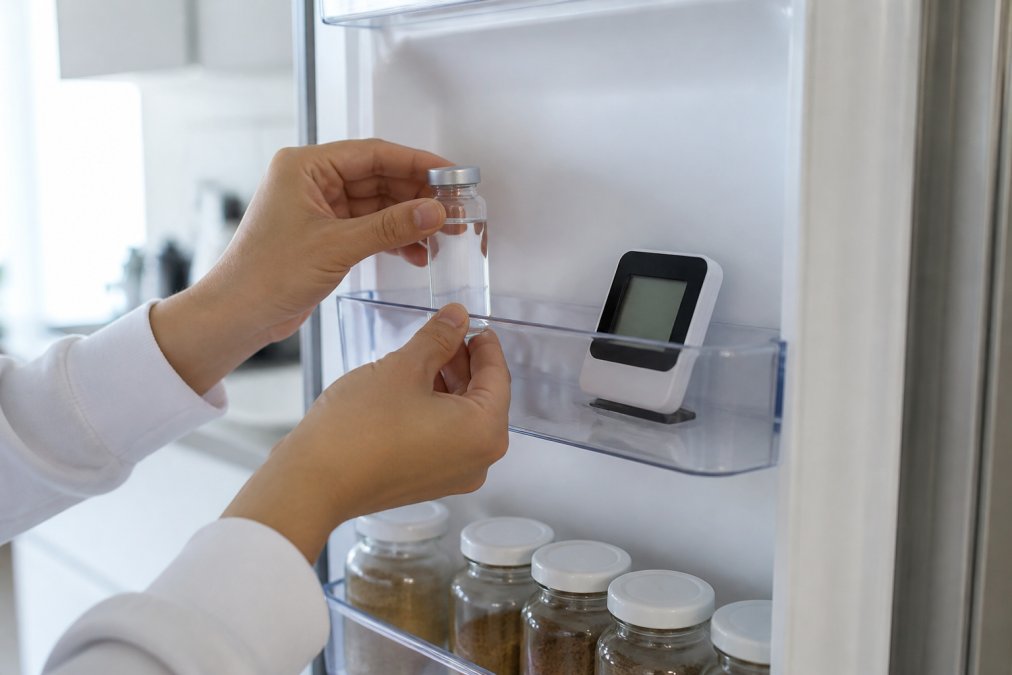
How to Verify the Temperature Where Your Vials Actually Sit
A refrigerator's built-in dial tells you the setpoint, not the temperature at the shelf where your vial sits. Those two numbers can differ by several degrees. The workable method:
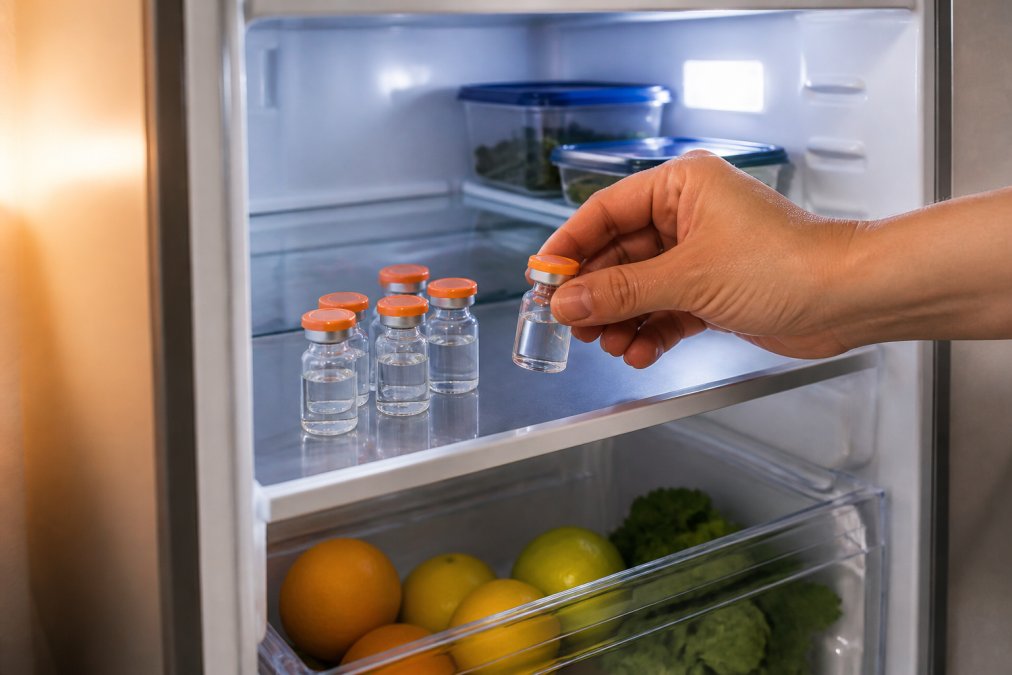
- Place a calibrated digital thermometer on the same shelf as your vials, not on the door and not against the back wall.
- Let it stabilize for 24 hours before reading it, since refrigerators cycle on and off.
- Check it at the same time each day for a week and write down the high and low. A single reading tells you almost nothing.
- Confirm the swing is small. A shelf that holds within a degree or two is stable. A shelf that swings 5 degrees or more is a poor storage location even if the average looks correct.
Most practitioners find a middle interior shelf, away from the back wall and the door, gives the tightest range. The back wall can drop below freezing near the evaporator; the door is warmest and most disturbed; the crisper drawer holds temperature well but traps humidity.
Refrigerated Storage vs. Controlled Room Temperature
Refrigerated storage applies to products formulated for cold conditions, typically 2 to 8 degrees Celsius. Controlled room temperature generally means a stable range around 20 to 25 degrees Celsius (68 to 77 degrees Fahrenheit), with limited excursions permitted.
The distinction matters because refrigeration isn't automatically "safer." Some formulations are designed for room temperature and can be harmed by cold, particularly if the solution is near its concentration limit and crystals form. A vial that has thrown crystals should not be warmed and used; the concentration may no longer match the label. Follow the label, and if unsure, ask the dispensing pharmacy.
For room-temperature products, the practical enemies are kitchen and bathroom heat sources. A cabinet above a refrigerator, beside an oven, or over a dishwasher can run well above ambient room temperature. An interior closet shelf or a closed cabinet in a cool room beats any kitchen storage.
What to Do After a Temperature Excursion
Excursions happen: a power outage, a refrigerator door left open, a vial forgotten on a counter. How you respond depends on how far and how long.
- Brief, small excursion (a few degrees for under an hour): return the vial to its correct location and continue monitoring. Note the event on the vial's date label.
- Extended excursion or a large swing: treat the vial as compromised for planning purposes. If it is a preserved multi-dose vial and still within its post-opening window, it may still be usable, but the safe default is to replace it rather than assume.
- Any excursion that may have frozen the vial: do not use it. Freezing can crack the container, compromise the stopper seal, and change the solution's concentration.
Travel and Transport: Holding the Range Away From Home
Transport is the most common gap in storage guidance, and where vials are most often lost. The goal in transit is the same as at home: a steady temperature inside the labeled range, protected from light and kept upright.
A workable travel setup:
- An insulated pouch or small hard case sized so the vial cannot roll or rattle.
- A phase-change gel pack rather than loose ice. Gel packs hold a steadier temperature and are less likely to drop below freezing.
- A barrier layer (a folded cloth or the original carton) between the gel pack and the vial.
- A small thermometer inside the case so you can confirm the range on arrival rather than assuming it.
- The vial upright in its carton, with the stopper up.
For air travel, keep injectables in your carry-on rather than checked baggage, since cargo holds are not temperature controlled and bags are handled roughly. If you carry a sharps container or used supplies, follow the disposal rules at your destination.
A Simple Temperature Log
You do not need a lab-grade system. A dated note on the vial or in a small notebook is enough: the date you stored it, the shelf or location, and any excursion with its duration. If a vial ever looks or behaves oddly, that log is the first thing a pharmacist or supplier will ask about.
Step 3: Protect Your Vials from Light and Moisture
Light destroys ascorbic acid. This is why vitamin C injections ship in amber glass or opaque packaging, and why the original carton is part of the storage system, not just shipping material.
Keep vials in their carton or a light-resistant container. A clear plastic organizer on an open shelf is a poor choice even in a dim room, because cumulative light exposure adds up over weeks and months. This process, called photodegradation, breaks down the ascorbic acid molecule directly. peptide storage standards.
Moisture is the second threat. Store vials upright, keep the rubber stopper dry, and never store injectables in a bathroom, above a kettle, or anywhere steam collects. Moisture around the stopper creates a path for contamination when you puncture it.
- Keep the carton closed between uses
- Store upright, never on their side
- Keep away from windows, heat vents, and appliances
- Never store in a bathroom or kitchen prep area
Understanding Ascorbic Acid Injection Stability
Ascorbic acid injection stability depends on four variables: temperature, light exposure, oxygen contact, and pH. Change any one and the degradation timeline changes with it.
The chemistry is straightforward: ascorbic acid oxidizes readily, and oxidation is accelerated by heat, light, and dissolved oxygen. A vial left on a sunny counter degrades far faster than one kept in its carton in a cool, dark cabinet.
What most guides miss is that stability is a property of the specific formulation, not of "vitamin C" in general. Buffered formulations, preserved multi-dose vials, and preservative-free single-dose products each have their own stability profile. Your supplier's documentation is the only reliable source for your specific product, and FDA guidance on drug storage and stability is a useful reference for how those stability claims are established.
Step 4: Handle Vials Safely After First Use
Once you puncture a stopper, the clock changes. A vial stable for months when sealed may have a much shorter usable window once air and a needle have entered it.
Follow these steps every time:
- Swab the stopper with alcohol and let it dry completely before puncturing.
- Use a new needle and syringe for every draw. Reusing either is the fastest way to contaminate a multi-dose vial.
- Draw once, cleanly. Avoid repeatedly puncturing the same stopper if you can plan your doses.
- Date the vial the day you first open it, and write the discard date next to it.
- Return it to its carton and correct temperature immediately after use.
- Inspect before every draw. If anything looks off, stop.
Aseptic technique isn't optional here. Injectable vitamin C bypasses your body's normal defenses, which is why sterility matters more than for a topical serum.
Preservative-Free vs. Preserved Formulations
Preservative-free injectable vitamin C carries a much shorter post-opening window, often hours rather than weeks, because nothing in the solution inhibits microbial growth. These products are typically single-dose for exactly that reason.
Preserved multi-dose vials contain an antimicrobial agent that extends the post-opening window, but only if you handle them correctly. A preserved vial left at room temperature for a day, or punctured with a dirty needle, loses its advantage.
The practical rule: match your handling to the formulation. If you're unsure which you have, the label will say, and the discard protocol usually follows directly from it.
Signs of Degraded Vitamin C Injection You Shouldn't Ignore
Discoloration is the clearest warning sign. Injectable vitamin C should be clear to faintly yellow, depending on formulation. A solution that has turned noticeably yellow, amber, or brown has oxidized and should be discarded.
Other signs to watch for:
- Sedimentation or particles floating in the solution
- Cloudiness where the solution was previously clear
- A cracked or damaged vial or a compromised hermetic seal
- A swollen or discolored rubber stopper
- Visible moisture or residue around the stopper
If you see any of these, discard the vial. There's no safe way to "use it up anyway," and a replacement vial is trivial next to the risk of injecting a degraded or contaminated product.
Visual Identification of Oxidation
Oxidation in vitamin C injection shows up as a color shift, moving from clear toward yellow and then brown as the ascorbic acid breaks down. The change is usually gradual and easiest to spot by comparing against a fresh vial of the same product.
Here's the practical method: hold the vial against a white background in good light and look through the solution, not at its surface. Compare it to a new vial if you have one. If the older vial is visibly darker, treat it as degraded even if the expiration date hasn't passed.
Vitamin C Injection Shelf Life: What to Expect
Vitamin C injection shelf life runs from the printed expiration date on the sealed vial, provided you've stored it correctly the whole time. Improper storage shortens that window, sometimes dramatically. The expiration date is a statement about a sealed vial held under the labeled conditions, and nothing more.
Two dates matter, and they're different:
| Stage | What It Means | What Governs It |
|---|---|---|
| Sealed vial | Full shelf life until the printed expiration date | Correct temperature, light, and moisture control |
| After first puncture | Shorter usable window, often hours to weeks | Preservative status and aseptic handling |
Once you open a vial, the expiration date no longer tells you how long it's good for. The post-opening window does, and it depends entirely on whether the formulation is preserved or preservative-free.
Post-Opening Windows by Formulation Type
Exact windows come from your product's labeling, but the pattern across injectable vitamin C products is consistent:
- Preservative-free single-dose vials and ampules: measured in hours, not days. These are intended for one use, and any remaining solution should be discarded. There is nothing in the solution to inhibit microbial growth once the seal is broken.
- Preserved multi-dose vials: typically days to a few weeks after first puncture, provided the vial is refrigerated, the stopper is swabbed before every draw, and a new needle and syringe are used each time. The preservative buys time, but only if handling is clean.
- Reconstituted powder: the shortest window of all. Once you add diluent, the clock starts immediately, and the reconstituted solution usually needs refrigeration and use within a defined period stated on the label or insert.
A common mistake is treating a preserved multi-dose vial as if it were preservative-free, or the reverse. Discarding a good preserved vial after one use wastes product; using a preservative-free vial days later is a genuine safety risk. The label resolves the question, so read it before the first draw.
How to Date and Track a Vial
Dating is the cheapest safety step you can take, and it takes ten seconds:
- Write the first-puncture date on the vial label or on a piece of tape wrapped around the vial, using a permanent marker.
- Write the discard date next to it, based on the formulation's post-opening window.
- Note the storage location if you keep more than one vial in rotation.
- Check the discard date before every draw, not after you have already prepared the syringe.
If you cannot remember when you opened a vial, treat it as expired. A replacement vial is trivial next to the risk of injecting a compromised product.
Shelf Life After a Temperature Excursion or Travel
Shelf life assumes the labeled storage conditions were met the entire time. An excursion shortens the effective window, and the amount depends on how far and how long. A vial that spent an afternoon in a warm car is not the same product it was that morning, even if it looks unchanged.
For travel, the practical approach is to plan around the trip rather than assume the vial survives it:
- Carry only what you need for the trip, in its original carton, in an insulated case with a phase-change gel pack.
- Keep a thermometer in the case and check it on arrival.
- Do not extend the post-opening window because of travel. If the discard date falls during the trip, plan to replace the vial rather than stretch it.
- Do not re-refrigerate a vial that warmed significantly and assume it is fine. Note the excursion and treat the vial as compromised for planning purposes.
Safe Disposal of Unused Portions
For safe disposal of unused portions, follow your local rules for sharps and medical waste rather than flushing product or tossing vials in household trash. Many pharmacies and health departments accept sharps containers, and your supplier can usually point you to the right option. Keep used needles and syringes in a puncture-resistant sharps container, out of reach of children and pets until you can dispose of it properly.
We provide discounted prices on B12 Shots, B1 injections, B6 Injectable, Vitamin C Shots, and also needles, so you can source your supplies in one order. Every order ships with industry standard security software and Geotrust SSL protection and 5 star customer service that responds if something arrives damaged.
Frequently Asked Questions
What is the recommended temperature range for storing injectable vitamin C?
Most injectable vitamin C products should be stored at controlled room temperature between 68°F and 77°F (20°C to 25°C), according to pharmacopeia standards. Some formulations require refrigerated storage between 36°F and 46°F (2°C to 8°C). Always check the vial label or package insert first, because the manufacturer's specific instructions override general guidelines. Avoid temperature excursions above 86°F (30°C), which accelerate oxidation and reduce chemical stability.
How can you tell if injectable vitamin C has degraded?
Look for discoloration, typically a yellow or brown tint, which signals oxidation of ascorbic acid. Check for sedimentation or particles floating in the solution. A normally clear injectable solution that becomes cloudy or changes color should be discarded. Other signs include a cracked rubber stopper, a broken hermetic seal, or visible moisture inside the vial. If you see any of these signs of degraded vitamin C injection, do not use the product.
How long does a vitamin C injection last after opening?
Vitamin C injection shelf life after opening depends on the formulation. Preservative-free vials should typically be used within a few hours to 24 hours after the rubber stopper is punctured, because bacteria can enter without preservatives to stop them. Preserved formulations may last longer, but still follow the manufacturer's discard protocol. Write the puncture date on the vial and never use it beyond the labeled beyond-use date. When in doubt, discard it.
Does light exposure affect the stability of injectable ascorbic acid?
Yes. Ascorbic acid is sensitive to photodegradation, meaning light breaks down the vitamin and reduces how well it works. Injectable vitamin C should stay in its original light-resistant container or carton until you are ready to use it. Never store vials on a sunny windowsill or under bright fluorescent light for long periods. Even brief exposure during preparation is fine, but long-term light exposure will speed up oxidation and shorten the product's usable life.