 How-to
7 Signs of Injection Site Infection to Watch For
Last Updated: November 3, 2026
Quick Summary
Signs of an injection site infection include redness that spreads or grows, a warm hard lump, pus or cloudy drainage, and red streaks moving away from the site. Symptoms that keep worsening after 48 hours, or fever, mean you should contact a doctor. A normal reaction fades within a few days.
- A normal reaction peaks early and fades within 48 hours.
- Redness that spreads or keeps growing after day two is concerning.
- Red streaks moving toward the torso require urgent care or the emergency department.
- A fever above 100.4°F (38°C) means the infection may have moved beyond the skin.
- Call 911 for trouble breathing or swelling of the face, lips, or throat.
Table of Contents
- Normal vs Infected Injection Site: How to Tell the Difference
- Common Symptoms of an Injection Site Reaction
- Warning Signs of a Serious Injection Site Infection
- Causes and Risk Factors for Injection Site Infections
- Injection Site Reaction When to Worry: Home Care vs Emergency Care
- How to Prevent Injection Site Infections
- Booking Your Next Supply Order From Buy-Otc.com
- Frequently Asked Questions
Normal vs Infected Injection Site: How to Tell the Difference
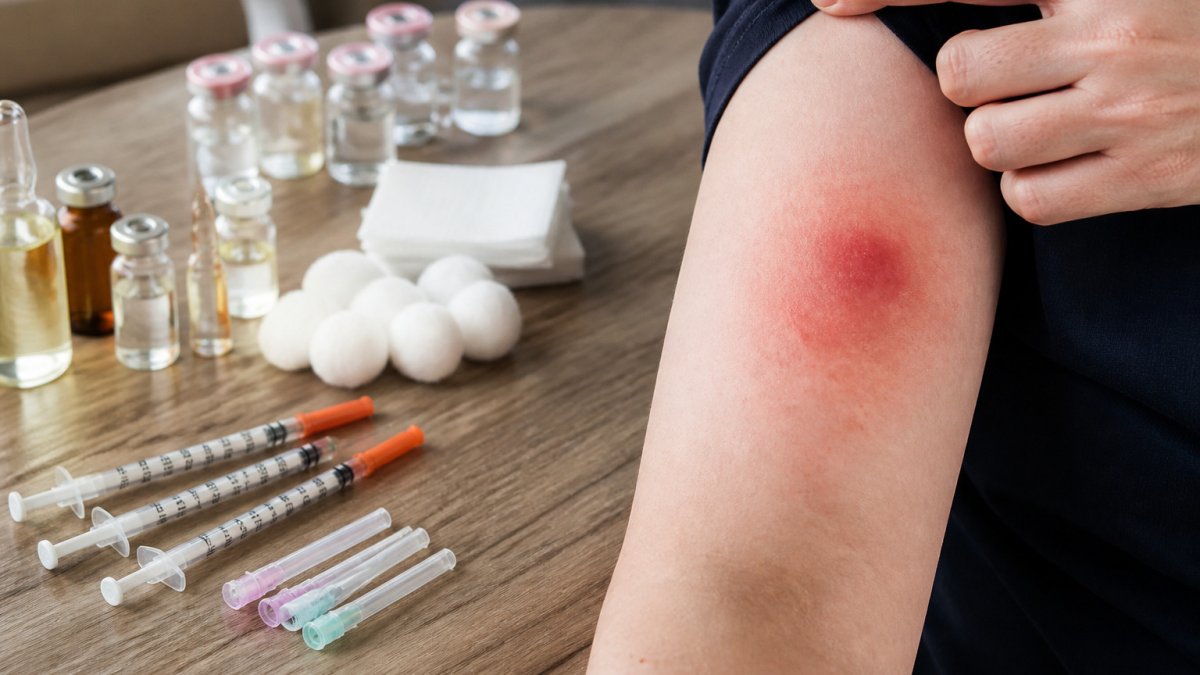
Most injection sites get a little red and sore for a day or two. That is normal. The body reacts to the needle and the medicine, and the skin calls for help. Signs of injection site infection to watch for look different. They get worse over time instead of better.
A quick way to tell them apart is to check the trend. A normal reaction peaks early and fades. An infection keeps growing, gets hotter, or starts to hurt more over several days.
- Normal: mild redness, soreness, or a small bump that shrinks within 48 hours
- Concerning: redness that spreads, grows warm to the touch, or keeps getting worse after day two
- Urgent: fever, chills, pus, or red streaks moving away from the site
Common Symptoms of an Injection Site Reaction
A typical reaction is local. It stays near the needle mark. Common symptoms include:
- Mild pain or tenderness
- Slight swelling or a firm bump
- Itching around the spot
- Light bruising
These symptoms are usually mild. Cold compresses and rest often help.
Warning Signs of a Serious Injection Site Infection
A serious infection is not just a sore spot. It is a spreading process, and the signs follow a pattern. The skin around the needle mark becomes a battleground: bacteria multiply in the tissue, the immune system floods the area with blood and fluid, and the result is heat, swelling, and pain that escalate rather than settle. Knowing what each sign actually looks like, not just its name, is what lets you act early.
Skin changes that signal spread. Normal redness after a shot is usually a small halo, roughly the size of a coin, that fades within 48 hours. Concerning redness does the opposite: it expands outward, often by a finger-width or more per day, and the border may be blurred rather than crisp. The skin can take on a dusky or purplish tone at the edges, and the surface may look shiny or taut from underlying swelling. A hard, warm lump that grows instead of shrinking is another red flag, that is the body walling off bacteria, which can become an abscess.
Drainage and texture. A small amount of clear fluid is common. Yellow, green, or cloudy drainage is not. Pus that smells foul, or a spot that weeps continuously and crusts over, points to a bacterial infection rather than a simple reaction. The skin may also feel thicker or firmer than the surrounding area, and pressing it may leave a dimple that lingers, a sign of fluid trapped in the tissue.
Red streaks. Thin red lines running away from the injection site toward the torso are a classic sign of lymphangitis, meaning the infection is moving through the lymphatic channels. These streaks can appear within hours and may feel warm or tender along their path. This is not a wait-and-see sign.
Systemic signs. Fever above 100.4°F (38°C), chills, body aches, nausea, or a general feeling of being unwell mean the infection may have moved beyond the skin. A rapid heart rate, dizziness, or confusion are emergency-level signs. A common pattern is for local signs to appear first and systemic signs to follow a day or two later, which is why tracking the site daily matters.
Severity tiers to act on.
- Call your doctor the same day: expanding redness, a growing hard lump, pus or cloudy drainage, or a low-grade fever.
- Go to urgent care or the emergency department: red streaks, fever above 100.4°F with worsening site pain, or a site that is hot and swollen far beyond the injection point.
- Call 911: trouble breathing, swelling of the face, lips, or throat, fast-spreading redness with dizziness, or confusion. These can indicate a severe allergic reaction or a rapidly progressing infection.
Watch out: a site that looks mildly red but feels disproportionately painful, or that hurts more on day three than day one, is easy to dismiss, treat increasing pain after 48 hours as a warning sign even if the skin looks only slightly changed.
Use this quick reference to tell a normal injection site reaction from signs that need medical attention.
| Sign | What it may mean | What to do |
|---|---|---|
| Redness that spreads or grows | Possible infection spreading | Call your doctor the same day |
| Growing hard, warm lump | Bacteria walled off, possible abscess | Call your doctor the same day |
| Yellow, green, or cloudy drainage | Bacterial infection | Call your doctor the same day |
| Red streaks moving toward the torso | Infection moving through lymphatic channels | Go to urgent care or the emergency department |
| Fever above 100.4°F (38°C) | Infection may have moved beyond the skin | Call your doctor; seek urgent care if site pain worsens |
| Pain increasing after 48 hours | Possible developing infection | Treat as a warning sign and get checked |
| Trouble breathing or facial/throat swelling | Severe allergic reaction or rapidly progressing infection | Call 911 |
Causes and Risk Factors for Injection Site Infections
Infections usually happen when bacteria get under the skin. Common causes include:
- Skin not cleaned well before the shot
- Reusing needles or syringes
- Touching the needle or the site before injecting
- Injecting into the same spot too often
- A weak immune system or a skin condition such as eczema
Some people face higher risk. These include people with diabetes, people taking drugs that lower immunity, and people who inject often. Knowing your risk factors helps you take extra care.
Injection Site Reaction When to Worry: Home Care vs Emergency Care
Most injection site reactions can be handled at home. The hard part is knowing when home care stops being enough. Instead of guessing, work through a short decision path based on what you see, how fast it is changing, and whether you feel sick overall.

Step 1: Check the trend. Compare the site today with yesterday. A normal reaction peaks within the first 24 to 48 hours and then improves. If the redness, swelling, or pain is larger or more intense on day two or three than on day one, that is your first signal to escalate.
Step 2: Check for local red flags. Look for expanding redness, a hard warm lump, pus or cloudy drainage, or red streaks moving toward the torso. Any one of these moves you out of the home-care lane.
Step 3: Check for systemic signs. Take your temperature. A reading above 100.4°F (38°C), chills, body aches, nausea, or a feeling of being generally unwell means the problem may be more than skin-deep.
Home care is appropriate when:
- Redness is small, stable, and fading
- Soreness is mild and improves each day
- There is no pus, no streaking, and no fever
- You feel otherwise well
For home care, apply a cold compress for 10 to 15 minutes at a time, rest the limb, and avoid rubbing or massaging the site. Over-the-counter pain relievers can ease discomfort. Keep the area clean and dry, and check it once a day rather than constantly.
Call your primary doctor or visit urgent care when:
- Redness or swelling grows after 48 hours
- The area feels hot, hard, or very painful
- You see pus or red streaks
- You have a fever or feel unwell
Urgent care is a common option for same-day evaluation of a worsening site without systemic symptoms. Your primary doctor is a good call for a site that is slowly worsening but not urgent, especially if you have diabetes or a weakened immune system.
Go to the emergency department or call 911 when:
- You have trouble breathing, or swelling of the face, lips, or throat
- Redness is spreading rapidly, visibly larger within hours
- You have a high fever with dizziness, confusion, or a rapid heart rate
- The site is severely painful, dark, or blistered
Watch out: the most common mistake is waiting to see if a worsening site clears on its own. If you are unsure which lane you are in, call your doctor's office and describe the site, a nurse can usually tell you whether to come in, go to urgent care, or watch it at home.
How to Prevent Injection Site Infections
Prevention is simple when you stay consistent:
- Wash your hands with soap and water before you start.
- Clean the injection site with an alcohol swab and let it dry.
- Use a new, sterile needle and syringe every time.
- Rotate injection sites, such as the upper arm, thigh, or belly, to give skin time to recover.
- Dispose of used needles in a sharps container, never in the trash (the FDA).
If you are still learning to inject at home, ask a nurse or doctor to check your technique at your next visit. Small changes often make a big difference.
Booking Your Next Supply Order From Buy-Otc.com
Clean supplies are part of safe self-injection. At Buy-Otc.com, we offer discounted B12 shots, B1 and B6 injectables, Vitamin C shots, and needles. Pricing depends on quantity and delivery, so check our site for current prices and a quote before you order.
Keep an eye on your injection sites, rotate them, and stock up on fresh needles before you run low. If something looks wrong, contact your doctor first. Then shop with Buy-Otc.com for the supplies you rely on.
Frequently Asked Questions
How can I tell if an injection site is infected?
An infected injection site usually gets worse over time rather than better. Watch for redness that spreads beyond the original area, warmth, increasing swelling or tenderness, pus or cloudy drainage, and a red streak moving away from the site. Mild soreness and a small firm bump typically improve within a few days. If the area keeps worsening after 48 to 72 hours, or you notice fever or chills, contact a healthcare provider promptly for an evaluation.
When is it necessary to see a doctor for an injection site issue?
See a doctor if you have spreading redness, a hot or painful area that is getting larger, pus draining from the site, a fever of 100.4 degrees Fahrenheit or higher, chills, or red streaks running from the injection point. Seek emergency care right away if you have trouble breathing, facial or throat swelling, a rapid heartbeat, dizziness, or confusion, since these can signal a severe allergic reaction or sepsis. Don't wait to see if it clears up on its own when systemic symptoms appear.
What is the difference between a normal reaction and an abscess?
A normal reaction is a localized response: soreness, mild redness, a small firm bump, or itching that appears within the first day or two and steadily fades. An abscess is a collection of pus under the skin. It typically forms a tender, warm, swollen lump that feels soft or fluctuant at the center and may drain. Abscesses generally need medical evaluation, and sometimes drainage, so a lump that grows or produces pus should be checked by a clinician rather than treated only at home.
Can an injection site infection lead to sepsis?
Yes, although it is uncommon. A localized bacterial infection can spread into the bloodstream and trigger sepsis, a life-threatening response that can cause fever or low temperature, rapid heart rate, fast breathing, confusion, and dizziness. Because early treatment makes a large difference, any injection site infection showing systemic symptoms should be evaluated the same day, and emergency care is warranted if these symptoms appear.