 comparison
B12 Shots vs Pills: A 2026 Cost Comparison Guide
Table of Contents
- B12 Shots vs Pills: The Cost Comparison at a Glance
- B12 Injection Cost: What You Pay Per Dose and Per Year
- B12 Pills Cost: Monthly and Annual Totals
- How Often Do You Need B12 Injections?
- Absorption, Bioavailability, and Why Dose Size Affects Cost
- Buying B12 Injections Online Safely: What to Check Before You Order
- Insurance, Prescriptions, and Out-of-Pocket Costs
- Which Option Costs Less for Your Situation?
- Frequently Asked Questions
Last Updated: October 14, 2026
B12 Shots vs Pills: The Cost Comparison at a Glance
The cost comparison of B12 shots vs pills comes down to one number most guides bury: injections carry a per-visit price, while pills carry a per-bottle price. A single clinic injection is often quoted at around $30, according to ELLEMES Med Spa's B12 injection comparison, while a month's supply of oral B12 pills is commonly reported at $10-$50, per The IV Lounge's B12 shot vs pills guide.
How to Read This Comparison
We separate three cost layers most comparisons merge: the product (vial or bottle), the administration (clinic visit, needle, nurse's time), and the monitoring (follow-up blood tests). Skipping the third layer is the most common mistake we see, a cheap option that doesn't correct your deficiency isn't cheap at all.
| Cost Layer | B12 Shots | B12 Pills |
|---|---|---|
| Product | Vial or prefilled syringe | Bottle of tablets or lozenges |
| Administration | Clinic visit or at-home injection supplies | None |
| Monitoring | Periodic serum B12 testing | Periodic serum B12 testing |
| Typical billing | Per dose | Per bottle |
B12 Injection Cost: What You Pay Per Dose and Per Year
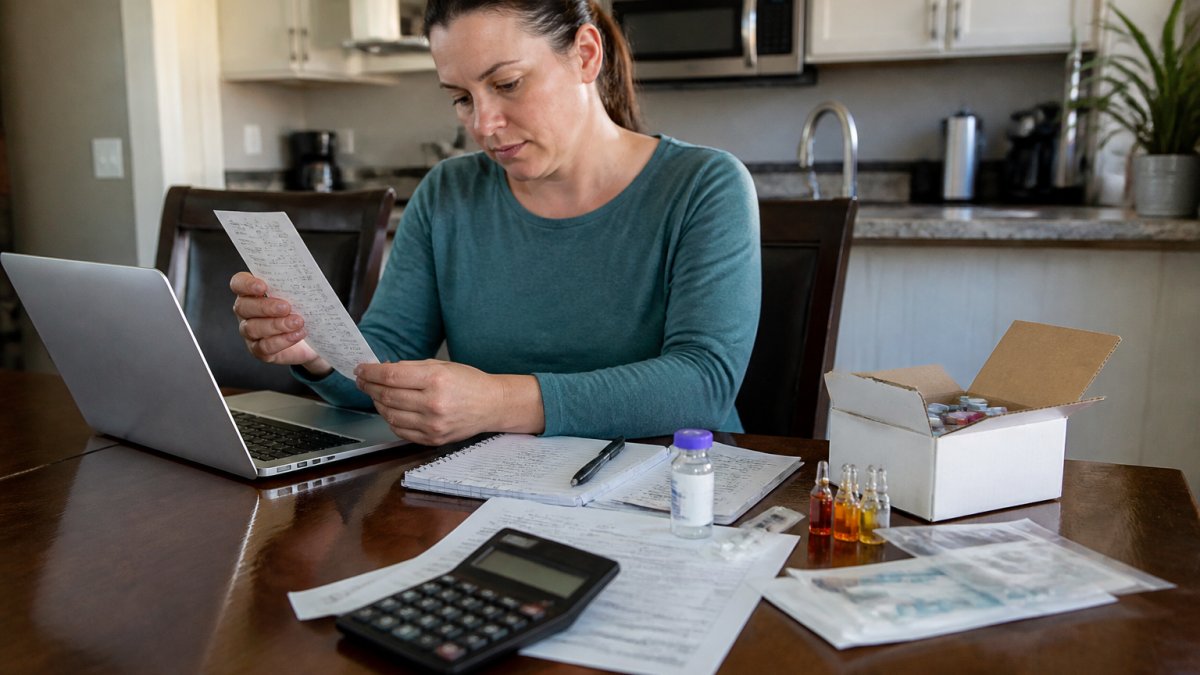
B12 injection cost is usually quoted per dose, but the annual figure is what matters for budgeting. One analysis from Innovative Medicine's B12 injection overview reports an average of about $44.33 per dose, with annual shot costs estimated near $530 once administration fees are included. If you need a loading phase first, it rises.
Clinic vs At-Home Injection Costs
Clinic injections bundle the drug and the visit into one bill. At-home injections split them: you buy the vial and needles separately, then administer the dose yourself. The at-home route removes the visit fee but adds supply costs and the responsibility of doing it correctly, often more economical over a full year, provided you source legitimate vials and needles.
B12 Pills Cost: Monthly and Annual Totals
B12 pills cost is the simplest line item in this whole comparison, and that simplicity is the point. A month's supply of oral B12 typically runs $10-$50 depending on brand, form, and dose, according to The IV Lounge's cost breakdown.
Here's the catch most pill-first comparisons skip: the cheapest bottle may not be the most cost-effective. If your body absorbs oral B12 poorly, you may need a high dose to match what a lower dose gives someone else.
How Often Do You Need B12 Injections?
How often you need B12 injections depends on whether you're correcting a deficiency or maintaining normal levels. Treatment usually starts with a loading dose, then shifts to a maintenance dose. Loading is more frequent and more expensive per month; maintenance is spaced out and cheaper. This schedule is the biggest driver of your annual injection cost.
Loading Dose vs Maintenance Dose Schedules
A typical loading schedule front-loads injections over the first weeks, then tapers to a maintenance rhythm. Oral regimens follow similar logic without the visit overhead: a higher daily dose first, then a lower one. Treat any published frequency as a general pattern and confirm yours with your clinician.
| Phase | Injection Pattern | Pill Pattern | Cost Impact |
|---|---|---|---|
| Loading | Frequent early doses | Higher daily dose | Highest monthly cost |
| Maintenance | Spaced doses | Standard daily dose | Lower monthly cost |
| Monitoring | Periodic blood tests | Periodic blood tests | Ongoing small cost |
Absorption, Bioavailability, and Why Dose Size Affects Cost
Absorption is the reason B12 shots vs pills isn't a pure price question. Oral B12 must pass through the gut, and absorption depends on intrinsic factor and gastrointestinal health; when it's impaired, a larger oral dose is needed.
This is where clinical evidence complicates the price story. A summary in American Family Physician on oral vs intramuscular B12 reports that oral supplementation at 2,000 mcg per day was more effective at raising B12 levels than intramuscular supplementation at 1,000 mcg per day in the cited comparison.
Buying B12 Injections Online Safely: What to Check Before You Order
Buying B12 injections online safely means verifying three things before you add anything to a cart: the seller, the product, and the payment protection.
- Seller uses SSL encryption and displays a current security certificate
- Product listing states the exact form: cyanocobalamin or methylcobalamin
- Concentration and volume are clearly printed, not vague
Buy-Otc.com stocks B12 shots, B1 injections, B6 injectables, vitamin C shots, and needles, with Geotrust SSL protection on checkout and a stated policy for resolving damaged items. Registered users also get access to discounts and special offers.
Insurance, Prescriptions, and Out-of-Pocket Costs
Insurance is where the B12 shots vs pills comparison stops being simple math, because the two options sit in different parts of the payment system. Injectable cyanocobalamin is a prescription product, so a clinician's order can run through the pharmacy benefit. Oral B12 is almost always over-the-counter: no prescription, no prior authorization, no coverage, you pay the shelf price and you're done.
That split produces four realistic payment paths, and they don't rank the same way for everyone:
| Payment Path | What It Looks Like | Who It Typically Favors |
|---|---|---|
| Covered injection | Prescription filled through pharmacy benefit, copay per fill | People with a diagnosed deficiency and a low copay tier |
| Uncovered injection | Self-pay vial plus a clinic administration fee | People who can't get coverage or don't want a prescription |
| OTC oral | Cash purchase of tablets, lozenges, or sublingual drops | Anyone with normal absorption who wants the lowest cash outlay |
| Prescription oral | High-dose oral B12 written as a prescription | People whose plan covers it and whose dose is high enough to matter |
What Actually Drives Your Out-of-Pocket Number
Three variables move your out-of-pocket number more than either sticker price:
- Formulary tier. Cyanocobalamin is a long-established generic and usually sits on a low tier when covered at all. Methylcobalamin is less commonly stocked and more often lands on a higher tier or needs prior authorization.
- Deductible status. Early in a plan year, a covered injection may cost the full negotiated rate until the deductible is met, while a cash OTC bottle costs the same in January as in December.
- Administration billing. A clinic may bill the injection as a product plus an administration code, or fold both into one visit charge. Ask which applies before you book, the administration line is frequently the larger of the two.
Generic Versus Branded, in Plain Terms
Cyanocobalamin is the workhorse form in both injectable and oral products and is widely available as a generic, keeping both delivery methods affordable at the product level. Methylcobalamin and hydroxocobalamin cost more in either form, with a larger gap on the injectable side because fewer manufacturers supply it. If your clinician confirms either form will work, generic cyanocobalamin is almost always the lower-cost route, but form is a clinical decision, not a shopping decision.
The Self-Pay Reality Check
If you're paying entirely out of pocket, the comparison narrows to two numbers you control: the cash price of a vial plus supplies, and the cash price of a bottle of tablets. Everything else, visit fees, travel, follow-up labs, is an add-on you either accept or avoid.
Which Option Costs Less for Your Situation?
Which option costs less depends on your diagnosis and its cause, not the headline price of either. Build the total cost in four layers rather than comparing a per-dose figure to a per-bottle figure; the layers are the same for both methods, only the amounts differ.
| Cost Layer | B12 Shots | B12 Pills |
|---|---|---|
| Product | Vial or prefilled syringe | Bottle of tablets, lozenges, or drops |
| Administration | Clinic visit fee, or at-home supplies (needles, syringes, sharps disposal) | None |
| Access | Consultation or prescription visit, plus travel and time | None beyond the purchase |
| Monitoring | Follow-up serum B12 testing | Follow-up serum B12 testing |
Pills win the product line almost every time. Administration and access are where injections pull ahead of their own sticker price, and where a "cheap" injection stops being cheap.
A Like-for-Like Cost Model by Treatment Phase
Instead of one number, model three phases. The pattern below is a general shape, not a prescription, confirm your schedule with your clinician.
- Loading phase (first weeks to first months). Injections are front-loaded, making this the most expensive stretch for shots: more doses, visits, and administration fees in a short window. Oral regimens also start higher but carry no visit overhead, so the gap is widest here.
- Maintenance phase (ongoing). Injection frequency drops, so monthly shot cost falls, while oral cost stays roughly flat. Over a full year, annual totals converge or diverge depending on how many visits you pay for.
- Monitoring phase (throughout). Serum B12 testing applies to both methods, a small recurring line, but the one that tells you whether the cheaper option is working.
The Cost of Treatment Failure
This is the line item almost no comparison includes, and it flips the answer. If you choose the cheaper option and your levels don't rise, or symptoms don't improve, you don't save money.
That's why the honest framing is cost per corrected deficiency, not cost per dose. The cheapest path is the one that gets your level into range on the first attempt.
A Decision Framework by Cause
- Diagnosed malabsorption or pernicious anemia: injections are typically more reliable. The higher cost buys certainty, and certainty is cheaper than a failed oral trial.
- Mild deficiency with normal gut absorption: high-dose oral B12 is often the lower-cost, equally effective path.
- Dietary shortfall (vegan, vegetarian, or low intake): oral supplements usually cover it at the lowest total cost, with no administration or access layer.
For most people weighing B12 shots vs pills on cost alone, pills come out ahead on the receipt; shots win when absorption is the problem. The mistake is picking on price without knowing which group you're in, and without counting the layers that don't show up on the price tag.
Frequently Asked Questions
Are B12 pills cheaper than B12 injections?
In most cases, yes. Oral B12 supplements typically run $10 to $50 per month depending on brand and dose, while a single clinic injection can cost around $30 or more, with annual injection costs including administration fees estimated at roughly $530. However, the cheaper option depends on your diagnosis: if malabsorption or pernicious anemia limits how well you absorb oral B12, injections may be the only effective route regardless of price.
Does insurance cover vitamin B12 injections?
Coverage varies by plan and diagnosis. Injections prescribed for a confirmed B12 deficiency or pernicious anemia are more likely to be covered than those sought for general energy or wellness. Check your plan's formulary for cyanocobalamin or methylcobalamin and confirm whether administration fees at a clinic are billed separately. Oral supplements are rarely covered because they are sold over the counter.
How often do you need B12 shots compared with taking pills?
Injection schedules usually start with a loading dose, often every other day or weekly for several weeks, followed by monthly maintenance injections. Oral B12 is typically taken daily at doses ranging from 1,000 to 2,000 micrograms. The frequency gap matters for cost: monthly injections mean fewer doses per year, while daily pills mean 365 doses annually, so compare total yearly spend rather than per-dose price alone.
Can high-dose B12 pills work as well as injections?
Clinical evidence suggests they can for some people. A comparison published in American Family Physician reported that oral supplementation at 2,000 micrograms per day was more effective at raising B12 levels than intramuscular injections at 1,000 micrograms per day. That said, absorption depends on the cause of your deficiency; conditions like pernicious anemia or intrinsic factor problems may still require injections.
What costs should I include when comparing B12 shots and pills?
Look beyond the product price. For injections, add clinic visit or administration fees, needles and syringes if self-injecting, and monitoring blood tests. For pills, factor in the monthly supply cost and any repeat testing to confirm levels are rising. A like-for-like total cost model across 12 months gives a clearer picture than comparing a single injection price against a one-month pill supply.