 how-to
How to Read Supplement Labels for Purity
Table of Contents
- Why Purity Matters When Reading Supplement Labels
- Understanding the Supplement Facts Label Explained
- How to Analyze a Supplement Ingredient List
- Decoding Supplement Label Claims and Front-of-Package Marketing
- Verifying Third-Party Tested Supplements
- Checking for Contaminants and Manufacturing Standards
- Step-by-Step Checklist for Evaluating Supplement Purity
- Frequently Asked Questions
Last Updated: October 10, 2026
Why Purity Matters When Reading Supplement Labels
The supplement industry operates differently than prescription medications, the FDA doesn't approve supplements before they hit shelves (the FDA).
Purity means the product contains what it claims and nothing harmful. Without checking the label carefully, you won't know if a supplement contains heavy metals, undisclosed fillers, or ingredients that don't match marketing claims.
Reading the label properly protects you from unlisted ingredients, heavy metals, and microbial contaminants that can affect your health directly.
Understanding the Supplement Facts Label Explained
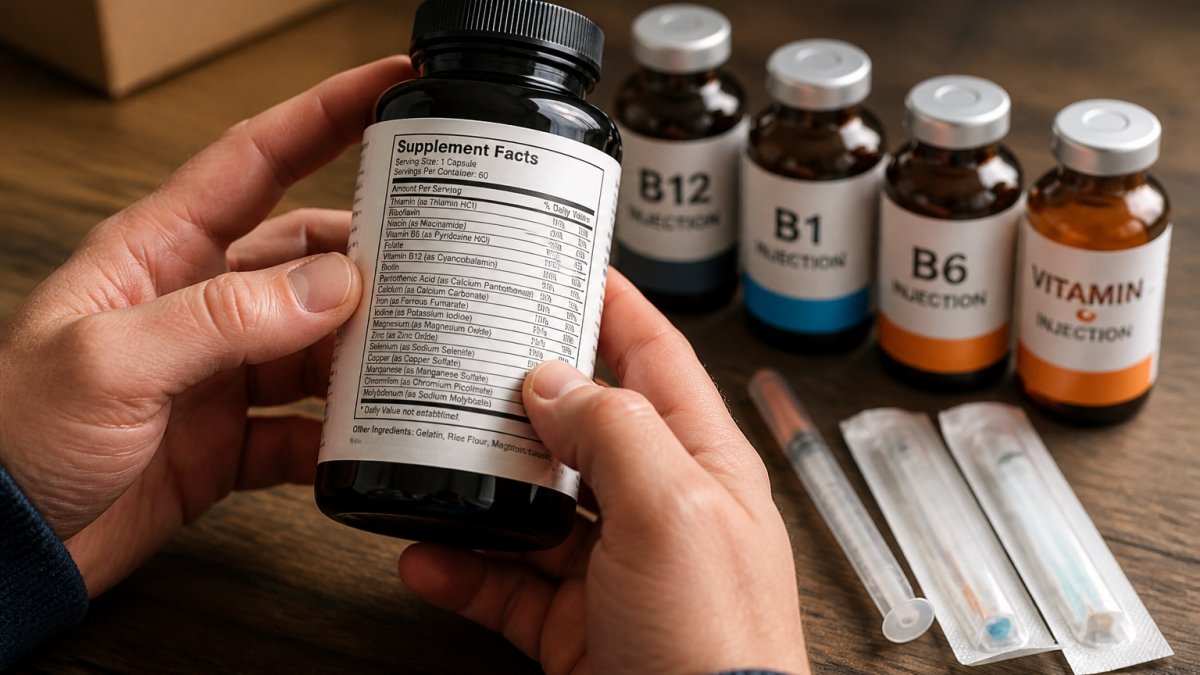
The Supplement Facts panel shows serving size, ingredient amounts, and nutrient percentages. Unlike nutrition facts on food, it has its own FDA rules (the FDA). Understanding each part helps you spot red flags and verify purity claims.
Serving Size and Servings Per Container
Check the serving size first, it determines all nutrient amounts listed below. Some products use tiny serving sizes to make amounts look bigger than they are. Always multiply the per-serving amount by how many servings you'll take daily to find your actual dose.
Amount Per Serving and Nutrient Claims
Compare the amount per serving to front-label claims. Words like "high potency" or "maximum strength" must be backed up by the Supplement Facts panel. If the front says "mega dose" but the panel shows a standard dose, that's a red flag.
How to Analyze a Supplement Ingredient List
The ingredient list shows everything in the product, listed by weight from most to least. Reading it helps you spot fillers, binders, and additives that may affect absorption or cause side effects in sensitive people.
Identifying Active vs. Inactive Ingredients
Active ingredients are the compounds you're taking the supplement for. Inactive ingredients (binders, fillers, preservatives) support the product's form and shelf life. Most are safe in small amounts, but if you have allergies or sensitivities, check this list carefully, some people react to magnesium stearate or certain dyes.
Spotting Proprietary Blends and Hidden Quantities
A proprietary blend lists multiple ingredients under one total weight without showing individual amounts. For example, "Herbal Complex 500mg" might contain five herbs, but you won't know if one is 400mg and the others 25mg each. Avoid proprietary blends when possible, buy supplements where each active ingredient has its own listed amount.
Decoding Supplement Label Claims and Front-of-Package Marketing
The front of the bottle uses marketing language like "natural," "pure," and "clinically proven" that means different things legally. Structure-function claims describe how a nutrient supports normal body function. Disease claims, which state a product treats or prevents disease, are illegal on supplements, if you see one, that's a serious warning sign.
Verifying Third-Party Tested Supplements
Third-party testing means an independent lab tested whether the supplement contains what the label claims and whether it's contaminated. Though voluntary, reputable makers pursue it to prove purity.
How to Request and Interpret Certificates of Analysis (COAs)
A Certificate of Analysis (COA) is a batch-specific, time-stamped report from a testing lab showing exactly what was found in a product, the most concrete evidence of purity available.
Requesting a COA: Most manufacturers post COAs on their websites or will provide one within 24-48 hours if you contact them.
What a complete COA includes:
- Product identity: Product name, lot number, and manufacturing date
- Active ingredient potency: Actual amounts with "pass" or "fail" status against label claims
- Heavy metal screening: Quantified results for lead, cadmium, arsenic, and mercury
- Microbial testing: Results for total aerobic microbial count, E. coli, Salmonella, and mold/yeast
- Pesticide residue testing: If applicable
- Lab accreditation: ISO 17025 or similar certification
Interpreting COA results: A "pass" result means the product met acceptance criteria. For heavy metals: lead below 2 mcg per serving, cadmium below 1 mcg per serving.
Recognizing Legitimate Third-Party Certifications
Third-party certifications are seals or logos that indicate a product has passed independent testing. The most widely recognized certifications include:
- NSF Certified for Sport: Tests for banned substances relevant to athletes and verifies label accuracy. NSF also offers NSF GMP certification for manufacturing facilities.
- USP Verified: Checks that products contain the ingredients listed in the amounts claimed, and screens for contaminants including heavy metals and microbial pathogens.
- ConsumerLab: Tests for label accuracy and contaminants; publishes test results on its website (some results are free, others require membership).
- Informed Choice: Focuses on banned-substance testing for sports supplements.
- Natural Products Association (NPA) GMP: Certifies manufacturing facilities that meet Good Manufacturing Practice standards.
How to verify a certification is real:
- Look for the certification seal on the label.
- Visit the certifying organization's official website and search their product database (e.g., usp.org for USP).
- Check the certification date, legitimate certifiers require re-testing every 1-3 years.
- Be wary of unfamiliar names or seals that don't link to a verifiable organization.
Checking for Contaminants and Manufacturing Standards
Purity includes more than just the listed ingredients. It also means the product is free from harmful contaminants that can enter supplements during ingredient sourcing, manufacturing, or storage. Understanding what contaminants to screen for and how to verify they've been tested is essential to assessing true purity.
How Contaminants Enter Supplements
Supplements can become contaminated during ingredient sourcing (heavy metals or pesticides in raw materials), manufacturing (improper equipment cleaning), or storage and transport (humidity, temperature fluctuations, non-airtight packaging).
Heavy Metal Testing: What the Numbers Mean
Heavy metals accumulate in the body and can cause neurological, kidney, and bone damage. FDA guidance limits: lead below 2 mcg per serving, cadmium below 1 mcg, arsenic below 15 mcg, mercury below 0.1 mcg. When reviewing a COA, ensure all heavy metals are reported as "pass" and well below these thresholds.
Microbial Testing: Bacteria, Mold, and Pathogens
A COA should show: total aerobic microbial count below 100,000 CFU/g, E. coli absent, Salmonella absent, and mold/yeast below 10,000 CFU/g. If any E. coli or Salmonella is detected, do not use the product. Elevated TAMC or mold indicates poor storage or manufacturing.
GMP Certification and Manufacturing Oversight
Good Manufacturing Practices (GMP) are standards set by the FDA that govern how supplements should be manufactured (the FDA). GMP rules cover facility design, equipment maintenance, employee training, record-keeping, and quality control. The FDA enforces GMP compliance, but the agency has limited resources and cannot inspect every facility regularly.
Types of GMP certification:
- FDA GMP compliance: The facility claims to follow FDA GMP rules. This is not independently verified and relies on FDA inspection, which may happen infrequently.
- Third-party GMP certification: An independent auditor has inspected the facility and verified compliance. Look for NSF GMP, USP GMP, or Natural Products Association (NPA) GMP seals. These require re-auditing every 1-3 years.
A facility with third-party GMP certification has been independently verified to maintain clean equipment, proper sanitation, documented procedures, and employee training. This reduces (but does not eliminate) the risk of contamination.
Batch Traceability and Lot Numbers
Batch traceability means you can track a specific bottle back to when and where it was manufactured.
What to look for on the label:
- Lot number: A code (letters and numbers) identifying the specific batch. Example: "LOT B2024-0847" or "Batch 20240315."
- Manufacturing date: When the product was made. This helps determine shelf life and whether the product is still within its tested window.
- Expiration date: When the product's potency and safety are no longer guaranteed. Supplements stored past expiration may have degraded active ingredients or increased microbial growth.
How to use batch traceability: If you read news about a supplement recall or contamination, check your bottle's lot number against the recall notice.
Manufacturers should be able to tell you the exact manufacturing date, facility, and ingredient suppliers for any lot number. If a company cannot provide this information, their traceability system is weak.
Step-by-Step Checklist for Evaluating Supplement Purity
Use this checklist every time you buy a supplement:
- Check the Supplement Facts panel for serving size and amounts
- Compare front-label claims to the Supplement Facts panel
- Read the full ingredient list for fillers and additives
- Look for third-party certification seals on the label
- Search for the product's COA on the manufacturer's website
- Match the COA lot number to your bottle's lot number
- Review COA results for heavy metals and microbial testing
- Verify GMP certification on the label or manufacturer's website
- Check certification dates to ensure they're current
- Avoid proprietary blends without individual ingredient amounts
| Checklist Item | What to Look For | Why It Matters |
|---|---|---|
| Serving Size | Listed at top of Supplement Facts | Determines all nutrient amounts |
| Active Ingredients | Named with specific amounts | Confirms you get what you paid for |
| Inactive Ingredients | Listed by weight | Identifies fillers and allergens |
| Third-Party Seal | NSF, USP, or ConsumerLab logo | Proves independent testing |
| COA Availability | Posted online or available on request | Shows actual test results |
| Heavy Metal Testing | Lead, cadmium, arsenic results | Confirms absence of toxins |
| Microbial Testing | Bacteria and mold screening | Ensures product safety |
| GMP Certification | Current facility certification | Verifies manufacturing standards |
Frequently Asked Questions
How can you tell if a supplement is pure?
Check for third-party testing certifications (NSF, USP, ConsumerLab), request a certificate of analysis (COA) from the manufacturer, verify GMP certification, and review the ingredient list for undeclared fillers. Look for batch numbers and expiration dates. Avoid proprietary blends that hide ingredient quantities. Pure supplements disclose all active and inactive ingredients with specific amounts per serving and show evidence of contaminant screening for heavy metals and microbial contamination.
What should you look for on a supplement label?
Read the Supplement Facts panel for serving size, amount per serving, and daily value percentages. Check the ingredient list order (ingredients listed by weight). Identify active ingredients and their forms (e.g., chelated minerals absorb better). Look for third-party testing seals on the front. Verify the manufacturer's name and address. Avoid front-of-package health claims that contradict label details. Check expiration dates and lot numbers for traceability.
How do you know if a supplement has been third-party tested?
Look for certification logos on the bottle: NSF Certified for Sport, USP Verified, or ConsumerLab tested. Visit the certifying organization's website to verify the product listing. Request a certificate of analysis (COA) from the manufacturer if not visible. Reputable brands display batch-specific testing results. Check the manufacturer's website for third-party testing documentation. Be cautious of claims like 'tested in-house only', independent testing provides stronger verification of purity and potency.
What does a proprietary blend mean on a supplement label?
A proprietary blend lists combined ingredients but hides the individual amounts of each component. Only the total blend weight is disclosed. This obscures whether you're getting therapeutic doses of active ingredients or mostly fillers. Proprietary blends reduce transparency and make it harder to assess purity and effectiveness. Prefer supplements that list each ingredient with its specific amount per serving. If a product uses a proprietary blend, request detailed ingredient quantities from the manufacturer before purchasing.
Buying supplements shouldn't require a chemistry degree. But taking time to read labels properly protects your health and your money. When you understand how to read supplement labels for purity, you can spot quality products and avoid contaminated ones. At Buy-Otc.com, we stock products from manufacturers who prioritize transparency and third-party testing. Shop right now and get access to competitive discounts on quality supplements with verified purity.