 how-to
Long-Term Safety of Daily Allergy Medication: What Science Shows
Table of Contents
- Is Daily Allergy Medication Safe Long-Term?
- Long-Term Antihistamine Side Effects You Should Know
- First-Generation vs. Second-Generation Antihistamines
- Safest Antihistamines for Long-Term Use
- How Long Can You Take Antihistamines Safely?
- Switching Allergy Medications: When and How
- Alternatives for Persistent Allergy Symptoms
- When to Talk to Your Doctor About Daily Use
- Frequently Asked Questions
Last Updated: October 17, 2026
Is Daily Allergy Medication Safe Long-Term?
Many people take allergy medication every single day, and the question of the long term safety of daily allergy medication keeps them up at night.
Second-generation antihistamines like cetirizine and levocetirizine are considered safe for long-term daily use by most allergists.
But "safe" doesn't mean risk-free. Some people experience tolerance over time. Others worry about dependence or rebound symptoms when they stop.
The real concern isn't whether you can take these medications daily, you can.
Long-Term Antihistamine Side Effects You Should Know
Daily antihistamines carry some potential side effects, especially over months or years. Most are mild, but know what to watch for.
Sedation and Drowsiness
First-generation antihistamines like diphenhydramine cause drowsiness in many people because they cross the blood-brain barrier and affect histamine receptors in your brain.
Second-generation antihistamines are much less sedating. Cetirizine and levocetirizine rarely cause significant drowsiness at standard doses, though some people report mild fatigue when they first start.
Sedation risk rises if you combine antihistamines with other medications or alcohol, since your body processes multiple sedating substances together. Never mix antihistamines without checking with your doctor first.
Tolerance and Reduced Effectiveness
One of the most frustrating side effects is tolerance. Your body adapts to the medication over time, and it stops working as well.
This happens more often with first-generation antihistamines, but it can occur with any antihistamine taken continuously for months, some people find symptoms return even at the same dose they've always taken.
The solution is often simple: switch to a different antihistamine for a few weeks, then switch back. This "drug rotation" helps reset your body's response.
Rebound Itching When Stopping
Stop taking antihistamines suddenly and some people experience rebound symptoms, with itching worse than before they started the medication.
This rebound effect is real but usually mild and temporary, lasting a few days to a week. Your body isn't becoming dependent, it's adjusting back to baseline, and the itching fades on its own.
To minimize rebound symptoms, taper slowly instead of stopping cold, and ask your doctor about a gradual reduction schedule if you've taken antihistamines for months.
First-Generation vs. Second-Generation Antihistamines
The difference between these two classes is crucial for long-term safety.
First-generation antihistamines include diphenhydramine, hydroxyzine, and chlorpheniramine.
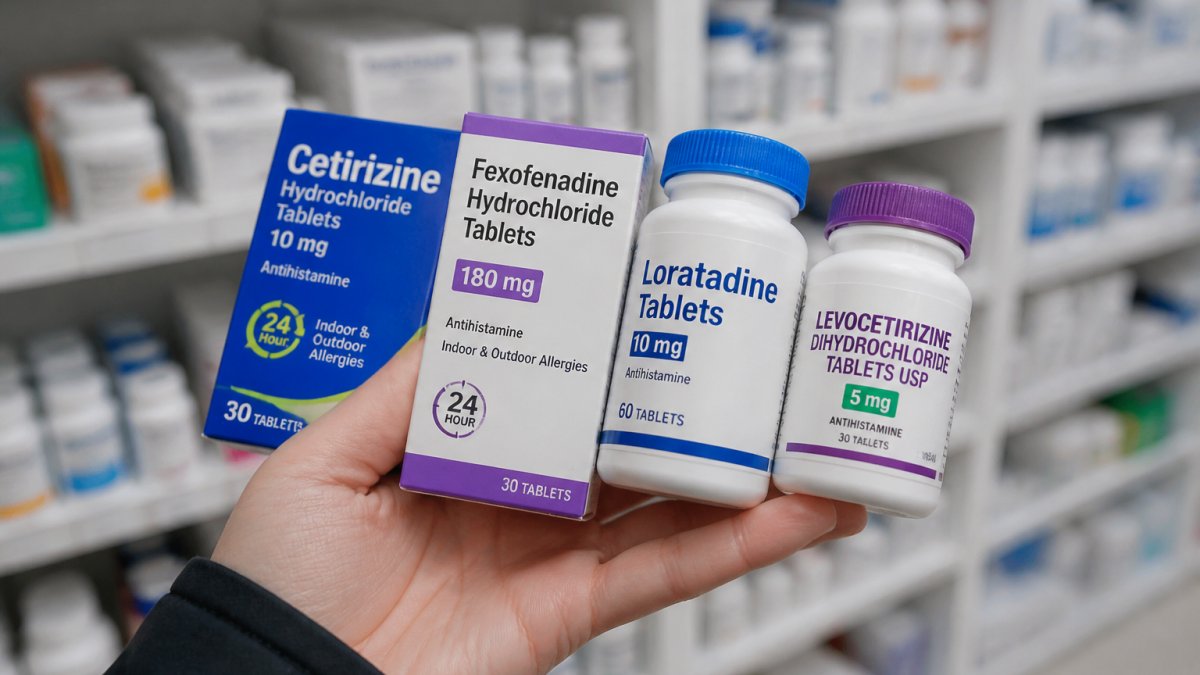
Second-generation antihistamines include cetirizine, levocetirizine, fexofenadine, and loratadine.
For long-term safety, second-generation antihistamines win: fewer side effects and no cognitive impairment.
Safest Antihistamines for Long-Term Use
"Second-generation" is a class label, not a safety guarantee. The four most common daily options differ in measurable ways, how sedating they are, how they are cleared from the body, and what long-term use looks like for each. Treating them as interchangeable is the single biggest mistake readers make when choosing a daily medication.
Cetirizine and Levocetirizine
Cetirizine is the most studied second-generation antihistamine for daily use, and levocetirizine is its active enantiomer, the half of the molecule that does the work. Both are cleared primarily by the kidneys, which matters for long-term safety: if kidney function declines with age or illness, the drug can accumulate.
Sedation is the trade-off. Cetirizine causes more drowsiness than loratadine or fexofenadine in head-to-head comparisons, roughly 10% of users report somnolence at standard doses, and that rate rises with alcohol or other sedating drugs. Levocetirizine is similar.
Loratadine and Desloratadine
Loratadine is metabolized in the liver by the CYP3A4 and CYP2D6 enzymes, and desloratadine is its active metabolite. That liver dependence cuts both ways: it means loratadine is less affected by kidney function, but it also means drugs that inhibit those enzymes, including some antifungals and antibiotics, can raise loratadine levels. Loratadine is among the least sedating options and has one of the longest post-marketing safety records of any over-the-counter allergy drug.
Fexofenadine
Fexofenadine is the active metabolite of terfenadine, a drug withdrawn from the market in the 1990s because of rare but serious heart-rhythm effects. Fexofenadine itself does not carry that risk at standard doses, which is why it remains available. It is not metabolized by the liver and is excreted largely unchanged, making it a common choice for people taking multiple medications. The catch: it must be taken with water and not with fruit juice, which can reduce absorption.
A practical comparison
| Ingredient | Sedation risk | Cleared by | Best fit for long-term daily use |
|---|---|---|---|
| Cetirizine | Moderate | Kidneys | People without kidney concerns who tolerate mild drowsiness |
| Levocetirizine | Moderate | Kidneys | Same as cetirizine, at half the milligram dose |
| Loratadine | Low | Liver (CYP3A4/2D6) | People wanting minimal sedation; watch for drug interactions |
| Fexofenadine | Low | Liver-independent | People on multiple medications or with kidney concerns |
What the evidence does and does not show
Decades of post-marketing surveillance support the long-term safety of second-generation antihistamines at labeled doses. What the evidence does not support is the idea that any of them are risk-free indefinitely, sedation, kidney accumulation, and liver interactions are real, ingredient-specific considerations. Claims about tolerance and dependence are far weaker in the evidence base and are covered separately below. If you are choosing a daily medication, match the ingredient to your health profile rather than to marketing language.
How Long Can You Take Antihistamines Safely?
There's no hard cutoff date where antihistamines suddenly become unsafe. You can take second-generation antihistamines daily for years if needed.
The long term safety of daily allergy medication depends more on monitoring your response than on any arbitrary time limit. Some people take the same antihistamine for a decade without problems.
Regular check-ins with your healthcare provider are important. They can assess whether your current medication is still the best choice and whether any underlying conditions have changed.
Switching Allergy Medications: When and How
Switching is common, but "just stop one and start another" is incomplete advice. The right approach depends on which drug you are leaving, how long you have taken it, and why you are switching.
When switching makes sense
- Tolerance or reduced effect. If the same dose no longer controls symptoms after months of daily use, a trial of a different ingredient is reasonable. Rotating between second-generation antihistamines, for example, cetirizine to fexofenadine, is a common pattern practitioners use.
- Sedation or cognitive effects. If cetirizine makes you drowsy, loratadine or fexofenadine is a logical next step.
- Interaction concerns. If a new prescription inhibits CYP3A4 or CYP2D6, moving off loratadine to fexofenadine may be appropriate.
- Kidney or liver changes. A change in lab results should prompt a medication review, not just a dose change.
How to switch without rebound symptoms
Most second-generation antihistamines do not require a taper when switching between them, you can typically stop one and start the next the following day. The exception is when you are stopping altogether rather than switching. In that case, rebound itching is a real and well-reported phenomenon, especially after long-term daily use of sedating antihistamines. A gradual reduction, for example, alternating days for one to two weeks before stopping, is a reasonable strategy to discuss with a clinician.
What to expect after the switch
Give the new medication at least one to two weeks before judging it. Antihistamines reach steady-state blood levels within a few days, but symptom control during real-world allergen exposure can take longer to assess. If the new drug is not working after two weeks, that is useful information, not a reason to switch again immediately.
The evidence-strength caveat
Much of what circulates about switching, drug rotation, tolerance, rebound, comes from clinical experience and small studies rather than large randomized trials. That does not make it wrong, but it means you should treat strong claims in either direction with caution. The most defensible position: switching between second-generation antihistamines is low-risk and reasonable; tapering is prudent when stopping altogether after long-term use; and any switch in a person with kidney, liver, or heart conditions should be reviewed by a clinician.
Condition-specific switching notes
- Older adults. Anticholinergic burden matters. First-generation antihistamines are on the Beers Criteria list of medications potentially inappropriate for older adults because of confusion, falls, and urinary retention risk. Moving to a second-generation option is often the safer long-term choice.
- Pregnancy and breastfeeding. Do not switch on your own. Loratadine and cetirizine are commonly considered preferred options, but the choice should be confirmed with an obstetric clinician.
- Children. Weight-based dosing matters, and some ingredients are approved for younger ages than others. A pediatric clinician should guide any switch.
- Kidney or liver disease. Cetirizine and levocetirizine may need dose adjustment in kidney impairment; loratadine may need adjustment in liver impairment. Fexofenadine is often favored when kidney function is a concern.
If you are switching because your symptoms are worsening rather than because of side effects, that is a signal to reassess the diagnosis and treatment plan, not simply to try a different antihistamine.
Alternatives for Persistent Allergy Symptoms
If daily antihistamines aren't controlling your symptoms, other options exist.
Nasal corticosteroid sprays like fluticasone reduce inflammation directly in your nasal passages.
Decongestants temporarily shrink swollen nasal tissues.
Immunotherapy (allergy shots or sublingual tablets) addresses the root cause by gradually desensitizing your immune system to allergens.
Environmental control is often overlooked but powerful: HEPA filters, allergen-proof mattress covers, and frequent cleaning reduce allergen exposure so you need less medication.
When to Talk to Your Doctor About Daily Use
Schedule an appointment with your doctor or allergist if:
- Your antihistamine stops working as well as it used to
- You're experiencing new side effects after months of use
- You want to stop taking the medication
- Your symptoms are getting worse despite daily medication
- You're taking other medications and wondering about interactions
- You're pregnant or breastfeeding and need guidance on safe options
- Your allergies are affecting your quality of life
Your healthcare provider can evaluate your specific situation, understand your medical history, and recommend the best long-term approach for you.
The long term safety of daily allergy medication is generally good, especially with second-generation antihistamines. But individual responses vary. What works perfectly for one person might need adjustment for another.
Managing allergies effectively means finding the right medication for your body and monitoring how you respond over time. Buy-Otc.com provides discounted prices on B12 Shots, B1 injections, B6 Injectable, Vitamin C Shots, and also needles, so you can manage your symptoms without breaking your budget.
Frequently Asked Questions
Can I take allergy medicine long term every day?
Yes, second-generation antihistamines like cetirizine and levocetirizine are designed for daily use and are generally considered safe for long-term daily use when taken as directed. Many people take them for months or years without significant issues. However, tolerance can develop over time, meaning the medication becomes less effective. Consult your healthcare professional if you need to take daily allergy medication for extended periods, especially if your symptoms change or worsen.
What are the main long-term antihistamine side effects?
Common side effects with daily use include drowsiness (especially with first-generation antihistamines), dry mouth, headache, and fatigue. Second-generation antihistamines cause less sedation. Tolerance can develop, reducing effectiveness over months to years. Some people experience rebound itching or worsening symptoms when stopping medication suddenly. Long-term use rarely causes serious adverse effects, but individual risk factors like age, pregnancy, or other medications should be discussed with your healthcare professional.
Which antihistamines are safest for long-term use?
Second-generation antihistamines like cetirizine (Zyrtec) and levocetirizine (Xyzal) are considered the safest options for long-term daily use. They have minimal sedating effects and lower risk of tolerance compared to first-generation drugs like diphenhydramine (Benadryl). These medications were specifically developed for predictable, on-demand use and extended daily use. Always follow package directions and speak with a healthcare professional before starting any long-term medication regimen.
What should I do when switching allergy medications?
When switching antihistamines, stop the first medication and wait 24-48 hours before starting a new one to avoid drug interactions and cumulative sedation. Never abruptly stop daily antihistamines, as rebound itching or worsening symptoms can occur. If tolerance develops and your current medication becomes less effective, your healthcare professional can recommend alternatives or suggest taking breaks. Document your symptom patterns and any side effects to discuss with your doctor before making changes.