 how-to
Regulations for Disposing of Medical Needles at Home
Table of Contents
- What Counts as Medical Sharps and Why Safe Disposal Matters
- FDA-Approved Sharps Containers: Your First Line of Defense
- Household Container Alternatives When FDA Containers Aren't Available
- Sharps Disposal Drop-Off Locations and How to Find Them
- Mail-Back Sharps Disposal Programs: Convenience and Cost
- State and Local Regulations: What You Need to Know
- What to Do After a Needlestick Injury or Container Leak
- Common Mistakes That Put You and Waste Workers at Risk
- Frequently Asked Questions
Last Updated: October 16, 2026
What Counts as Medical Sharps and Why Safe Disposal Matters
Lancets, pen needles, and small syringes all count as medical sharps.
Used sharps belong in a puncture-resistant, leak-resistant container, not loose in the trash.
At Buy-Otc.com, we recognize that home-based medical care is increasingly common. Understanding regulations for disposing of medical needles at home is essential.
Safe disposal options exist: FDA-cleared sharps containers, approved household alternatives in some states, or community drop-off programs.
FDA-Approved Sharps Containers: Your First Line of Defense
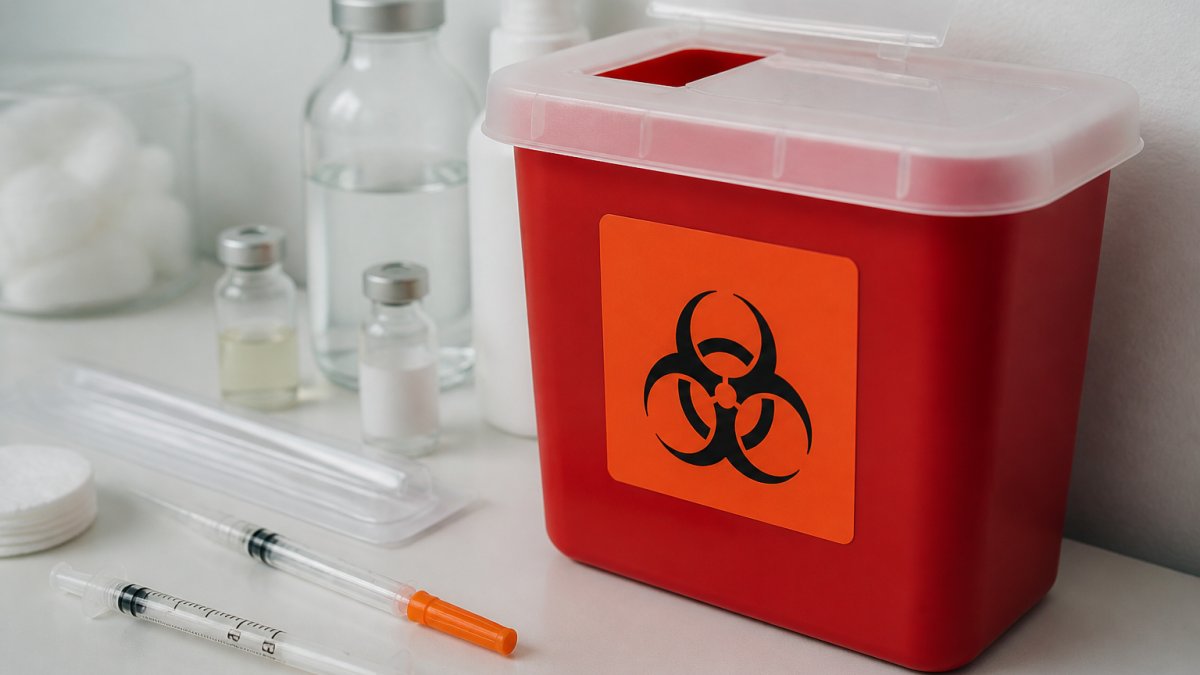
FDA-approved sharps containers are purpose-built for safe needle disposal, made of puncture-resistant plastic and designed to prevent accidental exposure. They meet strict safety standards and are your best option for home needle storage.
An FDA-cleared sharps container features:
- Puncture-resistant walls
- A leak-resistant design
- A closable, sealing lid
You can purchase sharps containers from pharmacies, medical supply stores, and online retailers like Buy-Otc.com.
How to Fill, Seal, and Label a Sharps Container
Filling your sharps container correctly prevents injuries:
- Place the container on a stable surface where it won't tip over
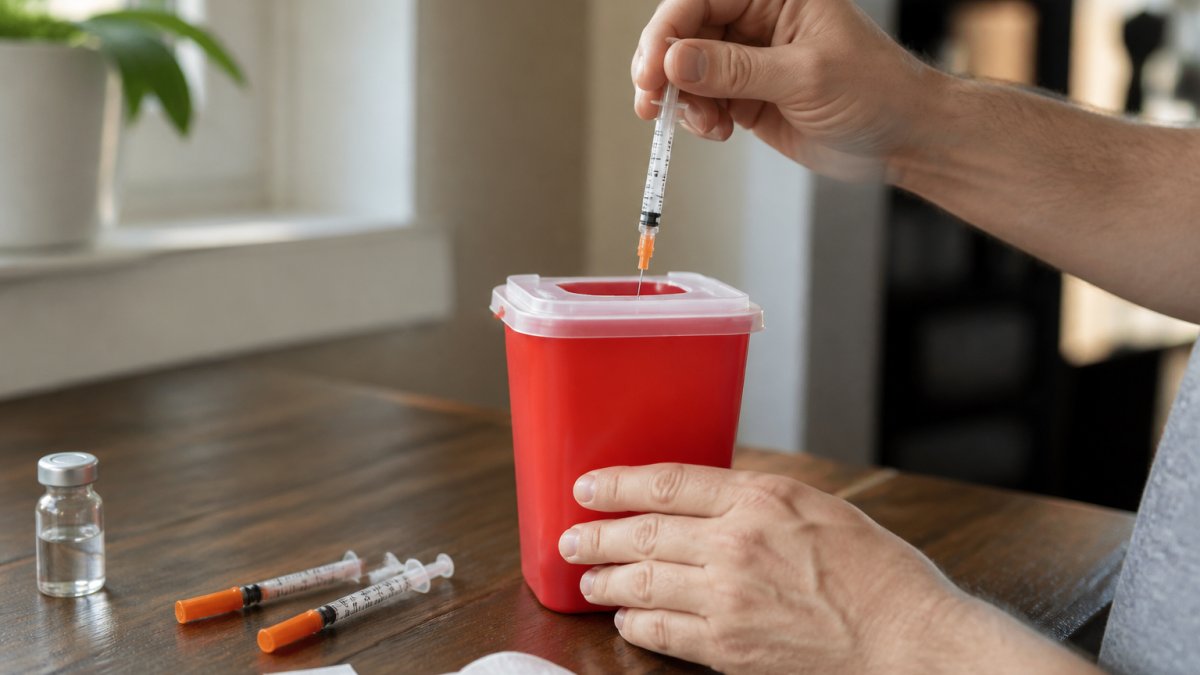
- Insert needles point-first, never recap or bend them
- Add syringes, lancets, and other sharps as you use them
- Stop at the fill line, never overfill
- Seal the container completely
- Label it with a biohazard symbol and "Sharps Waste"
After sealing, store it in a cool, dry place out of reach of children and pets, a locked cabinet or high shelf works well. Avoid direct sunlight or extreme heat.
Household Container Alternatives When FDA Containers Aren't Available
Some states allow household containers when FDA-cleared containers aren't accessible, but regulations vary significantly by location. Acceptable alternatives in certain jurisdictions include heavy-duty plastic bottles (like laundry detergent or bleach containers), rigid plastic containers with secure lids, and metal containers that won't corrode or leak.
If you use a household container:
- Fill it with used sharps only, no other medical waste
- Use a lid that closes securely
- Label it clearly with "Sharps Waste" and a biohazard symbol
- Seal it completely before disposal
- Never use containers that previously held food or beverages
The safest approach is always an FDA-approved sharps container. Household alternatives work only where regulations permit and when you follow strict labeling and sealing procedures.
Sharps Disposal Drop-Off Locations and How to Find Them
Drop-off is the most widely accepted disposal route, but the useful question is which route fits your situation, and what to do when the nearest site is an hour away or your pharmacy has stopped taking containers.
A decision tree for choosing your route
Work through these questions in order. Stop at the first route that fits.
- Does your county or city run a household hazardous waste (HHW) facility or collection event that accepts sharps? If yes, this is usually the lowest-cost, most clearly legal option; many accept sealed containers free to residents.
- Does a pharmacy, clinic, or hospital near you operate a take-back kiosk or accept sealed containers? Participation varies by store and can change without notice, call the specific store, not the corporate line.
- Does your state recognize mail-back? If you have limited transportation, live rurally, or cannot store a filled container safely, mail-back converts the problem into a shipping task.
- Does your state and your hauler permit sealed containers in household trash? Only if both say yes. This is the fallback, not the default.
- None of the above? Contact your state environmental agency for the current approved route. Do not improvise a method no agency has confirmed.
What drop-off actually costs
Costs vary by program; treat these as patterns to verify rather than fixed prices:
- Municipal HHW and county collection events: Often free to residents, funded through waste fees; some limit how many containers a household may bring per event.
- Pharmacy take-back: Frequently free, but some stores charge a per-container fee or accept only containers purchased from them.
- Hospital and clinic programs: May be free or charge a small handling fee; availability is often limited to certain hours or departments.
Before you drive anywhere, call and ask: Do you accept home sharps containers today? Is there a fee? Is there a limit on container size or quantity? A two-minute call prevents a wasted trip.
How to find a site without guessing
- County solid waste authority website: The most reliable source for HHW facility hours, event schedules, and what is accepted. Search "[your county] household hazardous waste sharps."
- State health or environmental agency: Many publish a searchable or downloadable list of sharps collection sites.
- FDA sharps disposal guidance: Use the agency's general guidance to confirm container and sealing practices before you arrive.
What to bring and how to hand it over
Bring only a sealed, labeled container, never loose sharps, and never an open or leaking container. Follow staff instructions and hand the container over rather than setting it down unattended. If a container is leaking or damaged, tell staff first so they can use the right protective equipment.
When there is no site nearby
Rural and small-town residents often face a two-hour round trip or a once-a-year collection event. Practical responses:
- Batch your trips: Store filled, sealed containers in a cool, dry place out of reach of children and pets, and combine drop-offs with other errands. Confirm any state storage-time limit first.
- Use mail-back as the primary route: For low-volume users, a prepaid mail-back container can replace multiple drives.
- Ask your pharmacist about manufacturer programs: Some device makers and pharmacies sponsor take-back for their own products.
Mail-Back Sharps Disposal Programs: Convenience and Cost
Mail-back programs let you dispose of sharps from home without visiting a facility: fill a special container, seal it, and mail it to a licensed disposal company. This works well for rural residents and people with limited mobility.
Here's how they typically work:
- Order a mail-back sharps container online or from a medical supply company
- Fill it with your used sharps at home
- Seal and label it according to instructions
- Place the sealed container in the prepaid shipping box
- Drop the box at a postal location or arrange home pickup
- The company disposes of the sharps safely and legally
Some programs charge per container; others offer subscriptions for regular users. Check that any mail-back program uses licensed medical waste disposal facilities and provides documentation of proper disposal, ensuring your sharps are handled according to federal and state regulations for disposing of medical needles at home.
State and Local Regulations: What You Need to Know
No single federal rule governs how a household disposes of used needles. The EPA treats household sharps as household waste and defers to state and local authorities, while the FDA regulates the containers themselves, not where you take them. That split is why two neighbors in different states can follow completely different legal paths for the same insulin pen needle.
The three regulatory layers that actually apply to you
- Federal (container and transport): FDA clears sharps containers as medical devices, and OSHA's bloodborne pathogens standard (29 CFR 1910.1030) governs how employers, including pharmacies and clinics that take back containers, must handle sharps. Neither agency tells a household which disposal route is legal.
- State (disposal method): State environmental and health agencies decide whether home sharps may go in household trash, must go to a collection site, or may use mail-back. Search your state health department site for "home sharps disposal" rather than a general waste page.
- Local (collection and trash acceptance): County and municipal solid waste authorities decide whether your curbside hauler will accept a sealed sharps container, and they run or fund the drop-off sites. A state may permit trash disposal while your city's hauler prohibits it, the stricter local rule controls.
A practical way to read your state's rule
Most state rules fall into one of three patterns. Use this to interpret what you find, then confirm with the agency's own page:
- Trash-permitted states: The state allows sealed, labeled sharps containers in household garbage, often with conditions such as a rigid container, a secure lid, and a visible "Sharps" label. Even here, check your hauler's contract, many refuse sharps regardless of state law.
- Collection-required states: The state directs households to drop-off sites, HHW events, or mail-back and discourages or prohibits trash disposal. These often publish a list of participating pharmacies or county sites.
- Mail-back-recognized states: The state explicitly names mail-back as an approved route, sometimes with container or labeling requirements. This is common where collection sites are sparse.
Questions to ask your state or county agency
One call or web form to your state environmental agency or county solid waste office can settle the whole question. Ask specifically:
- May I place a sealed, labeled sharps container in my curbside household trash?
- Does the state or county operate sharps drop-off sites, and where is the current list?
- Are household containers (detergent bottles, rigid plastic) acceptable, or is an FDA-cleared container required?
Record the date and the name of the person or page you relied on, rules and site lists change, and a record helps if a hauler or landlord questions your method.
Where to find the official answer fast
- Your state health department or state environmental protection agency, search for the home sharps fact sheet.
- Your county or city solid waste authority, for hauler acceptance and drop-off lists.
- The FDA's sharps disposal website, for general recommended practices and container guidance, which many states reference.
Special cases that change the rule
- Sharps contaminated with medication: Some state rules treat medication-contaminated sharps, such as auto-injectors or leftover injectable medication, differently from plain needles. Check whether the medication itself must go through a drug take-back program first.
- Business or multi-unit use: If you inject for a home business, a group home, or a rental property with shared waste service, the household exemption may not apply and stricter medical-waste rules can kick in.
- Travel: A container legal to carry in your state may not be accepted where you are visiting. Seal and label it before travel, and confirm the destination state's rule before you leave.
If you cannot find a clear answer, treat the FDA-cleared container plus a drop-off or mail-back route as the default. That combination is accepted in the widest range of jurisdictions and avoids relying on a trash exemption you cannot verify.
What to Do After a Needlestick Injury or Container Leak
Needlestick injuries happen despite careful handling. If you or someone else is pricked by a used needle, act immediately.
Immediate steps after a needlestick:
- Wash the wound with soap and warm water for 15 seconds
- Let it bleed slightly if it's not already bleeding
- Apply an antiseptic like hydrogen peroxide or alcohol
- Cover the wound with a clean bandage
- Contact your doctor or local health department immediately
Your doctor will assess whether you need post-exposure prophylaxis (PEP) or other treatment. If the needle came from a container with unknown medical history, medical evaluation is especially important.
If your sharps container leaks:
- Do not touch the spilled sharps with bare hands
- Put on gloves and use tongs or forceps to pick up sharps
- Place them in a new sealed container
- Clean the area with bleach solution (1 part bleach to 10 parts water)
- Dispose of gloves in a sealed bag
- Contact your local health department if the leak was significant
Leaks from improperly sealed containers create exposure risks, which is why proper sealing and puncture-resistant containers matter. A sealed FDA-approved container virtually eliminates leak risk.
Common Mistakes That Put You and Waste Workers at Risk
Several mistakes happen repeatedly in home sharps disposal.
Recapping needles: Recapping causes most needlestick injuries.
Throwing sharps in regular trash: Loose sharps in household garbage injure sanitation workers.
Flushing sharps down the toilet: Needles don't dissolve.
Leaving containers unsealed: An open container poses risks to family members, pets, and visitors.
Failing to label containers: Unlabeled containers create confusion about contents.
Home-based medical care requires responsible sharps disposal.
Frequently Asked Questions
How do I dispose of medical needles at home safely?
Place used needles and syringes immediately into an FDA-cleared sharps container, never into household trash or recycling. Fill the container until the fill line, then seal it securely. Label the container with a biohazard warning. Once full, take it to a community drop-off site, mail it back through a mail-back program, or follow your local waste management guidelines. Never recap needles or try to bend or break them, this is the leading cause of needlestick injuries.
What type of container should I use for used needles at home?
An FDA-cleared sharps container is the safest option. These are puncture-resistant, leak-resistant, and designed specifically for medical sharps. If an FDA-approved container is unavailable, some states permit household alternatives like a rigid plastic detergent or bleach bottle with a secure, closable lid, though availability depends on local regulations. Always check your state and local guidelines before using a household container alternative.
Where can I take a full sharps container for disposal?
Options include community drop-off sites (pharmacies, hospitals, clinics, or household hazardous waste facilities), mail-back sharps disposal programs, or municipal waste collection events. Many pharmacies including large chains accept filled sharps containers at no cost. Contact your local waste management authority or visit your state health department website to find the nearest drop-off location or mail-back program near you.
What should I do if I get a needlestick injury or my sharps container leaks?
For a needlestick injury, wash the wound immediately with soap and water, apply an antiseptic, and seek medical attention promptly to discuss testing and post-exposure prophylaxis if needed. For a container leak, do not touch the spilled sharps directly. Wear gloves, use a broom and dustpan to carefully sweep them into a new sharps container, then wipe the area with a bleach solution. Report the incident to your healthcare provider and local health department.