 How-to
How to Treat B12 Injection Bruising
Last Updated: November 1, 2026
Quick Summary
Treat B12 injection bruising with a wrapped cold pack for 10 to 15 minutes at a time during the first 24 hours, then switch to a warm damp cloth after 48 hours. Never apply heat in the first 24 hours, as it can make the bruise larger. Most B12 injection bruising fades on its own within a few days to about a week.
- Wrap ice or frozen peas in a thin cloth and never place ice directly on bare skin.
- Skip aspirin and ibuprofen unless your clinician approves them, since they can worsen bruising.
- Do not massage or press the bruise, because pressure can spread the leaked blood.
- Call your care team if a bruise is still growing after 48 hours.
- A small lump under the skin is common and usually fades within a few days.
Table of Contents
- Is Bruising After a B12 Injection Normal?
- How to Treat a Bruise After an Injection: Step by Step
- How Long Injection Site Bruising Lasts
- B12 Injection Technique to Prevent Bruising
- Soreness, Small Lumps, and Other Common Injection-Site Reactions
- Injection Site Infection Symptoms and When to Seek Medical Advice
- Why Some People Bruise More Easily After Injections
- Ordering B12 Injections and Needles With Confidence
- Frequently Asked Questions
Is Bruising After a B12 Injection Normal?
Yes, B12 injection bruising is normal and very common. A minor bruise is a harmless injection-site reaction, not a sign that something went wrong.
Here is what happens. The needle passes through skin and into muscle or fat. Along the way, it can nick a tiny blood vessel.
Most bruises are small and fade on their own. You do not need to panic.
Why a Needle Can Nick a Small Blood Vessel
Blood vessels sit close to the surface in some spots. The outer thigh and upper arm have plenty of them. A needle that hits one will cause a small bleed under the skin.
This is more likely when:
- The injection is rushed
- The needle is too thick for the site
- You inject into a spot with visible veins
A poorly placed injection is the most common cause. The good news is that technique fixes most of it. We cover that below.
How to Treat a Bruise After an Injection: Step by Step
Treat a fresh injection bruise with a wrapped cold pack for the first 24 hours, then switch to gentle warmth. Most bruises need no other care. The timeline below turns that advice into a practical routine.
First 24 Hours: Cold to Limit the Bruise
Cold narrows blood vessels, which slows the leak of blood into surrounding tissue and limits how large the bruise becomes. Apply cold as soon as you notice bruising or right after the injection if you are prone to bruising.
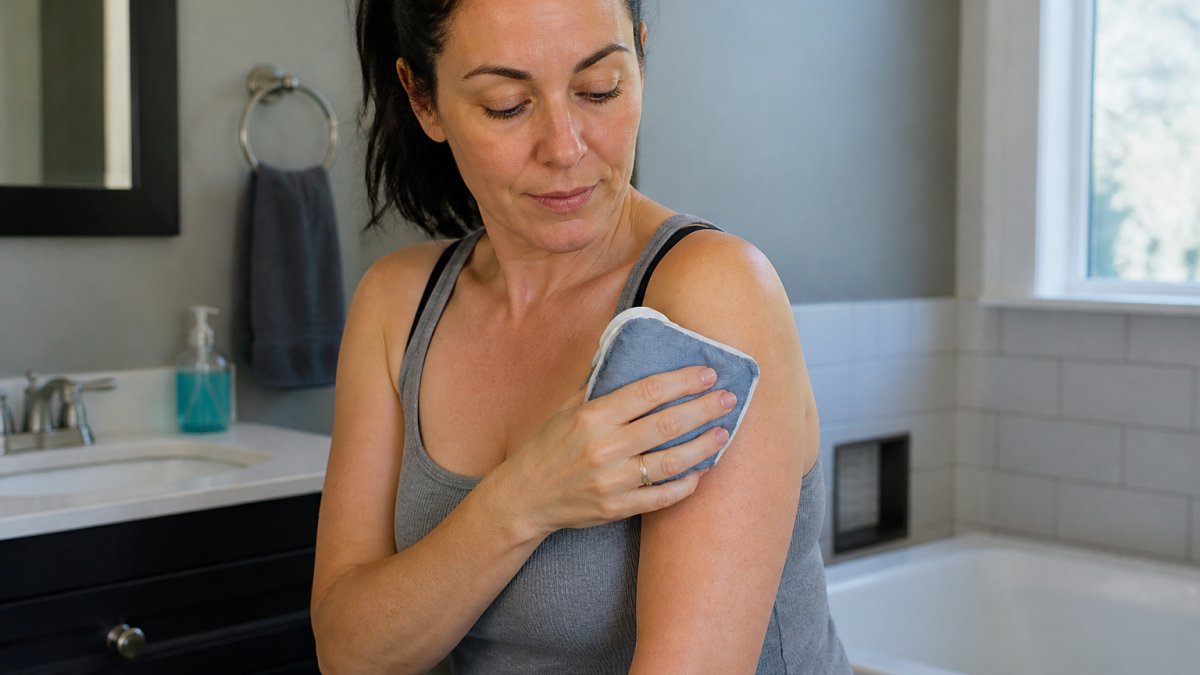
- Apply a wrapped cold pack. Wrap an ice pack or a bag of frozen peas in a thin cloth. Hold it against the site for 10 to 15 minutes.
- Take a break. Wait at least an hour before reapplying. Never place ice directly on bare skin, direct cold can cause a cold burn.
- Keep the site clean. Wash gently with soap and water and pat dry. Do not rub.
- Skip aspirin and ibuprofen unless your clinician has approved them. These medicines can thin the blood and make bruising worse. Acetaminophen is often a better choice for soreness, but confirm with your care team.
- Elevate if you can. Raising the limb above heart level, when practical, slows blood flow to the area.
- Leave the bruise alone. Do not massage or press it. Pressure can spread the leaked blood.
24 to 48 Hours: Watch and Decide
During this window, the bruise should stop expanding. Continue cold if the site still feels tender, or leave it alone if it is comfortable. This is the point to check for the warning signs covered in the escalation section, expanding bruising, worsening pain, or a growing hot lump.
After 48 Hours: Warmth to Clear the Bruise
Warmth opens blood vessels and helps the body clear the trapped blood. Once the bruise has stopped expanding, typically after 48 hours, switch to a warm, damp cloth for 10 to 15 minutes at a time, a few times a day.
| Timeframe | Compress | Why |
|---|---|---|
| First 24 hours | Wrapped cold pack, 10-15 minutes at a time, at least an hour apart | Narrows vessels, limits bruise size |
| 24-48 hours | Cold if tender, or none | Watch for expansion or worsening |
| After 48 hours | Warm damp cloth, 10-15 minutes | Helps clear leaked blood |
| Any time | No direct ice on skin | Prevents cold burn |
When to Stop Home Care
Stop home care and contact a healthcare professional if the bruise is still growing after 48 hours, pain is worsening, the site feels hot and hard, or you see signs of infection.
For a full aftercare checklist that covers what to do beyond bruise care, see our guide on what to do after a B12 injection.
How Long Injection Site Bruising Lasts
Most B12 injection bruising lasts a few days to about a week, and it usually fades on its own.
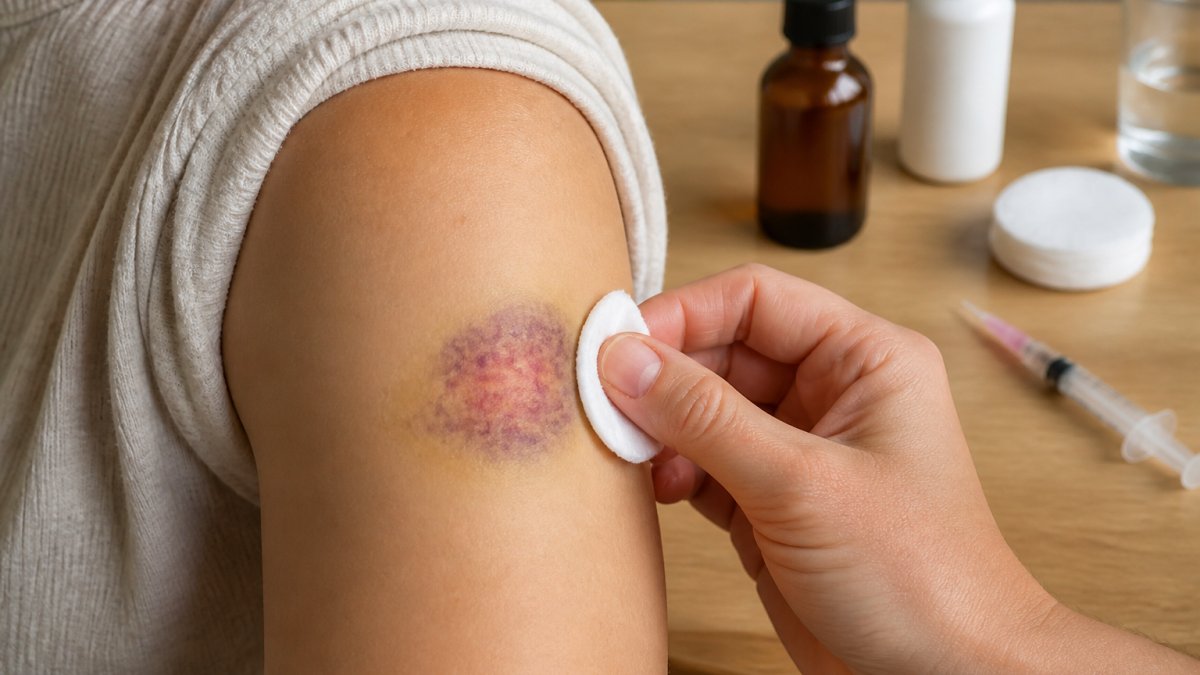
The bruise will change color as it heals. It usually starts red or purple, turns blue, then green, then yellow (Bruise healing). That color shift is normal.
Call your care team if a bruise is still growing after 48 hours. That is not typical.
B12 Injection Technique to Prevent Bruising
Good technique can reduce the chance of bruising. A rushed injection is a common cause, so slowing down helps.
Follow these steps:
- Wash your hands and clean the site with an alcohol swab
- Let the alcohol dry fully before you inject
- Use a fresh needle every time
Do not rub the spot after you pull the needle out. Light pressure for a minute is enough.
If you are new to self-injecting, our step-by-step guide on how to self-administer B12 injections safely walks through the full process.
Choosing and Preparing the Injection Site
Site choice matters. Pick a spot with good muscle and few visible veins.
For an intramuscular injection, the outer thigh and upper arm work well. For a subcutaneous injection, the belly and the fatty part of the thigh are good choices.
Needle gauge also plays a role. Our article on the best needle gauge for painless subcutaneous injections explains how to pick the right size.
Soreness, Small Lumps, and Other Common Injection-Site Reactions
A small lump under the skin is common and usually harmless. It often comes from a little fluid or blood pooling at the site. Most lumps fade within a few days.
Other normal reactions include:
- Mild soreness or tenderness
- Slight redness
- A small raised bump
These usually clear up on their own. Rotating your injection sites helps reduce irritation. Our guide on how to rotate B12 injection sites shows a simple rotation plan.
Injection Site Infection Symptoms and When to Seek Medical Advice
Most injection-site reactions are minor and resolve without treatment. The challenge is telling an ordinary bruise apart from something that needs a clinician. Use the distinctions below rather than a single symptom checklist.
Ordinary Bruise vs. Something That Needs a Call
A normal bruise stays roughly the same size or shrinks after the first day, is tender but not intensely painful, and does not feel hot to the touch. The following patterns are different and warrant a call to your care team:
- Expanding bruising. A bruise that keeps growing after 48 hours, or that spreads down the limb, can indicate ongoing bleeding under the skin rather than a single nicked vessel.
- Severe or worsening pain. Tenderness that intensifies instead of easing, or pain out of proportion to the size of the bruise, is not typical of a simple injection bruise.
- Persistent bleeding. A small drop of blood at the needle site that stops with light pressure is normal. Bleeding that restarts, soaks through a bandage, or continues well after the injection is not.
Signs of Infection
Infection at an injection site typically appears within a few days and worsens rather than improves. Contact a healthcare professional if you notice:
- Spreading redness or warmth around the site
- Swelling that increases after the first 24 hours
- Pus or drainage
These can point to a skin or soft-tissue infection. They can also, less commonly, signal a more serious reaction. Either way, prompt medical advice is appropriate.
Signs of an Allergic Reaction
A localized allergic reaction can cause hives, itching, or swelling near the injection site. A systemic reaction is a medical emergency. Seek immediate care for:
- Difficulty breathing or wheezing
- Swelling of the face, lips, tongue, or throat
- Widespread hives
When to Call vs. When to Seek Emergency Care
A reasonable rule: call your care team the same day for expanding bruising, worsening pain, signs of infection, or a lump that is growing and hot. For general context on how bruises form and when they deserve a closer look, the MedlinePlus guide to bruises is a useful reference.
If you are unsure, err toward contacting your clinician. Most questions about injection-site reactions can be resolved with a phone call, and early guidance is safer than waiting.
Why Some People Bruise More Easily After Injections
Some people bruise more than others, even with perfect technique. That is not a flaw in their routine. It comes down to the body.
Common risk factors include:
- Age, since skin and vessels get more fragile over time
- Blood-thinning medicines like aspirin or warfarin
- Certain supplements, such as fish oil or high-dose vitamin E
If you bruise heavily every single time, mention it to your care team. They can check whether a medicine or health issue is behind it. The MedlinePlus guide to bruises explains how bruising works and when it deserves a closer look.
Ordering B12 Injections and Needles With Confidence
Getting your supplies from a trusted source matters as much as good technique. Buy-Otc.com offers discounted prices on B12 shots and needles, with secure checkout backed by Geotrust SSL protection. Registered users also get access to special offers. For current prices, visit Buy-Otc.com directly, as pricing depends on quantity and delivery.
A few habits keep every order smooth:
- Order fresh needles in the right gauge for your route
- Keep a small supply of alcohol swabs and cold packs on hand
- Store your injectables as directed on the label
Frequently Asked Questions
Is it normal to bruise after a B12 shot?
Yes. A minor bruise at the injection site is one of the most common reactions to a B12 injection. It happens when the needle nicks a small blood vessel and a little blood leaks into the surrounding tissue. Most bruises are harmless and fade on their own within a few days. Applying a cloth-wrapped cold pack for 10 to 15 minutes during the first 24 hours can ease discomfort and limit color spread. If bruising is unusually large, keeps spreading, or comes with fever or spreading redness, contact your care team.
How long does bruising after a B12 injection last?
Most injection site bruising fades within several days, though larger bruises can take longer to fully resolve. The color typically shifts from red or purple to blue, green, then yellow as the leaked blood breaks down. Bruises from a rushed injection or a nick to a larger vessel may last longer. If a bruise is still growing after 48 hours, feels hot, or is accompanied by swelling and pain that worsens, seek medical advice rather than waiting it out.
What should you avoid doing after a B12 shot?
Skip vigorous exercise with the injected arm for the rest of the day, and avoid rubbing or massaging the site, which can push more blood into the tissue. Don't apply heat during the first 24 hours, since warmth increases blood flow and can make a bruise spread. Avoid alcohol right after injecting because it can thin the blood slightly. Also hold off on re-injecting the same spot for several days, and never reuse a needle, which raises the risk of infection and additional tissue trauma.
When should you seek medical care for a bruise after an injection?
Contact a healthcare professional if the bruise keeps expanding after 48 hours, becomes hard and hot, or is accompanied by fever, chills, or streaks of redness spreading from the site. These can be injection site infection symptoms. Also seek advice if you notice pus, worsening pain, numbness, or if you bruise heavily after every injection despite good technique, since frequent large bruises can point to an underlying bleeding or clotting issue worth checking.
Bruising after a B12 injection is common, and most cases clear up with simple care: cold first, warmth later, and a steady hand. The harder part is getting safe supplies and the right needle for your routine. Buy-Otc.com makes that easier with discounted injectables and needles, a secure shopping experience, and responsive customer service. Get started with Buy-Otc.com and keep your B12 routine on track.