 Comparison
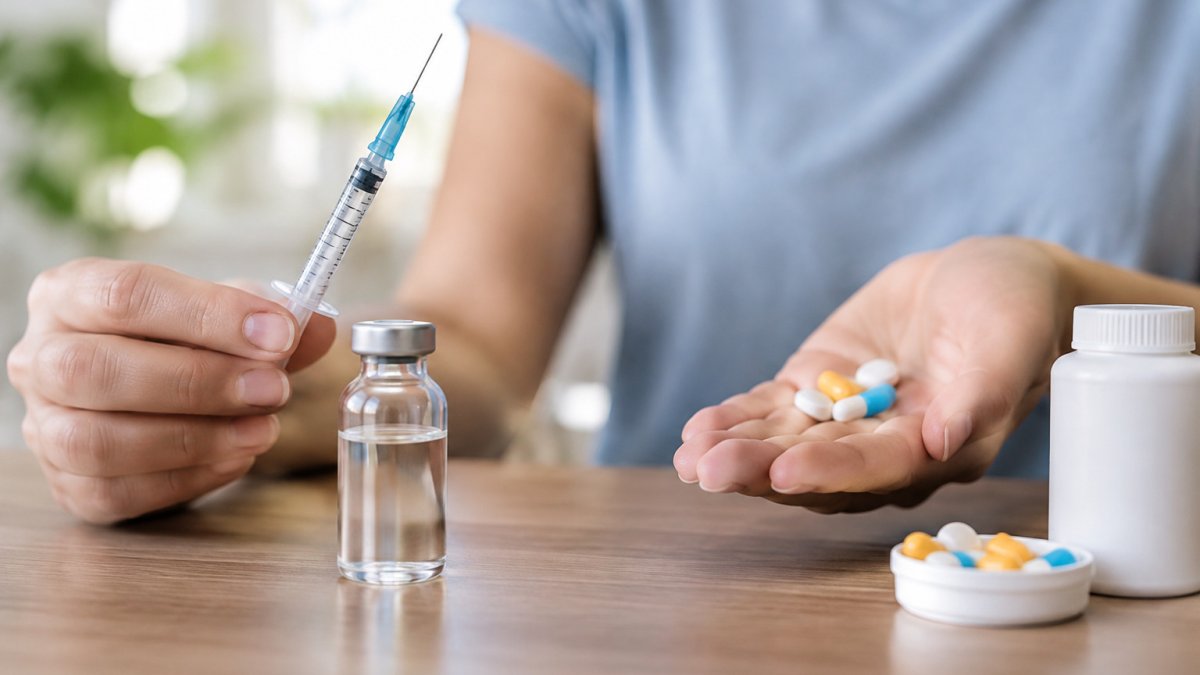
Are B12 Shots Better Than Pills for Deficiency?
Last Updated: November 11, 2026
Quick Summary
The choice in B12 shots vs pills for deficiency comes down to whether your body can absorb oral B12. High-dose pills work well for most people with dietary deficiency, while injections remain the reliable route when absorption is impaired, such as pernicious anemia or malabsorption.
- A typical injection dose is 1,000 mcg, while oral pills are commonly 1,000 to 2,000 mcg per day.
- Injections bypass digestion entirely, so blood levels climb quickly and symptom relief is often faster.
- Pernicious anemia, chronic gastritis, or gastric surgery can make standard oral supplements insufficient.
- A common pattern is starting with injections, then switching to high-dose oral therapy once levels normalize.
- Levels are often rechecked after roughly two to three months to confirm the chosen route is holding them.
Table of Contents
- B12 Shots vs Pills: Quick Comparison Table
- How Each Treatment Raises Your B12 Levels
- B12 Injection vs Sublingual: What the Evidence Says
- How Many B12 Pills Equal a Shot?
- Oral Vitamin B12 Supplements: Who They Work For
- Vitamin B12 Injections Dosage and Frequency Explained
- Matching Treatment to Cause: A Practical Decision Guide
- Testing, Follow-Up, and Recovery Timelines
- Frequently Asked Questions
B12 Shots vs Pills: Quick Comparison Table
The choice between B12 shots vs pills for deficiency comes down to one question: can your body absorb oral B12? The short answer is that high-dose pills work well for most people with dietary deficiency, while injections remain the reliable route when absorption is impaired.
| Feature | B12 Injections | Oral B12 Pills |
|---|---|---|
| How it's absorbed | Bypasses digestion entirely | Requires intrinsic factor and healthy gut function |
| Typical dose | 1,000 mcg per injection | 1,000-2,000 mcg per day |
| Frequency | Loading doses, then monthly | Daily |
| Best for | Malabsorption, pernicious anemia, severe deficiency | Dietary shortfalls, vegans, mild deficiency |
| Onset of symptom relief | Often faster | Gradual over weeks |
| Convenience | Requires needles and scheduling | Simple, portable, no appointment |
Cost is the other deciding factor for most shoppers. Injectable B12 typically carries a higher upfront price than a bottle of tablets, but the gap narrows once you factor in how long each option lasts. For a detailed breakdown, see our B12 shots vs pills cost comparison.
How Each Treatment Raises Your B12 Levels
Both routes raise serum B12, but they take different paths. An intramuscular injection delivers cyanocobalamin or methylcobalamin straight into muscle tissue, where it enters the bloodstream without passing through the stomach. Blood levels climb quickly, which is why clinicians often choose injections when a deficiency is severe or symptomatic.
Pills take the digestive route. Vitamin B12 in food is bound to protein, and stomach acid plus intrinsic factor must free it before absorption can occur in the ileum. A common mistake is assuming all oral B12 is equal. It isn't. Absorption depends heavily on the health of that digestive chain.
Absorption and the Role of Intrinsic Factor
Intrinsic factor is a glycoprotein produced by the stomach lining that binds to vitamin B12 and carries it to receptors in the small intestine (pubmed.ncbi.nlm.nih.gov). Without enough of it, B12 passes through unabsorbed no matter how much you swallow. This is the mechanism behind pernicious anemia, an autoimmune condition where the body attacks the cells that make intrinsic factor.
Aging, gastric surgery, and certain gastrointestinal conditions also reduce intrinsic factor production or absorption capacity. In those cases, oral tablets at standard doses often fail, and injections become the practical choice. For a deeper look at the absorption mechanics, read our comparison of injection and oral absorption.
B12 Injection vs Sublingual: What the Evidence Says
Sublingual tablets dissolve under the tongue and are marketed as a way to bypass digestion. The theory is appealing, but the evidence is less clear-cut, and the research base remains limited and mixed.
What most guides miss is that sublingual products vary enormously in quality and dose. A tablet that dissolves quickly may not deliver enough active B12 to correct a real deficiency. If you are considering sublingual, check the dose per tablet and confirm the form, methylcobalamin or cyanocobalamin, on the label.
How Many B12 Pills Equal a Shot?
There is no exact pill-to-shot conversion, because the answer depends on absorption. A single 1,000 mcg injection delivers most of that dose into circulation. An oral tablet of the same strength delivers only a fraction, sometimes a small one, because absorption is limited by intrinsic factor and gut health.
That is why high-dose oral B12 uses much larger amounts. A common clinical approach is 1,000 to 2,000 mcg per day by mouth to compensate for poor absorption. In practical terms, one injection can roughly match weeks of daily high-dose tablets for someone with normal absorption, but the comparison breaks down entirely for anyone with malabsorption. For those patients, no reasonable number of pills equals a shot.
Oral Vitamin B12 Supplements: Who They Work For
Oral vitamin B12 supplements work well for a clearly defined group. People with dietary deficiency, including vegans and vegetarians who avoid animal products, often respond well to tablets. Older adults with mild low levels often benefit too, provided their gut function is intact.
The profile that suits pills best:
- Vegans and vegetarians with low dietary intake
- Adults with mildly low serum B12 and no digestive disease
- People who prefer avoiding needles
- Anyone maintaining levels after a course of injections
Watch out: if you have pernicious anemia, chronic gastritis, or have had gastric surgery, standard oral supplements may not be enough. In those situations, relying on pills alone can delay proper treatment.
Vitamin B12 Injections Dosage and Frequency Explained
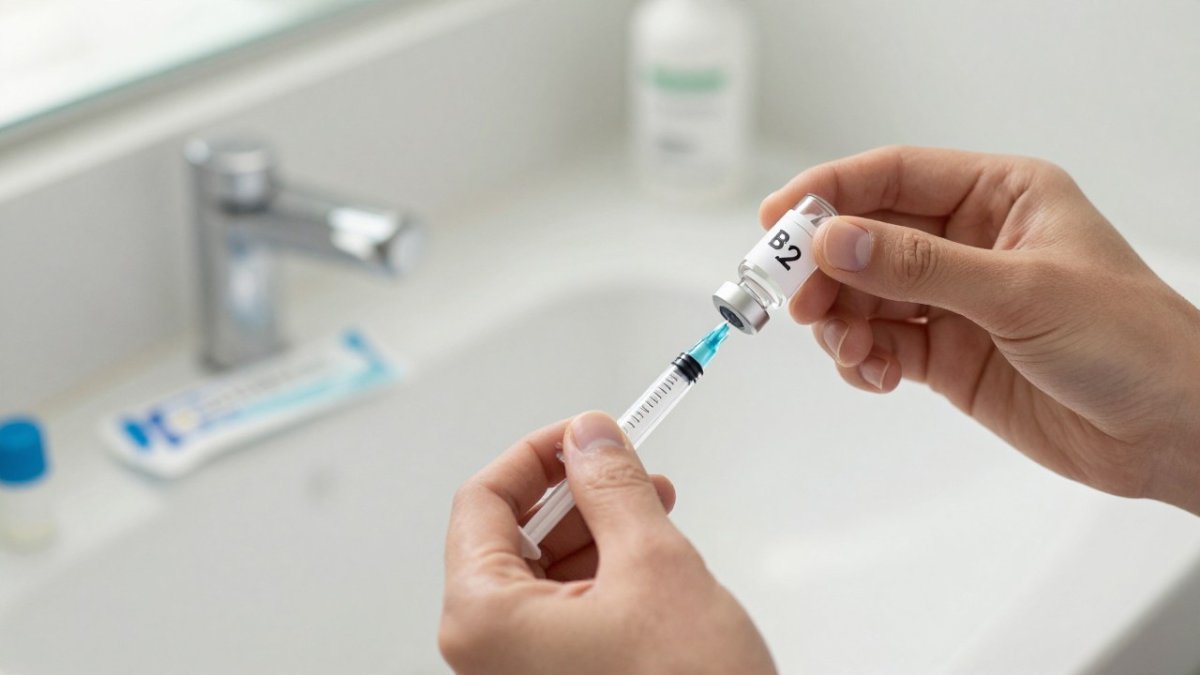
Injection dosing follows a predictable two-phase pattern: a loading phase to refill depleted stores, then a maintenance phase to keep them there.
Loading phase. A frequent approach is 1,000 mcg of cyanocobalamin or methylcobalamin given intramuscularly every other day, or several times per week, for roughly one to two weeks. Some clinicians use a shorter series of larger doses. The goal is to saturate liver stores, which hold a large share of the body's B12, rather than to chase a single blood test number.
Maintenance phase. After loading, the schedule stretches out, commonly 1,000 mcg once a month. For people with pernicious anemia or another permanent absorption problem, that monthly cadence is typically lifelong. For a dietary deficiency that has been corrected, maintenance may shift to oral tablets instead.
What changes the schedule.
- Neurological symptoms (numbness, tingling, balance problems, memory changes) often push clinicians toward a more aggressive loading phase and closer follow-up, because nerve recovery is slower and less forgiving than blood-count recovery.
- Kidney function and age can affect how aggressively levels are pushed and how often they are rechecked.
- Pregnancy and breastfeeding raise B12 requirements, and requirements rise with age as stomach acid and intrinsic factor production decline.
- Self-injection is common for maintenance; the dose and interval still need to be set and reviewed by a clinician, not improvised.
How this compares with oral dosing. High-dose oral regimens are built around the same logic but compensate for absorption losses with volume: a common clinical approach is 1,000 to 2,000 mcg per day by mouth, sometimes higher during an initial correction phase.
When a clinician might switch routes. A common pattern is to start with injections when the deficiency is severe, symptomatic, or caused by malabsorption, then transition to high-dose oral therapy once levels have normalized, provided follow-up testing confirms the oral route is holding levels.
Sticking to the schedule matters more than most people expect. Missed maintenance doses let levels drift down again, and symptoms can creep back gradually. Our guide on tracking B12 injection frequency walks through a practical system for keeping on schedule.
Matching Treatment to Cause: A Practical Decision Guide
The right choice follows the cause, not the marketing. Use this framework:
- Dietary deficiency, normal absorption: high-dose oral tablets are usually sufficient and convenient.
- Pernicious anemia or malabsorption: injections are the dependable route.
- Severe deficiency with neurological symptoms: injections are generally preferred for speed.
- Maintenance after correction: either route can work, depending on what got you there.
- Needle-averse but malabsorbing: discuss sublingual or very high-dose oral options with your clinician, and monitor levels closely.
If injections are the path, knowing what to expect on day one helps. Our guide on preparing for your first B12 injection appointment covers the practical steps.
Testing, Follow-Up, and Recovery Timelines
Testing is where the shots-versus-pills decision actually gets made, and it is the part most consumer comparisons skip. A serum B12 level is the standard starting point, but it has a well-known limitation: it can read normal in people who are genuinely deficient, and it can read low in people who are not. That is why clinicians often pair it with a second-line test.
The tests that matter.
- Serum B12, the first-line test; cheap and widely available, but not definitive on its own.
- Methylmalonic acid (MMA), rises when B12 is functionally low, and is generally considered a more sensitive marker of true deficiency. It can also be elevated in kidney disease, so it is interpreted alongside kidney function.
- Homocysteine, another functional marker that tends to rise with B12 deficiency; it is less specific because folate deficiency and other conditions also raise it.
- Complete blood count, a low mean corpuscular volume pattern (large red cells) supports the diagnosis, though a normal blood count does not rule out deficiency.
- Intrinsic factor antibodies and parietal cell antibodies, used when pernicious anemia is suspected, because that diagnosis changes treatment from temporary to lifelong.
Follow-up testing. A common pattern is to recheck levels after roughly two to three months of treatment, once the loading phase is complete and a maintenance routine is established. The purpose is not just to confirm the number rose, but to confirm the route you are on is holding it. If you switched from injections to oral tablets, that recheck is the proof the switch worked. After levels stabilize, many clinicians move to annual or twice-yearly checks, with more frequent monitoring for people with pernicious anemia, kidney disease, or ongoing neurological symptoms.
Recovery happens on two different clocks. This distinction is the one readers most often miss:
- Biochemical recovery, serum B12 and MMA can normalize within weeks of starting treatment. The blood test improves before the person necessarily feels different.
- Hematologic recovery, if anemia is present, reticulocyte counts typically rise within about a week, and hemoglobin usually climbs over several weeks. Fatigue often improves in this window.
- Neurological recovery, numbness, tingling, balance problems, and cognitive changes are the slowest to resolve and the least predictable. Some people improve over months; some have residual symptoms, particularly if treatment was delayed. This is the strongest argument for not waiting to see whether pills work before seeking care.
Watch out: new or worsening neurological symptoms, numbness, tingling, unsteadiness, confusion, or memory changes, warrant prompt medical assessment rather than a trial-and-error approach with over-the-counter supplements. B12 deficiency that is treated late can leave lasting nerve damage, and the delay, not the choice of route, is usually the deciding factor in how well someone recovers.
For comprehensive background on B12, its functions, and the health consequences of deficiency, see our guide to vitamin B12 injections.
Sorting out whether injections or tablets fit your situation is the first step toward feeling like yourself again. Buy-Otc.com supplies discounted B12 shots, B1 and B6 injectables, vitamin C shots, and needles, with Geotrust SSL protection for secure checkout and a support team that resolves damaged-item issues quickly. Registered customers also unlock ongoing discounts and special offers. Get started with Buy-Otc.com and keep your B12 routine simple, secure, and on schedule.
Frequently Asked Questions
Are B12 shots more effective than pills for a deficiency?
It depends on the cause. For pernicious anemia or malabsorption from gastrointestinal conditions, B12 shots bypass the gut and are the reliable choice. For dietary deficiency, high-dose oral B12 at 1,000 to 2,000 mcg per day is often used as a practical option. The route matters less than matching it to why you are deficient in the first place.
How many B12 pills equal one shot?
There is no exact conversion, because absorption differs by person and by cause of deficiency. Only a fraction of an oral dose is absorbed without intrinsic factor, which is why high-dose oral regimens use 1,000 to 2,000 mcg daily to compensate.
How long does it take for B12 pills or shots to work?
Response varies by person and by cause of deficiency. Neurological symptoms such as numbness or brain fog can take longer to resolve, and some people have lasting effects if treatment was delayed. Your clinician can advise on follow-up blood testing.
When are B12 injections recommended instead of oral supplements?
Injections are typically recommended for pernicious anemia, after gastric or intestinal surgery, in Crohn's disease or celiac disease with poor absorption, and when neurological symptoms are present and fast correction matters. They are also used when oral therapy has failed to raise serum B12 levels. For dietary deficiency alone, oral vitamin B12 supplements are usually sufficient.