 Comparison
Portable Cooling Cases for Temperature-Sensitive Medication
Last Updated: November 7, 2026
Quick Summary
Portable cooling cases keep temperature-sensitive medication within its labeled range during travel, using insulated ice packs, active electric cooling, or evaporative cooling. Choose cooling cases that match your medication's storage label: refrigerated injectables need 36-46°F (2-8°C) and must not freeze, while room-temperature medications need insulation from heat, not ice.
- Insulated cases suit day trips and short flights; active electric coolers hold steadier temperatures for long journeys.
- Freeze reusable gel packs fully, typically 8-12 hours, before loading your case.
- Precondition the empty case in the refrigerator for a few hours so it does not absorb cold from your packs.
- Declare medication and cooling packs to TSA officers before the bag is scanned.
- After a suspected excursion, record details and contact your pharmacist or the manufacturer before discarding.
Table of Contents
- How Portable Cooling Cases Protect Temperature-Sensitive Medication
- Insulated Cases vs. Active Electric Coolers
- Temperature Ranges: 36-46°F, 68-77°F, and the 2-8°C Standard
- The Best Travel Cooler for Medication: Top Options Compared
- Cooling Duration, Ice Packs, and Preconditioning Explained
- Choosing a TSA-Approved Medication Cooler Travel Case
- When You Need a 72-Hour Insulin Travel Cooler
- Picking a Small Travel Cooler for Medication and Daily Use
- Freezing Prevention, Temperature Excursions, and Backup Plans
- What to Check Before You Buy Your Medication Cooler
- Frequently Asked Questions
How Portable Cooling Cases Protect Temperature-Sensitive Medication
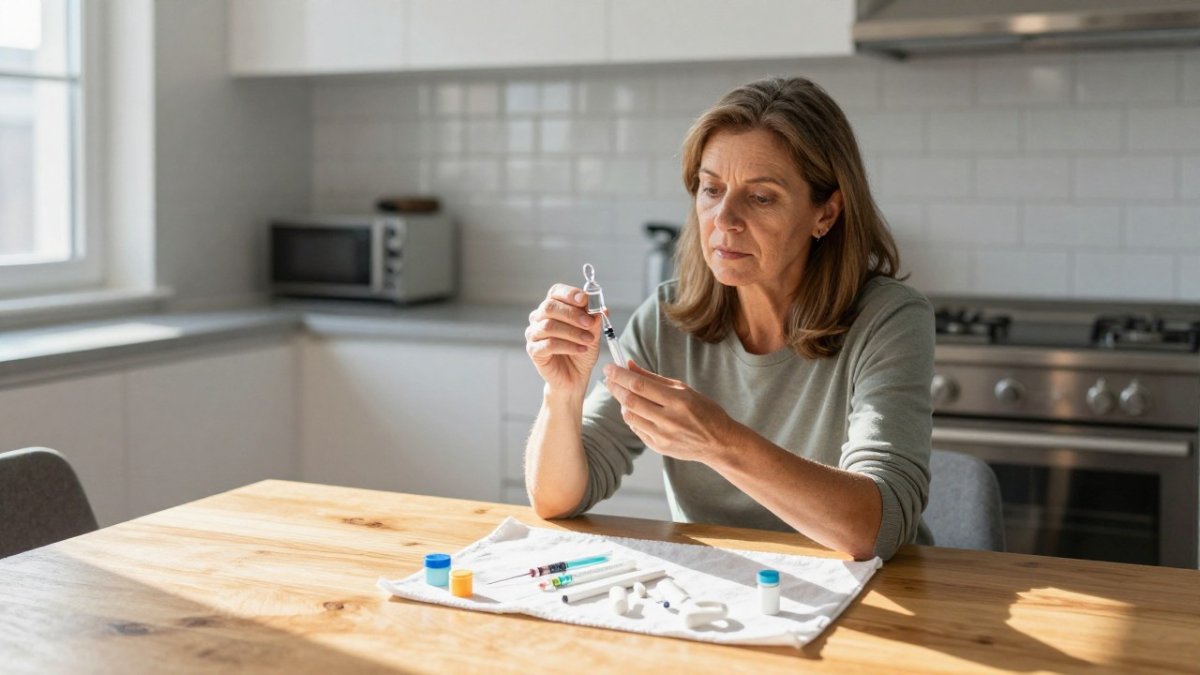
Portable cooling cases for temperature sensitive medication keep injectables within a safe range while you travel or spend a day away from your refrigerator.
A portable medication cooler is an insulated or actively powered container designed to hold medication within a defined temperature band during transport. Unlike a lunch bag, a proper cooler is built around a temperature target, not just "keeping things cold."
Insulin, GLP-1 medications, epinephrine auto-injectors, and many injectable vitamins lose potency when they freeze or overheat. A case that swings too cold is as much a problem as one that gets too warm.
Insulated Cases vs. Active Electric Coolers
Insulated cases rely on pre-frozen ice packs or evaporative cooling; active electric coolers use a powered element, usually USB or battery, to hold a set temperature.
Insulated cases are lighter, cheaper, and have no power dependency, but cooling fades over time and depends on preconditioning the packs.
Active electric coolers hold a steadier temperature and often include a display.
A third category, evaporative cooling wallets like FRIO, use water evaporation instead of ice.
Temperature Ranges: 36-46°F, 68-77°F, and the 2-8°C Standard
Most refrigerated injectables are labeled for storage between 36°F and 46°F, which is the same as the 2-8°C range used in clinical guidance. 68-77°F is the typical room-temperature band for medications that do not require refrigeration.
Those two ranges are not interchangeable. A drug labeled for 2-8°C needs to stay cold; one labeled for room temperature should not be packed against ice. Check your prescription label before choosing a case.
Here is the practical translation for travelers:
| Storage Label | Fahrenheit | Celsius | What It Means for Your Case |
|---|---|---|---|
| Refrigerate | 36-46°F | 2-8°C | Use a cooling case; avoid freezing |
| Room temperature | 68-77°F | 20-25°C | Insulation against heat, not ice |
| Do not freeze | Below 32°F | Below 0°C | Evaporative or regulated cooling preferred |
The "do not freeze" instruction is where cheap ice-pack setups fail. A pack straight from the freezer can drop the medication below 32°F in transit.
The Best Travel Cooler for Medication: Top Options Compared
The best travel cooler for medication depends on trip length, medication type, and whether you can freeze packs in advance. This roundup adds what a spec table cannot show: cost of ownership, how cooling claims can be checked, and real-world usability.
| Product | Cooling Method | Stated Cooling Time | Starting Price | Power or Freezer Dependency | Best For |
|---|---|---|---|---|---|
| 4AllFamily Coolers | Temperature-controlled, portable | Not specified | $54.99 | Charging or power bank | Multi-medication travelers |
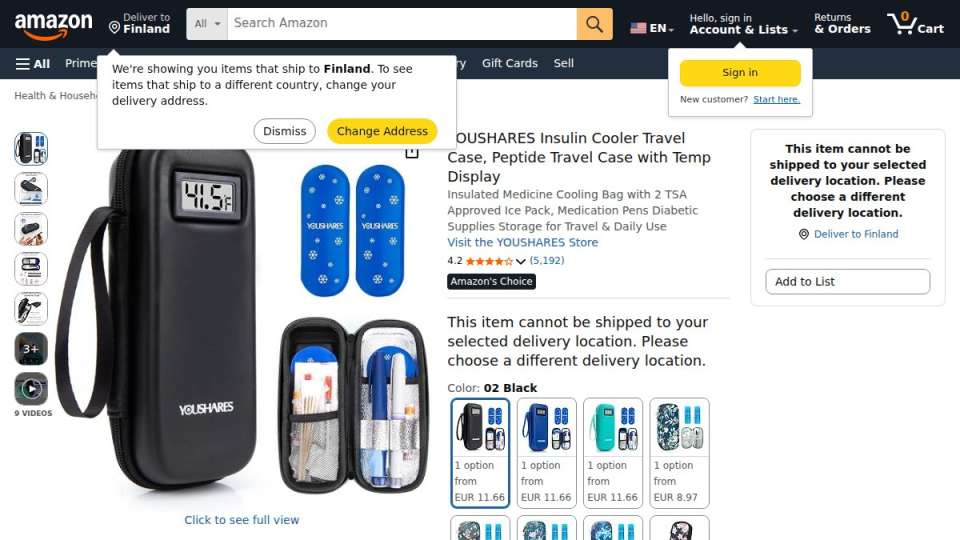
| YOUSHARES Case | Two reusable ice packs | Up to 6-8 hours | Not listed | 8-12 hours of pre-freezing | Short trips with freezer access |
| FRIO Cooling Wallets | Evaporative | Not specified | Not listed | Water soaking, no freezer | No-freezer travel, freeze-averse meds |
| Breezy Pack | Cooling case | Not specified | Not listed | Not detailed | Insulin and EpiPen users |
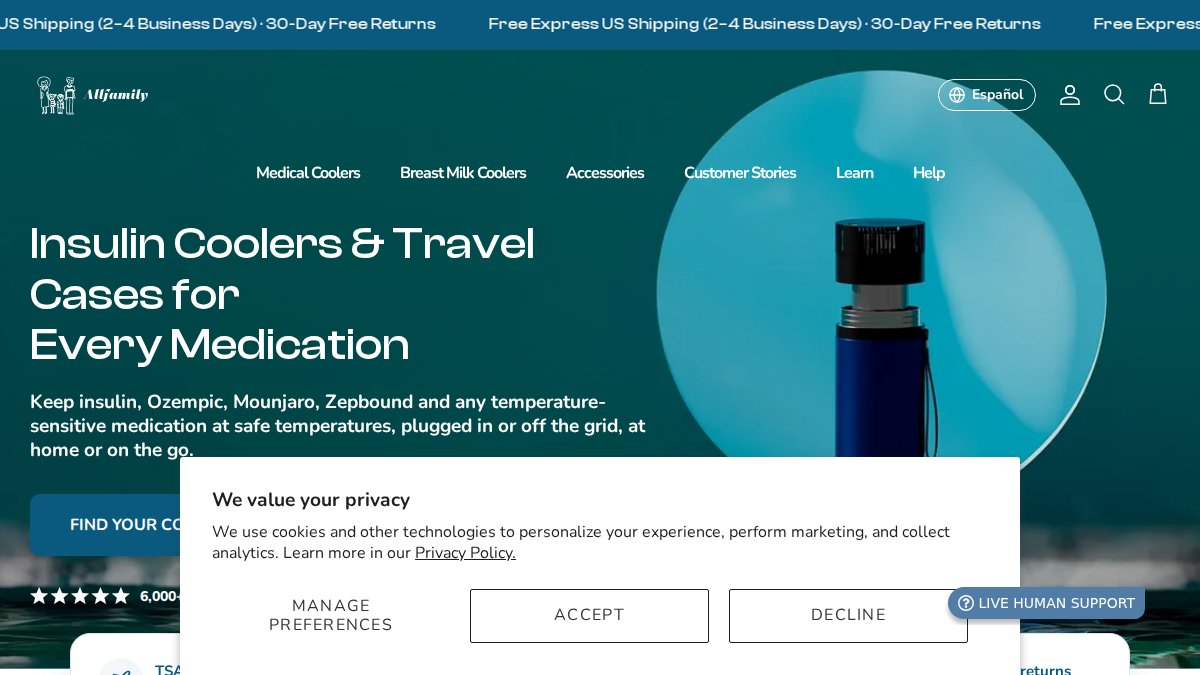
4AllFamily Insulin Coolers & Travel Cases
4AllFamily builds portable, temperature-controlled coolers aimed squarely at medication transport.
What we like: the range goes beyond insulin, so households managing more than one injectable can use a single product line.
Accessibility check: ask how the lid opens and whether the temperature display is readable without removing the case from a bag.
Best for: travelers who want one cooler for several medication types. Skip if: you need documented cooling hours before you commit.
YOUSHARES Insulin Cooler Travel Case
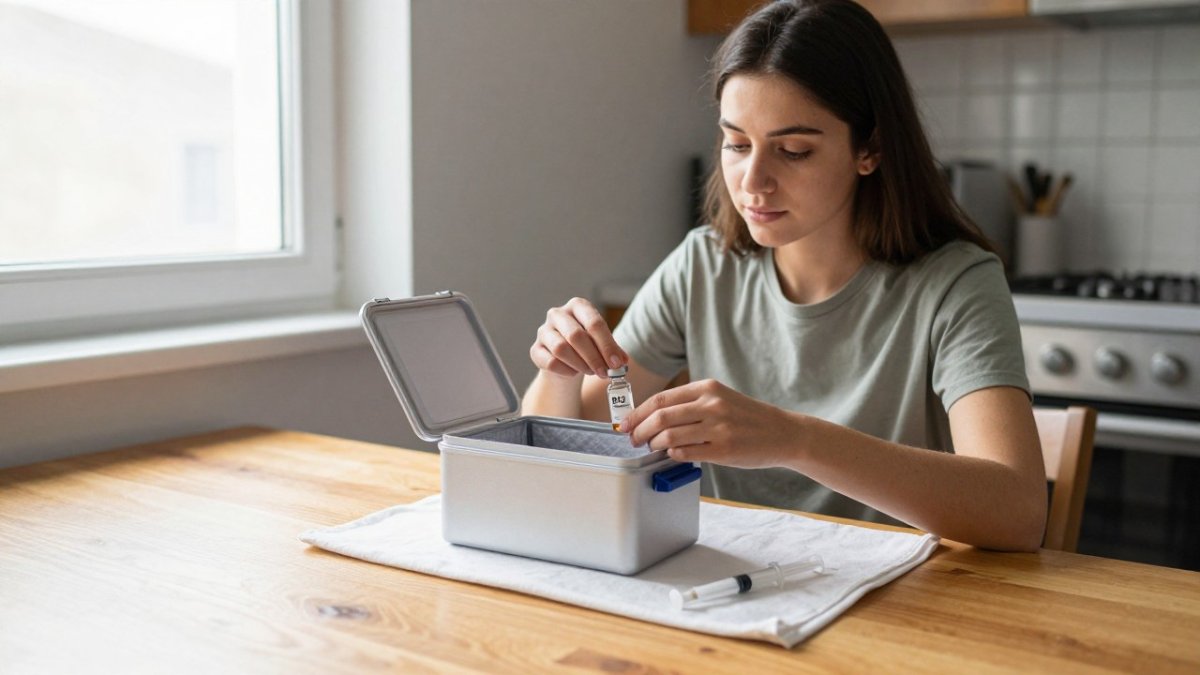
YOUSHARES takes the classic approach: an insulated case with two reusable, TSA-compliant ice packs and a built-in temperature display.
The catch is preparation, forget to freeze the packs the night before, and the case is just a padded bag.
Total cost of ownership: the case is inexpensive up front, but the gel packs are the wear item.
Accessibility check: confirm the display reads in Fahrenheit or Celsius and whether it can be switched.
FRIO Cooling Wallets and Breezy Pack
FRIO wallets use evaporative cooling: you soak the inner pouch, and evaporation draws heat away from the medication.
Total cost of ownership: evaporative wallets have the lowest running cost, nothing to recharge, no packs to replace.
Accessibility check: these are the lightest and quietest option, with no fan or battery noise, which matters in a shared office or classroom.
Best for: travelers who cannot freeze packs and need freeze-safe cooling. Skip if: your medication requires a strict 2-8°C hold.
How to Check a Cooling Claim Before You Buy
Most listings say "keeps cool" without saying under what conditions.
A practical home check: load the case as you would for a real trip, place a small thermometer inside, and log the reading every hour at room temperature.
Watch out: a stated cooling time measured with the case closed and undisturbed may overstate real-world performance, because every opening exchanges cold air for warm.
Cooling Duration, Ice Packs, and Preconditioning Explained
Cooling duration is how long a case holds its target range, and preconditioning is the preparation that makes that duration possible.
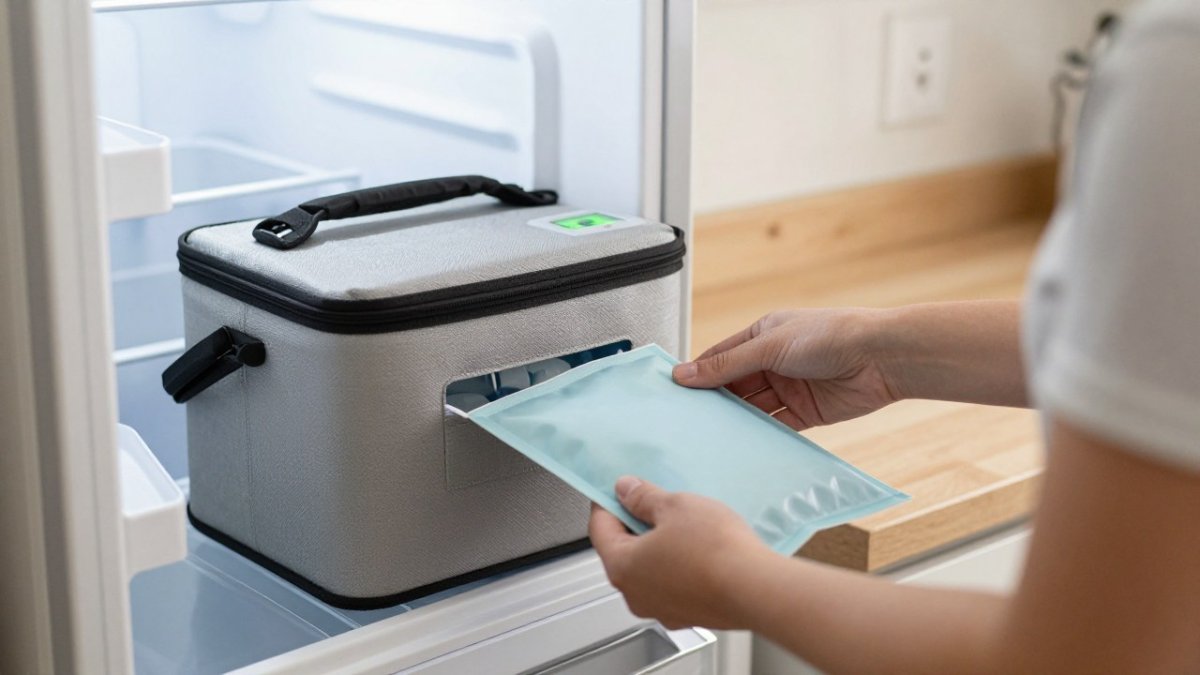
Preconditioning means chilling the case itself, not just the packs. Place the empty insulated case in the refrigerator for a few hours before loading.
Ice pack rules that matter:
- Freeze packs fully, typically 8-12 hours for reusable gel packs.
- Wrap packs in a thin cloth if your medication is labeled "do not freeze."
- Never load packs straight from the freezer against medication without a barrier.
Watch out: loading a room-temperature case with half-frozen packs is the most common reason travelers arrive with warm medication.
Choosing a TSA-Approved Medication Cooler Travel Case
A TSA-approved medication cooler travel case is one you can carry through airport security without a hassle, and "TSA-approved" usually means the ice packs are compliant with the agency's rules for medically necessary refrigerants. The TSA guidance on medically necessary liquids and gels confirms that frozen ice packs and cooling accessories needed for medication are permitted, but you should declare them.
In practice, screening goes smoother when you:
- Keep medication in its original labeled packaging.
- Tell the officer you are carrying medication and cooling packs before the bag is scanned.
- Separate the cooler from other liquids for easy inspection.
If you are also packing needles and injectables, our guide on how to safely transport medical needles while traveling covers the packing and documentation side. And if you are staying in a hotel and need to deal with used sharps, we explain how to dispose of medical sharps in hotels so you are not stuck improvising.
When You Need a 72-Hour Insulin Travel Cooler
A 72-hour insulin travel cooler is for trips where you cannot reliably recharge or refreeze for three days: long-haul flights, remote work assignments, or multi-city travel. Most insulated cases with standard packs will not hold that long without a refresh. Because a three-day stretch without a reliable way to recharge or refreeze leaves little room for error, insulin cooler travel cases are worth considering whenever a trip makes temperature control difficult.
For a true 72-hour window, prioritize active electric coolers with rechargeable batteries and a power bank backup, or plan to carry spare frozen packs and access a freezer en route. Evaporative wallets can be re-wetted, but check the temperature they actually hold against your medication's label.
The honest answer: no single case guarantees 72 hours without attention. Build a plan around your itinerary, not a marketing claim.
Picking a Small Travel Cooler for Medication and Daily Use
A small travel cooler for medication works best when it fits your daily bag and holds just what you need for the day. Compact design matters more than capacity for most people.
Look for a case sized to your pen, vial, or auto-injector with a little room for a pack.
Accessibility counts too. Our guide on common mistakes when self-administering injections pairs well with choosing a case you can actually use one-handed, and if you are new to injectables, how to self-administer B12 injections safely walks through the basics.
Freezing Prevention, Temperature Excursions, and Backup Plans
A temperature excursion is any period when your medication drifts outside its labeled storage range. Excursions happen from frozen packs, a dead battery, a hot car trunk, or a case left in direct sunlight. Most guides stop at "keep it cool." The useful part is knowing which medications are at risk, how to prevent the two opposite failures (freezing and overheating), and what to actually do after a suspected excursion.
Match the Storage Guidance to the Medication
Storage requirements are set by the product label, not by the cooler. Two medications that look identical in a travel case can have opposite requirements.
- Refrigerated injectables (many insulins, GLP-1 medications, and some injectable vitamins) are typically labeled for 36-46°F (2-8°C). These need a cooling case and must not freeze.
- Room-temperature medications are typically labeled for 68-77°F (20-25°C). These should be insulated against heat, not packed against ice. A cold pack can push a room-temperature product below its labeled range just as easily as a hot car pushes it above.
- "Do not freeze" products are the most common failure point in ice-pack setups, because a pack straight from the freezer can drop the medication below 32°F in transit.
Travelers often apply one cooler to every medication in the household. That works only when every product shares a storage range.
Watch out: a medication labeled for room temperature that rides against a frozen pack can be damaged by cold, and the damage is invisible.
Preventing Freezing
Freezing prevention is mostly about barriers and placement.
- Wrap frozen packs in a thin cloth or place a foam divider between the pack and the medication.
- Never load packs straight from the freezer against medication without a barrier.
- Prefer evaporative or regulated cooling for any product labeled "do not freeze."
Preventing Overheating
Overheating is the mirror failure. A dead battery, a forgotten pack, or a case left on a dashboard can push a refrigerated product above 46°F. Carry a spare pack or power bank, keep the case in the passenger compartment rather than the trunk, and check the display at each transition.
What to Do After a Suspected Excursion
If you suspect the medication drifted out of range, do not panic-discard it and do not assume it is fine. Work through a short protocol:
- Record what happened. Note the approximate duration, the likely temperature, and whether the medication was exposed to freezing or heat. This information matters to your pharmacist.
- Check the label and manufacturer guidance. Many products include instructions for short excursions, and some allow a defined window at room temperature.
- Contact your pharmacist or the manufacturer. They can tell you whether the product is still usable for your situation. This is the step most travelers skip, and it is the one that resolves the question.
- Do not use a product that visibly changed. Cloudiness, particles, or discoloration in an injectable is a reason to stop, regardless of temperature history.
- Replace if advised. If the product must be discarded, arrange a replacement before you need the next dose.
A backup plan makes the protocol easier: carry a spare pack or power bank, keep a second small case for a split supply, and store a copy of the prescription label so a pharmacist can identify the product quickly.
When you are planning backup supplies at home, our article on regulations for disposing of medical needles at home explains how to handle anything you do need to replace.
What to Check Before You Buy Your Medication Cooler
Before you buy, match the case to your medication's label, your trip length, and your access to power or a freezer.
Run this checklist:
- Confirm your medication's storage range (2-8°C, room temperature, or do not freeze).
- Check the stated cooling duration against your longest leg of travel.
- Confirm whether the case needs pre-freezing and how long.
At Buy-Otc.com, we stock discounted injectables and needles, and we are glad to point you toward the supplies that pair with your cooler.
Carrying temperature-sensitive medication does not have to be stressful, but it does take the right case and a little planning.
Frequently Asked Questions
How long can a medication travel cooler keep medicine cold?
It depends on the cooling method and the product you choose. Check each product's stated cooling duration and preconditioning requirements. Evaporative wallets such as FRIO work differently and do not reach refrigerator temperatures, so they suit shorter trips or backup use. For longer journeys, look for a case with a stated cooling duration that covers your full travel time plus a buffer, and always carry a thermometer to confirm the internal temperature.
What makes a cooling case TSA-approved for air travel?
Screening rules for cooling accessories can change, so check current TSA guidance before you fly. Keep the medication in its original labeled pharmacy packaging and tell the screening officer that you are carrying temperature-sensitive medication. Check the current TSA guidance before flying, since screening rules can change, and arrive early so a bag inspection does not cost you time.
Do medication cooler cases show the internal temperature?
Some do. A built-in display lets you confirm the inside temperature without opening the lid and releasing cold air. Many insulated cases and evaporative wallets have no display at all, so you would need a separate thermometer. A display is worth having if you travel often or use insulin, GLP-1 medication, or an epinephrine auto-injector, because it turns a guess into a reading you can act on.
How do you prevent medication from freezing in a cooler?
Never place medication directly against a frozen ice pack. Wrap the pen or vial in a cloth or use the internal pocket or sleeve that most cases provide, and precondition the pack so it is cold but not rigid. Insulin that freezes loses effectiveness and should not be used. If you suspect freezing, check the temperature display or a thermometer, inspect the liquid for cloudiness or particles, and replace the medication rather than risk a dose that will not work.
What should you look for in a small travel cooler for medication?
Look for a case sized to the medication you actually carry, since a small travel cooler for medication stays cold longer when there is less empty air inside. Check the stated cooling duration, whether packs need 8-12 hours of freezing beforehand, whether there is a temperature display, and how the case fits in a carry-on or glovebox. If you carry injectables, confirm the interior dimensions fit the vial or prefilled syringe along with its packaging.