 How-to
Packing Medical Supplies for Long Term Travel: A Step-by-Step Plan
Last Updated: November 6, 2026
Quick Summary
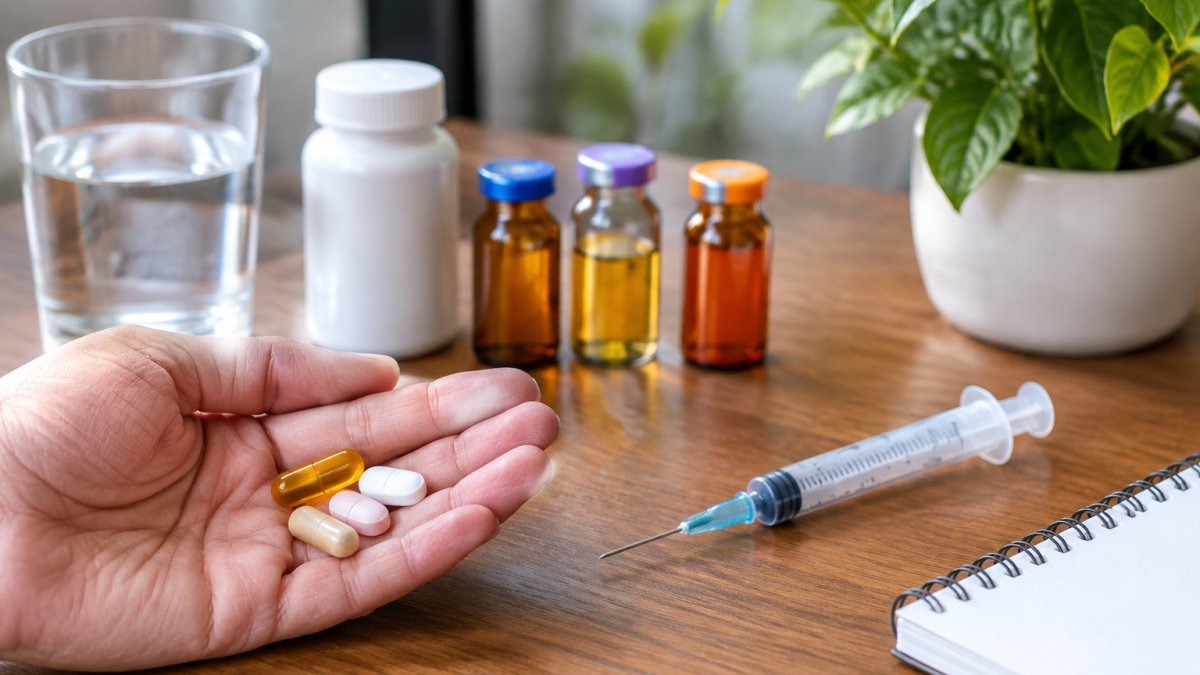
Packing medical supplies for long term travel starts with calculating daily doses times trip days, then adding a buffer of one to two extra weeks for short trips or a full month for open-ended travel. Keep medicines in original labeled containers, carry everything in your carry-on, and map every refill date against your itinerary before departure.
- Bring every daily prescription plus emergency medication, and keep a written list with generic names and dosages.
- Store needles in a hard, puncture-resistant container and carry a prescriber letter naming the medication and needles.
- Use a phase-change cooler for long travel days and warm climates, since its panels hold a target temperature rather than freezing.
- Split your supply so a few days of medication travel in a separate bag from the main supply.
- Photograph every label, your medication list, prescriber letter, and receipt before you pack.
Table of Contents
- Step 1: Calculate How Much Medication to Pack for Travel
- Step 2: Build Your Travel Medicine Kit List
- Step 3: Packing Injectable Medications and Needles for Travel
- Step 4: Keep Medicines in Original Containers With Clear Labels
- Step 5: Manage Temperature-Sensitive Medication and Cold Storage
- Step 6: Organize Supplies for Carry-On Luggage and Security Screening
- Step 7: Download a Travel Medicine List PDF and Pack Your Checklist
- Step 8: Plan for Refills, Loss, and Insurance on Long-Term Travel
- Frequently Asked Questions
Step 1: Calculate How Much Medication to Pack for Travel
Packing medical supplies for long term travel starts with one number: how many days you will be away. Most travelers pack too little, a three-week trip can turn into five after a flight cancellation. Plan for the trip you booked plus a cushion.
The duration formula: daily doses, buffer, and refill windows
Use this simple formula before you open a suitcase:
- Daily doses × trip days = base supply
- Add a buffer for delays and lost doses
- Check the refill window on your prescription label
A common approach is a buffer of one to two extra weeks for short trips and a full month for open-ended travel. If your prescription refills every 30 days, plan how you will refill on the road before you leave.
Prescription medications to bring and extra supply for delays
Bring every prescription you take daily, plus any emergency medication such as an inhaler or epinephrine auto-injector. Keep a written medication list with generic names, dosages, and prescriber details.
Watch out: running out of a daily medication mid-trip is the most common and most preventable travel health problem. Pack the buffer first.
Step 2: Build Your Travel Medicine Kit List
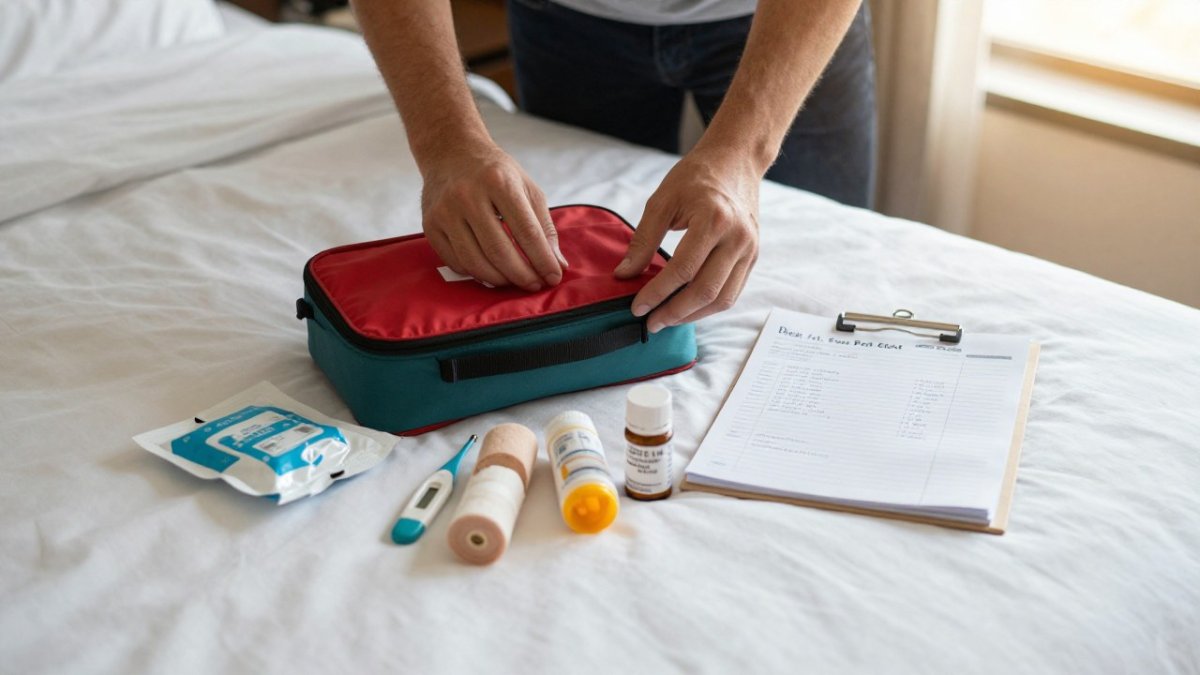
A travel medicine kit list is a written inventory of every medicine and supply you carry, sorted into three groups: prescriptions, over-the-counter medicines, and first-aid supplies.
Over-the-counter medicines for common travel ailments
Pack for the problems that actually interrupt a trip:
- Pain reliever and fever reducer
- Antihistamine for allergies
- Anti-diarrheal tablets
First-aid kit essentials and personal medical supplies
A basic first-aid kit covers most minor problems. Include bandages in several sizes, adhesive tape, antiseptic wipes, disposable gloves, and a thermometer. Add tweezers and blister pads.
Then add your personal medical supplies: glasses and a spare pair, contact lenses and solution, diabetes testing supplies, rapid tests, and any medical equipment you rely on.
Step 3: Packing Injectable Medications and Needles for Travel
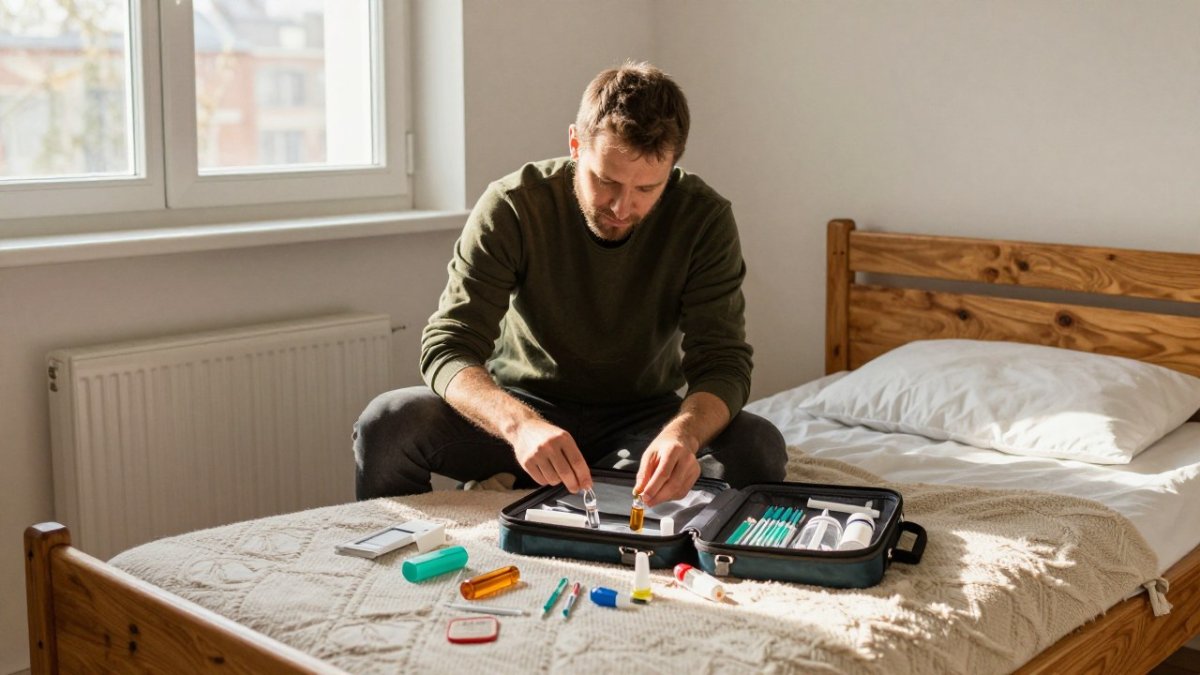
Packing injectable medications and needles for travel requires three things: a doctor's note, secure storage, and a plan for disposal. Injectable medication is generally best kept in your carry-on rather than checked baggage.
Carry your prescription label or a letter from your prescriber that names the medication and the needles. Security screening rules for medical supplies are set by the TSA guidelines on medically necessary items, and they allow medically necessary liquids and sharps with proper screening.
Store needles in a hard, puncture-resistant container. Plan disposal before you leave: our guide on how to dispose of medical sharps in hotels covers the options for long stays. If you self-inject, a refresher on how to self-administer B12 injections safely helps when you are injecting in an unfamiliar place.
Our guide to transporting medical needles while traveling covers legal and safe handling, and our overview of home needle disposal regulations helps you plan disposal after you return.
Watch out: loose needles in a toiletry bag can puncture other items and get flagged at screening. Use a dedicated hard case every time.
Step 4: Keep Medicines in Original Containers With Clear Labels
Medicines should stay in their original containers with clear labels for the whole trip. Pharmacies print the drug name, dosage, and your name on the label, and that label is what security officers and customs officials check.
Keep these points in mind:
- Do not move pills into unlabeled daily organizers for travel day. Pack the original bottle and fill the organizer at your destination.
- Keep the label readable. If it fades, ask your pharmacy for a reprint before you go.
- Carry a printed medication list as a backup.
A destination may restrict certain medications, including some controlled substances. Check the rules for every country on your route before departure.
Step 5: Manage Temperature-Sensitive Medication and Cold Storage
Temperature-sensitive medication needs a plan built around three numbers: the storage range on the label, the maximum time the product can spend outside that range, and the length of your longest leg without reliable refrigeration. Insulin, many biologics, GLP-1 injectables, some vaccines, and certain reconstituted powders fall into this category. A checked bag in a hot cargo hold or a rental car parked in the sun will not protect them, so the entire cold chain has to travel with you.
Know your product's actual limits before you buy any cooler
Start with the manufacturer's prescribing information, not a blog. Most labels state a storage range and any allowed excursion, so check the manufacturer's prescribing information for your product. Write those two numbers on your medication list: the safe range and the cumulative out-of-range allowance.
Choose a validated cooling system, not a lunch bag
There are three practical tiers, and the right one depends on your longest unrefrigerated stretch:
- Insulated medication case with gel packs, adequate for flights, day trips, and hotel-to-hotel moves of a few hours. Look for a case that holds the product upright and keeps gel packs from direct contact with the vial.
- Phase-change (PCM) cooler, uses panels that hold a target temperature rather than freezing, avoiding the common failure of accidentally freezing insulin or a biologic. Better for long travel days and warm climates.
- Battery-powered or thermoelectric cooler, for multiweek trips, road travel, or destinations where you cannot rely on a hotel minibar. These need a power plan.
A common pattern among long-term travelers is to carry a small hard-sided case with a PCM panel plus a backup gel pack, and to keep the medication in its original carton inside the case so the label and lot number stay readable.
Monitor temperature instead of guessing
A cheap digital thermometer or a data logger with min/max memory turns cold storage from hope into evidence. Check the case at each transfer, leaving the hotel, at the gate, on arrival, and note the reading.
Watch out: freezing is as damaging as heat for insulin and many biologics, and it happens most often when gel packs are frozen solid and pressed against the vial, use a barrier layer or a phase-change panel instead.
Plan refrigeration at every stop
Before you book, ask each accommodation whether the room refrigerator has a reliable freezer compartment and whether it stays on when the room key is removed. Many minibars cycle off or run too warm. Carry a small thermometer to check the fridge on arrival, and keep the medication in a sealed bag on a middle shelf, away from the freezer plate and the door.
Power and backup for anything that runs on electricity
If you carry a powered cooler, pack a backup battery bank sized for at least one full travel day, a car adapter, and the correct plug adapter. Confirm the cooler's voltage and whether it needs a converter rather than a simple adapter. Keep the medication in the insulated case even while powered, so a power interruption does not immediately expose it.
What to do when the cold chain breaks
If the case warms beyond the allowed range or the product freezes, do not discard it automatically and do not use it blindly. Record the time and temperature, keep the product, and contact the prescriber, pharmacist, or manufacturer's medical information line for a stability assessment.
The article lays out three tiers of cooling gear, matched to how long the medication will be without refrigeration.
| Cooling option | Best for | Key difference |
|---|---|---|
| Insulated medication case with gel packs | Flights, day trips, hotel-to-hotel moves of a few hours | Holds product upright; keep gel packs off the vial |
| Phase-change (PCM) cooler | Long travel days and warm climates | Panels hold a target temperature rather than freezing |
| Battery-powered or thermoelectric cooler | Multiweek trips, road travel, unreliable minibars | Needs a power plan |
Step 6: Organize Supplies for Carry-On Luggage and Security Screening
Organize your medical supplies into one bag you can pull out at security.
Sort supplies into resealable bags by type: pills, liquids, sharps, and first-aid items. Keep liquids under the screening limit or declare them as medically necessary.
Before you finalize your carry-on, confirm your needle and syringe specifications. Our needle and syringe information page covers B12 injection needle size, syringe types, and whether B12 injections are IM or SQ, so you can pack the right supplies for security screening.
Label the outside of the pouch with your name and a contact number.
Step 7: Download a Travel Medicine List PDF and Pack Your Checklist
A travel medicine list PDF gives you one document to print, share with a travel companion, and show at a pharmacy abroad. Build it once, update it before each trip, and keep a copy on your phone and in your bag.
Your PDF should include:
- Every medication with generic name, dosage, and schedule
- Prescriber name and contact details
- Allergies and emergency contacts
Then run this packing checklist:
- Prescriptions plus buffer supply, in original containers
- Over-the-counter medicines for common ailments
- First-aid kit with bandages, tape, wipes, gloves, thermometer
Check every expiry date as you pack. Replace anything expiring during your trip.
Step 8: Plan for Refills, Loss, and Insurance on Long-Term Travel
Long term travel breaks the normal refill cycle, and the failure mode is predictable: a 30-day supply runs out on day 34 in a place where your pharmacy cannot ship and your prescriber cannot be reached. Plan refills, replacements, and contingencies before departure.
Map your refill windows against your itinerary
List every prescription with its fill date, days supplied, and refill eligibility date. Then lay that against your travel calendar and mark every date a refill comes due while you are away. For each one, decide now which path you will use:
- Extended supply before you leave, ask your prescriber whether a vacation override or larger quantity is appropriate for your trip length. Many insurers allow an early or larger fill for documented extended travel; the request usually comes from the pharmacy or prescriber, not the traveler.
- Mail-order or home pharmacy shipment, workable only with a reliable address and enough lead time; international shipment of prescription medication is often restricted, so confirm before relying on it.
- Local prescriber and pharmacy abroad, the fallback, requiring a current medication list with generic names, dosages, and prescriber details, plus a copy of your prescription.
Make prescription access abroad realistic
Generic names are the key that unlocks a foreign pharmacy, because brand names differ by country.
Watch out: a controlled substance prescription filled abroad may be illegal to bring back or even to possess without a permit, check the destination's rules for every controlled medication on your list before you travel, and carry documentation for anything regulated.
Build a loss, theft, and damage contingency
Medication loss is usually a chain of small failures: a bag left in a taxi, a checked suitcase that does not arrive, a cooler that fails. Prepare for each link:
- Photograph everything before you pack, every label, the medication list, the prescriber letter, and the receipt. A photo is proof of what you carried and what it cost.
- Split the supply, carry a few days of medication in a separate bag from the main supply, so a single loss does not leave you with nothing.
- Keep prescriber and pharmacy contacts offline, saved on your phone and on paper, not only in an email account you may not be able to open abroad.
Confirm what your coverage actually pays for
Travel health policies vary widely on medication replacement. Before you leave, ask three questions in writing: Does the policy reimburse replacement of lost or damaged prescription medication? Is there a per-item or total limit? Does it cover a temperature-damaged biologic or only a lost bottle? Keep the answers with your policy documents.
Order backup supplies before a long trip
For travelers who inject regularly, ordering supplies before a long trip saves stress on the road.
Packing for months away takes more planning than a weekend bag, but the formula is simple: count your doses, add a buffer, map every refill date, and keep everything labeled, documented, and in your carry-on.
Long-term travel tests your preparation more than your itinerary. Start with a supply calculation, build a labeled kit, and keep your medication in your carry-on.
Frequently Asked Questions
How much medication should I bring for long-term travel?
Pack enough for the full trip plus a buffer of at least 7 to 14 days. For a six-month trip, that means counting daily doses, adding the buffer, and checking refill options at your destination. Carry a written prescription and keep a copy of your medication list separate from the pills. If you take injectables, calculate needles and sharps containers the same way. Buy-Otc.com stocks B12 shots, B1 injections, B6 injectable, and needles.
Can I mix pills in the same container when flying?
No. Keep every medication in its original, clearly labeled container. Security screening and customs officers need to match the pills to the prescription label. Mixing pills in a single unlabeled container can lead to delays, confiscation, or worse, a medical mix-up if you forget which pill is which. Use a pill organizer only for daily doses you will take during the flight, and refill it from labeled bottles. Pack the original containers in your carry-on luggage.
How should I pack injectable medications and needles for travel?
Carry injectables in a insulated pouch with a cold pack, and keep them in your carry-on luggage rather than checked baggage. Bring a copy of your prescription and a doctor's note explaining the needles are for medical use. Place used needles in a sharps container or a hard plastic bottle with a screw-top lid. Buy-Otc.com sells needles and injectable vitamins.
What should go in a travel medical kit?
A travel medicine kit list should include prescription medications in original containers, extra supply for delays, over-the-counter pain relievers, antihistamines, anti-diarrheal medicine, motion sickness tablets, oral rehydration packets, bandages, adhesive tape, antiseptic wipes, a thermometer, gloves, and any personal medical supplies such as diabetes testing supplies or contact lens solution. Add a written medication list and copies of prescriptions. Buy-Otc.com offers discounted injectables and needles.